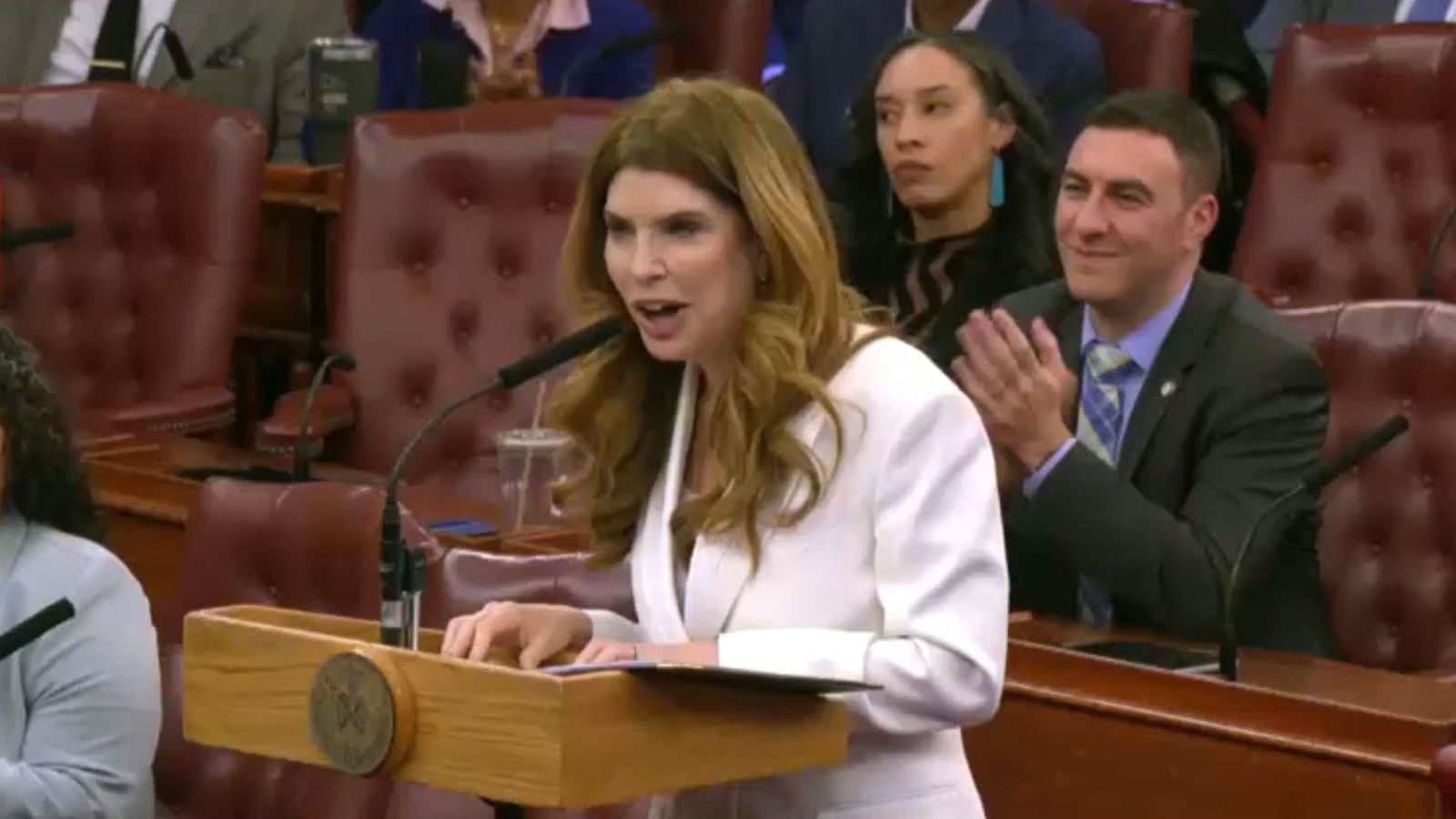
Julie Menin was unanimously elected New York City Council Speaker 51-0 after members gave explanations of their votes; she is the council's first Jewish speaker. Menin, a moderate from the Upper East Side, inherits the immediate task of deciding whether to override 19 vetoes left by former Mayor Eric Adams and has signaled priorities including universal child care, lowering health-care costs, expanding affordable housing and cutting fines and red tape for small businesses while positioning herself as a check on the mayor.
Market structure: Menin’s election tilts New York policy toward pragmatic moderation — winners include small businesses, construction firms and non-profit affordable housing developers if the Council prioritizes workload-cutting and new-build incentives; losers would be large private landlords and local healthcare incumbents if city-level cost controls expand. Expect a 6–18 month reallocation of project pipelines (affordable housing permitting and city-backed deals) that could increase local construction demand by mid-single digits versus baseline. Competitive dynamics: A Council that can override or uphold Adams’ 19 vetoes will be the gatekeeper for spending and regulatory direction; a bloc that preserves fiscal restraint cements NYC’s credit story and benefits NY-focused banks and muni credit, while a large override program (> ~$500–1,000MM annual new commitments) would transfer pricing power to contractors and non-profit builders and compress margins for private childcare and healthcare providers. Risk assessment: Tail risks include an aggressive override package that forces >50 bps widening of NYC muni spreads or a targeted healthcare/childcare price cap that removes 3–5% EBITDA from local operators; material catalysts are the override votes (expected in the next 14–45 days), budget hearings (30–90 days), and state/federal matching announcements. Hidden dependencies: state-level funding and federal tax-exempt bond capacity; second-order effects include higher muni issuance pressuring long-dated municipals. Trade implications: Near-term (days–weeks) favor tactical exposure to NY-centric small-business lenders and construction-related equities; short-to-medium (1–6 months) monitor override vote counts as binary triggers for shifting muni/real-estate allocations; use options to hedge insurer exposure if policy language targets rate-setting. Maintain event-driven sizing (1–3% positions) and ready stop-losses keyed to objective thresholds (e.g., >30 bps muni spread move).
AI-powered research, real-time alerts, and portfolio analytics for institutional investors.
Request DemoOverall Sentiment
neutral
Sentiment Score
0.05
