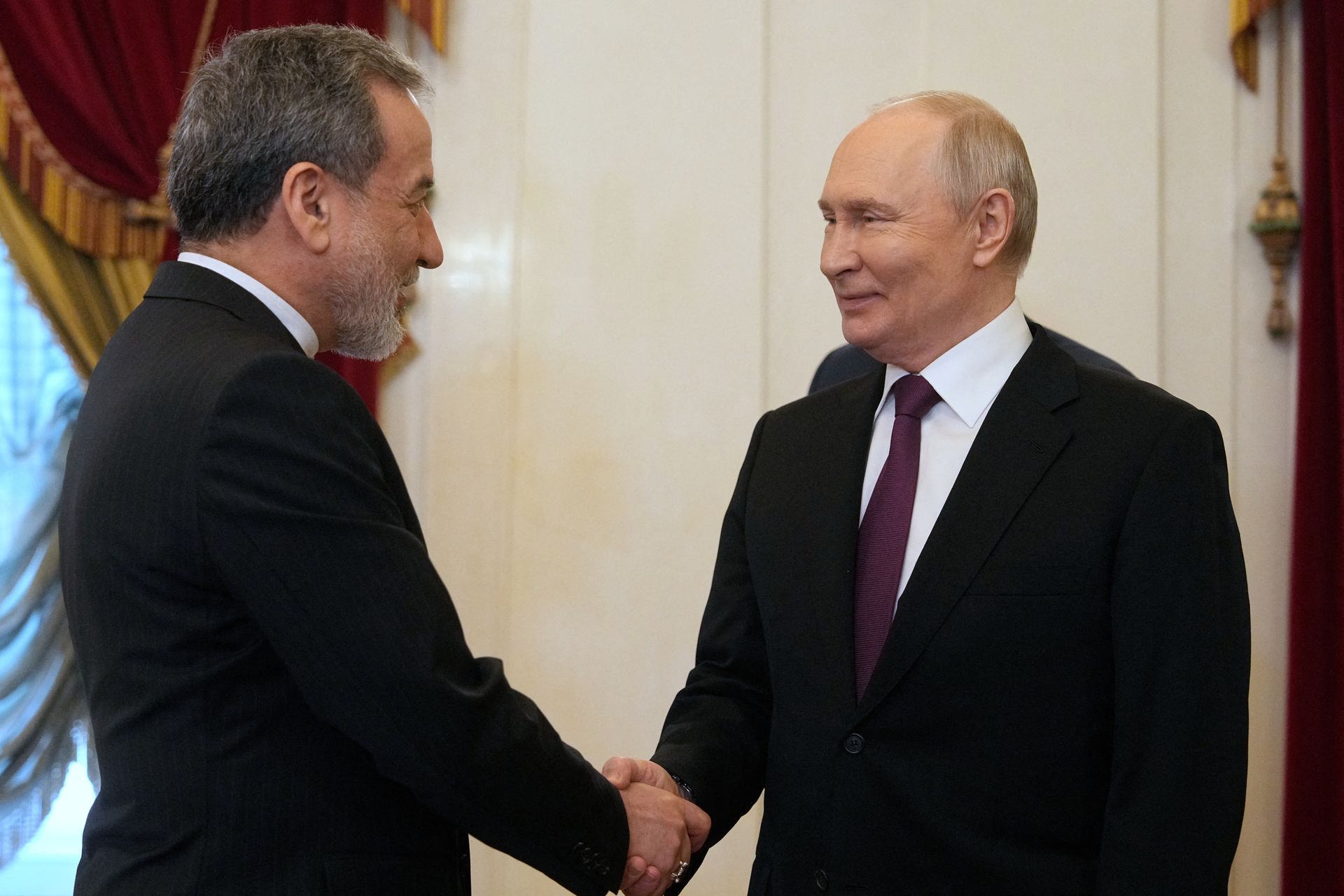
Russia and Iran are deepening coordination as Foreign Minister Abbas Araghchi met Vladimir Putin in St. Petersburg on April 27 to discuss ceasefire talks with the U.S. and broader Middle East tensions. The article highlights ongoing conflict risk after the Feb. 28 U.S.-Israeli strikes, the later April 7 U.S.-Iran ceasefire, and Tehran's proposal to reopen the Strait of Hormuz, a route for about 20% of global oil trade. The backdrop remains geopolitically volatile, with direct implications for regional security and global energy prices.
This is less about rhetoric than about the emergence of a sanctioned conflict-management bloc that can modulate headline risk in energy and EM assets without resolving underlying supply fragility. The key market implication is that Russia now has an incentive to act as a diplomatic backchannel for Iran while simultaneously benefiting from any renewed pressure on Gulf shipping and insurance premia; that asymmetric optionality is bullish for volatility in crude, freight, and regional CDS even if spot oil does not immediately re-rate.
The most important second-order effect is on the Strait of Hormuz risk distribution. Even a low-probability reopening or closure narrative can move front-end energy structure, tanker earnings, and marine insurance pricing within days, while the larger risk sits in 1-3 month horizon if talks fail and proxy escalation resumes. In that scenario, the market is likely underpricing the convexity in Asia-import-dependent economies, especially refiners and airlines, where margin compression would show up before headline macro revisions.
A contrarian read: the diplomatic choreography may actually cap the immediate oil spike by giving both Washington and Tehran a face-saving off-ramp, meaning the consensus ‘geopolitical premium’ could be overbought in crude but underbought in volatility and shipping. The cleaner expression is not outright directional oil beta, but long convexity around transport chokepoints and defense spend, where spending persistence tends to outlast any temporary ceasefire. If negotiations extend, energy equities with low geopolitical sensitivity may outperform high-beta crude proxies on a relative basis even if the commodity itself stays firm.
AI-powered research, real-time alerts, and portfolio analytics for institutional investors.
Request DemoOverall Sentiment
mildly negative
Sentiment Score
-0.20
