


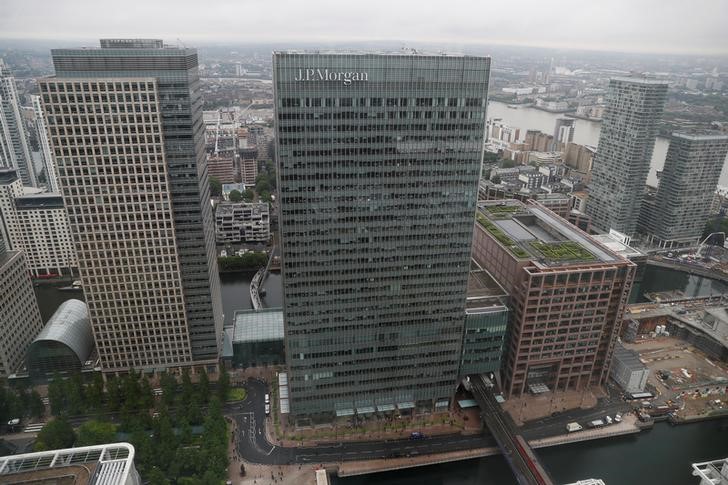
JPMorgan Chase and Mitsubishi UFJ are nearing completion of a $38 billion loan package for Oracle data center projects in Texas and Wisconsin, with lenders still trying to place less than $1 billion. The deal is the largest debt package on record for new U.S. data centers, but the heavy syndication effort, Oracle's negative free cash flow, and rising debt-insurance costs point to increasing credit concerns in AI infrastructure financing. The article suggests appetite for funding the AI buildout may be waning as concentrated risk builds across lenders.
The key signal is not the size of the financing, but the distribution failure: when a club loan for a marquee AI asset still needs forced syndication months later, the market is implicitly telling us that duration, concentration, and refinancing risk are starting to outrun the narrative. That matters because the AI infrastructure trade has been financed on a “borrow first, prove cash flow later” model; once lenders begin pricing that as quasi-project risk rather than investment-grade adjacency, the cost of capital can rise faster than expected and compress returns across the entire buildout.
For JPM and MUFG, the immediate P&L impact is likely manageable, but the second-order risk is balance-sheet and reputational: these are the names other banks watch as capital allocators, so any markdown in appetite can slow future underwriting, not just this deal. The more important knock-on is for vendors and adjacent beneficiaries of the AI capex wave: if financing becomes more selective, the market will begin favoring operators with existing cash generation and punishing those reliant on serial debt issuance to fund capex. ORCL is the clearest pressure point because the funding structure is exposing leverage sensitivity right when credit protection costs are rising.
The contrarian view is that this may be less about a near-term credit event and more about a normalization of pricing after an overheated period of underwriting. If lenders are simply re-rating the risk from “obvious pass-through” to “equity-like volatility,” the fundamental buildout can continue, just with lower multiples and slower deployment. In that case, the best relative expression is not a broad short on AI infrastructure, but a long/short that separates self-funded beneficiaries from externally financed ones.
Near term, watch whether additional loan placement stalls for 2-6 weeks; that would validate the idea that private credit and leveraged loan appetite are tightening, not just this one transaction. Over 3-9 months, the catalyst is a weaker guide from any hyperscaler or platform company forced to defend capex while debt markets demand wider spreads. If financing terms keep worsening, the AI winners will migrate from “buildout names” to suppliers with immediate cash conversion and low capital intensity.
AI-powered research, real-time alerts, and portfolio analytics for institutional investors.
Request TrialOverall Sentiment
mildly negative
Sentiment Score
-0.15
Ticker Sentiment
