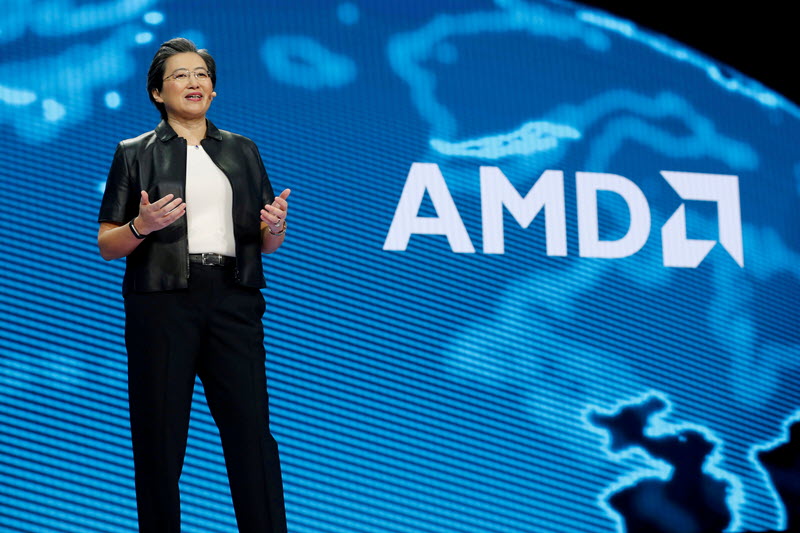
Evercore reiterated Outperform ratings on AMD, Arm and Intel after Q1 2026 server CPU share data showed AMD up 220 bps quarter over quarter and Arm up 140 bps, while Intel fell from 59% to 55%. Arm said Mercury data undercounts its server CPU units by about 30%, implying a 2025 server CPU TAM of 30.4 million units with Intel at 59%, AMD at 24% and Arm at 17%. The firm’s CPU renaissance thesis remains positive for AMD and Arm, though it highlights tightening server CPU constraints for Intel.
The market-share shift matters less as a one-quarter print than as evidence the server CPU market is still in a capacity-constrained transition, where incumbency is becoming a liability. If Intel is structurally supply-bound while AMD and Arm are taking share, the second-order effect is that cloud capex can increasingly bypass legacy x86 bottlenecks and be allocated to designs that optimize power efficiency and time-to-deploy rather than raw compatibility. That tends to favor the names with the cleanest roadmap and the fastest pass-through of wafer availability into shipment growth.
The most interesting implication is for the ecosystem, not just the three CPU vendors. A wider CPU TAM means more sockets, but also more accelerators, memory, networking, and advanced packaging demand, because server refresh cycles tend to pull adjacent content with them. That is constructive for the semiconductor supply chain broadly, but the share math suggests Intel’s weakness is likely to be felt in platform attach rates and customer design wins over the next 2-4 quarters, not just unit shipments today.
Consensus may be underestimating how much of this is a duration trade rather than a pure share trade. If investors accept a multi-year re-acceleration in server CPU units, AMD and Arm can compound into both share gains and market expansion, which is a better setup than either alone; meanwhile Intel’s issue is not merely share loss but the risk that customers build new procurement habits around non-Intel architectures before Intel can reassert manufacturing credibility. The contrarian risk is that the undercall on Arm may be partially offset by weaker monetization per socket and slower enterprise qualification, so the near-term revenue surprise could lag the unit-share narrative even if the strategic thesis stays intact.
AI-powered research, real-time alerts, and portfolio analytics for institutional investors.
Request DemoOverall Sentiment
mildly positive
Sentiment Score
0.35
Ticker Sentiment
