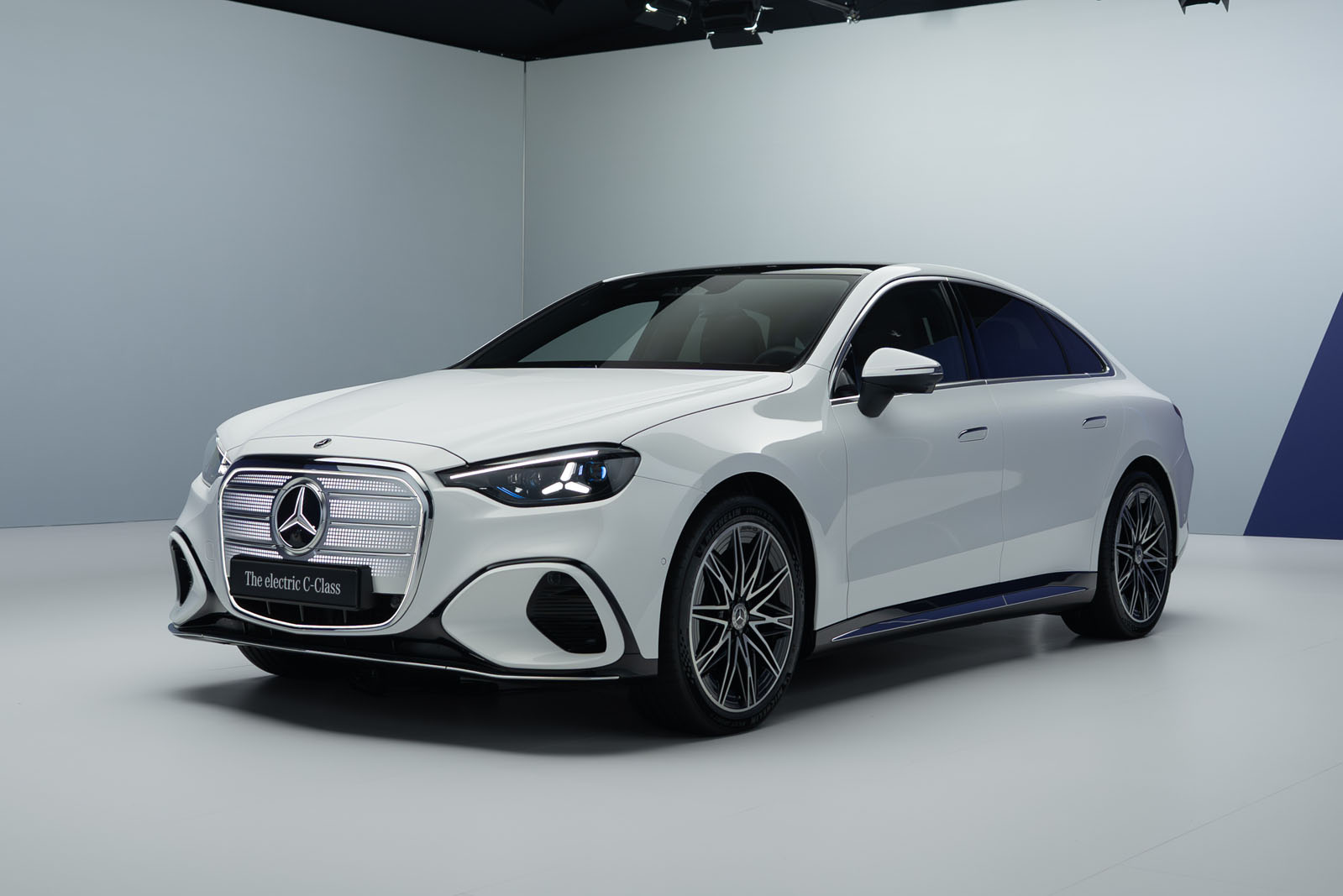
Mercedes-Benz unveiled its first electric C-Class, a dual-motor 400 4Matic variant with 472 miles of range and a sub-£60k list price, due in the UK later this year. The EV is positioned as the sportiest version of the long-running saloon and signals Mercedes’ strategy to make electric models look more like ICE cars, with further single-motor and performance variants to follow. The launch is strategically important for Mercedes’ EV lineup but is unlikely to move the broader market materially.
This is less about one model and more about Mercedes collapsing the visual gap between EV and ICE, which reduces the branding tax that has hurt premium EV adoption. The second-order effect is that Mercedes is implicitly defending residual values across its entire core sedan/SUV portfolio: if the EV looks “normal,” lease comparability improves and dealer resistance to EV allocation should ease. That matters because premium buyers are not EV-maximalists; they are switching-cost minimalists, so lower cognitive friction can be a real demand lever over the next 2-4 quarters.
The competitive read-through is mixed for BMW. On the surface, the electric C-Class is a direct response to the i3, but the bigger issue is that Mercedes is moving toward a unified design language while preserving ICE optionality. That is usually better for mix and margin than a hard EV/ICE split, because it keeps one set of tooling, one brand expression, and one customer funnel. The winner may actually be suppliers with exposure to shared platform components, battery packs, and infotainment/HMI content, while niche EV-only premium brands face more pressure as established OEMs converge on familiar-looking EVs at sub-$60k pricing.
The contrarian risk is that “more ICE-like” can also mean less EV distinctiveness, which may cap willingness to pay if the product feels like a compliance-electrified version of an existing sedan. If Mercedes has to protect the ICE C-Class and future E-Class simultaneously, channel conflict could compress pricing in Europe and the UK first, where EV incentives and fleet demand are already price-sensitive. The key catalyst window is the next two earnings cycles: management commentary on order intake, lease rates, and the mix between dual-motor and eventual single-motor variants will tell us whether this is a volume unlock or just a styling exercise.
AI-powered research, real-time alerts, and portfolio analytics for institutional investors.
Request DemoOverall Sentiment
mildly positive
Sentiment Score
0.25
Ticker Sentiment
