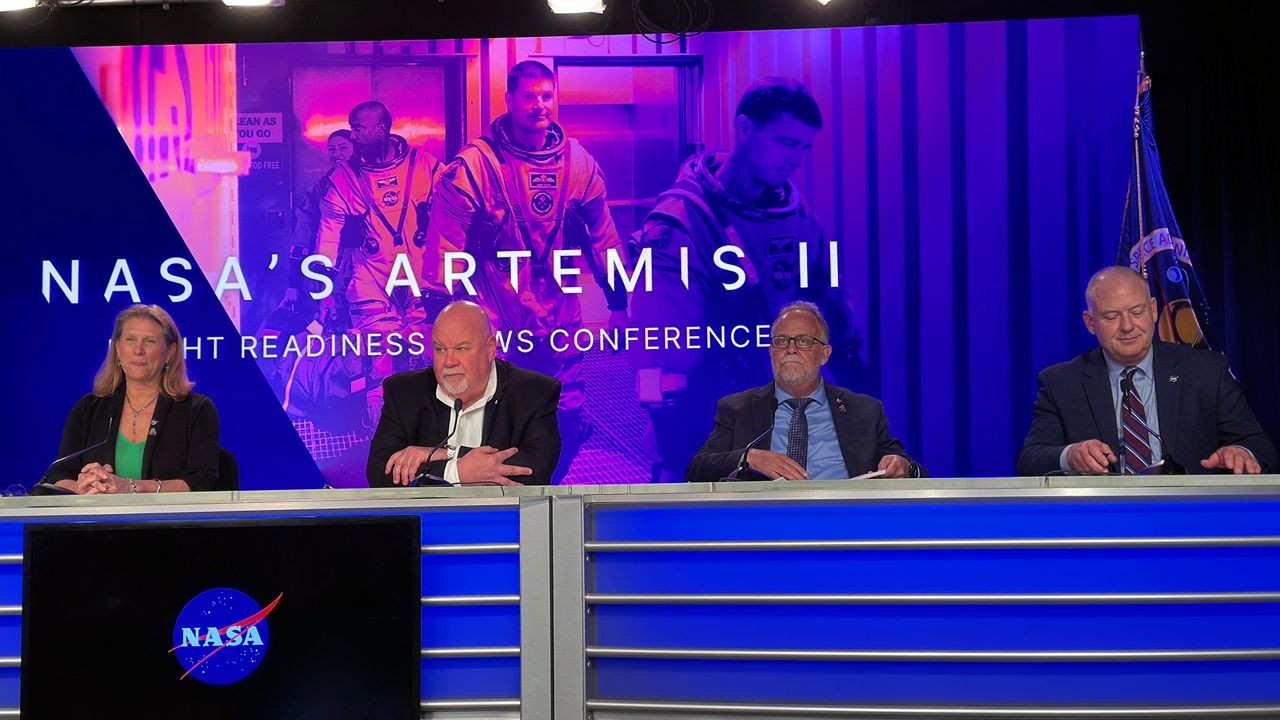
NASA added April 1 (6:24 p.m. ET) and April 2 (7:22 p.m. ET) as new Artemis II launch attempts after repairs to a faulty quick-disconnect seal that caused a helium flow leak. The SLS rocket and Orion capsule will roll back to Launch Pad 39B on March 19; technicians also replaced/charged multiple flight and termination batteries and concluded there is no need for a third wet dress rehearsal. The four-person crew (Cmdr. Gregory Reid Wiseman, Victor Glover, Christina Koch, Jeremy Hansen) will undertake an approximately 10-day lunar flyby; the program has been delayed twice due to prior leaks and testing issues.
Late-stage hardware failures in human-rated launch programs amplify value for large, vertically integrated aerospace primes while compressing optionality for niche vendors. Primes lock in multi-year revenue streams and can amortize schedule slips across backlog, turning near-term schedule risk into balance-sheet visibility; smaller suppliers face concentrated cashflow and renegotiation risk if late integration items drive repeated pad work. Insurance and reinsurance markets will likely reprice policies for crewed missions incrementally higher, benefiting established brokers and reinsurers that can scale capacity and underwriting expertise.
Key catalysts that will move markets are deterministic: (1) another discovery forcing a multi-week rollback — sharp negative for small suppliers with milestone payments; (2) Congressional oversight or budget language tightening program cashflow — medium-term political risk; (3) certification milestones clearing — triggers for positive re-rating of primes. Timescales matter: day-to-week operational disruptions mostly alter quarterly revenue timing; multi-month slips reallocates cash recognition across fiscal years and can convert moderate margin tailwinds into visible cost inflation for fixed-price elements.
Consensus underestimates the asymmetric optionality embedded in prime contractors’ integration footprint. The market tends to punish any slip as program risk, but once flight-proven, primes typically capture follow-on work and aftermarket services that drive outsized free cash flow over 3–5 years. Tactical investors can exploit this by favoring scaled, diversified defense/aerospace exposures while shorting execution-levered small-cap launch contractors whose valuations assume near-perfect cadence and manifest growth.
AI-powered research, real-time alerts, and portfolio analytics for institutional investors.
Request DemoOverall Sentiment
neutral
Sentiment Score
0.00
