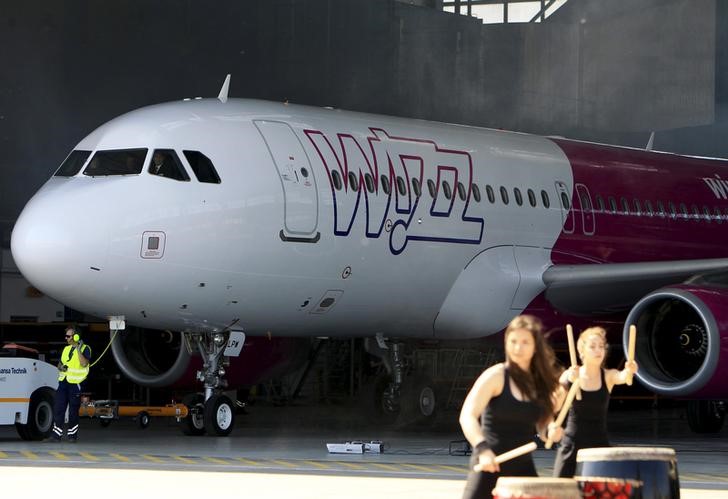
Wizz Air reported annual operating profit of €139.7 million, well above the €88.5 million analyst forecast, though still down 16.6% year over year. Revenue rose 8% to €5.7 billion and EBITDA increased 16.2% to €1.32 billion, but the company declined to issue fiscal 2027 guidance due to limited visibility from the Middle East conflict. The profit beat is supportive for the stock, but geopolitical disruption and rising ex-fuel costs temper the outlook.
The market is likely underestimating how much of this beat was driven by portfolio quality rather than just cost discipline. A higher mix of shorter-haul capacity and strong ancillary conversion usually signals better resilience in a weaker macro tape, but it also means the earnings base is more sensitive to route economics if fuel or fees re-accelerate. The bigger takeaway is that management is effectively choosing optionality over visibility: withholding guidance is not just caution, it is a signal that capacity deployment decisions over the next 1-2 quarters may be repriced quickly around geopolitical headlines.
Second-order winners are the carriers with cleaner balance sheets and less exposure to the most disrupted corridors, because capacity should migrate toward the remaining unconstrained routes. That favors network airlines with stronger pricing power on intra-Europe business travel and hurts ultra-low-cost peers that compete primarily on fare, since any industry capacity pullback tends to support yields for the whole group before it shows up in reported numbers. The supply-chain angle is less about airplanes and more about labor and maintenance: if conflict-driven disruptions persist, crew utilization and aircraft rotation efficiency become the true bottlenecks, widening the gap between operators with flexible fleets and those with rigid scheduling.
The main risk is not a one-quarter miss; it is a regime shift in fuel, insurance, and overflight costs that compresses margins with a lag. If Middle East risk escalates further, the market may initially reward the carriers most exposed to yield support, only to reverse once demand elasticity kicks in and consumers trade down or defer travel over a 2-3 month horizon. Consensus is likely too focused on the near-term profit surprise and not enough on how quickly cost inflation can outrun pricing when airlines are forced to absorb route disruption rather than pass it through.
From a positioning standpoint, this is a better relative-value than outright beta trade: the cleanest expression is long quality European travel operators versus short the weakest low-cost names, because dispersion should widen as investors reward visibility and penalize guidance scarcity. The optionality in Wizz’s setup argues for owning downside protection, not chasing momentum; if geopolitical risk eases, implied volatility should collapse and airline multiples can re-rate higher, but if it worsens, margin estimates will likely come down faster than consensus expects. In that sense, the right trade is to own the strongest balance sheets and avoid the most operationally fragile growth stories.
AI-powered research, real-time alerts, and portfolio analytics for institutional investors.
Request DemoOverall Sentiment
mildly positive
Sentiment Score
0.42
