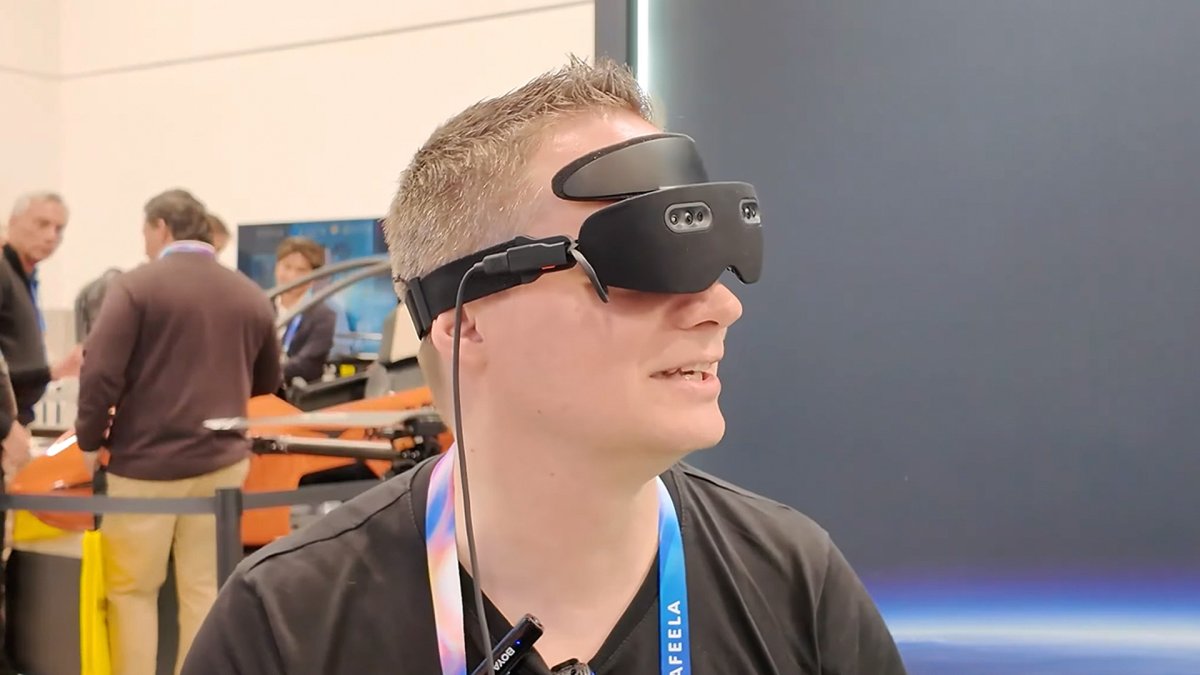
Goertek showcased a mass-producible reference VR headset design at CES 2026 that weighs roughly 100 grams and integrates two 4K OLED microdisplays with pancake lenses, 100° FOV, passthrough and spatial tracking but relies on an external PC for processing. Pimax has pre-orders for its Dream Air line with sub-200g variants and deliveries starting at month-end, while Play for Dream showed a sub-100g prototype with production slated for end-2026; several vendors are adopting split architectures that outsource compute and battery to wired pocket computers. The advances in micro-OLED panels and pancake optics signal a shift toward much lighter, mass-manufacturable PC/standalone hybrid headsets, which should benefit component manufacturers and contract assemblers but may trade off user mobility and comfort.
Market structure: The immediate winners are contract manufacturers and component suppliers (Goertek, micro‑OLED and pancake‑lens makers) that enable sub‑200g designs, and platform owners that can leverage tethered “pocket‑compute” architectures (META, select Chinese OEMs like Pico/Pimax). Losers are premium, heavy standalone devices (Apple Vision Pro style) whose value proposition may be downgraded for mass adoption; expect mid‑cycle pricing pressure and a potential 3–7% share shift from premium to mid‑tier XR within 12–18 months. Supply/demand: component consolidation (micro‑OLED replacing LCD) will tighten supply early in 2026 then broaden as fabs scale, implying cyclical supply squeezes and 10–30% component price normalization over 6–12 months. Risk assessment: Tail risks include US export controls on advanced optics/semiconductors or IP injunctions that could halt Chinese contract manufacturers — a low‑probability but high‑impact event that could wipe 20–40% off expected volume in 2026. Immediate (days)=PR and sentiment spikes; short (weeks–months)=pre‑orders and initial shipments (Pimax end‑month); long (12–36 months)=consumer adoption and software ecosystem maturation. Hidden dependency: success hinges on pocket‑compute SoCs (Qualcomm/Apple silicon) and battery/cooling tradeoffs; catalyst watchlist: Meta/Pico product launches, component price declines of >20% and any sanctions in next 90 days. Trade implications: Direct: establish a 2–3% long in META via a 6‑month call spread 15–35% OTM to capture near‑term share gains while capping cost; reduce AAPL exposure by 1–2% (rotate to cash or buy protective 3‑month puts if >2% portfolio). Pair trade: long META equal‑dollar, short AAPL short‑delta (target 6–12 month horizon) to express premium share erosion; small 1–2% tactical long in SONY for diversification into console/AR content. Options: sell covered calls on newly acquired META to harvest premium if positive catalysts miss; consider buying 12–18 month LEAPs on key suppliers on material cost declines. Contrarian angles: Consensus underestimates user acceptance of tethered/pocket‑compute tradeoffs — lighter units may spur unit volumes but compress ARPU and per‑device service revenue; the market may be underpricing Meta’s ecosystem leverage and overpricing Apple’s short‑term XR moat. Historical parallel: early smartphone camera consolidation where cheaper, lighter devices drove massive volume despite lower margins; unintended consequence is faster commoditization that could shave 200–400 bps gross margin from incumbents over 18–24 months if software monetization lags.
AI-powered research, real-time alerts, and portfolio analytics for institutional investors.
Request DemoOverall Sentiment
mildly positive
Sentiment Score
0.25
Ticker Sentiment
