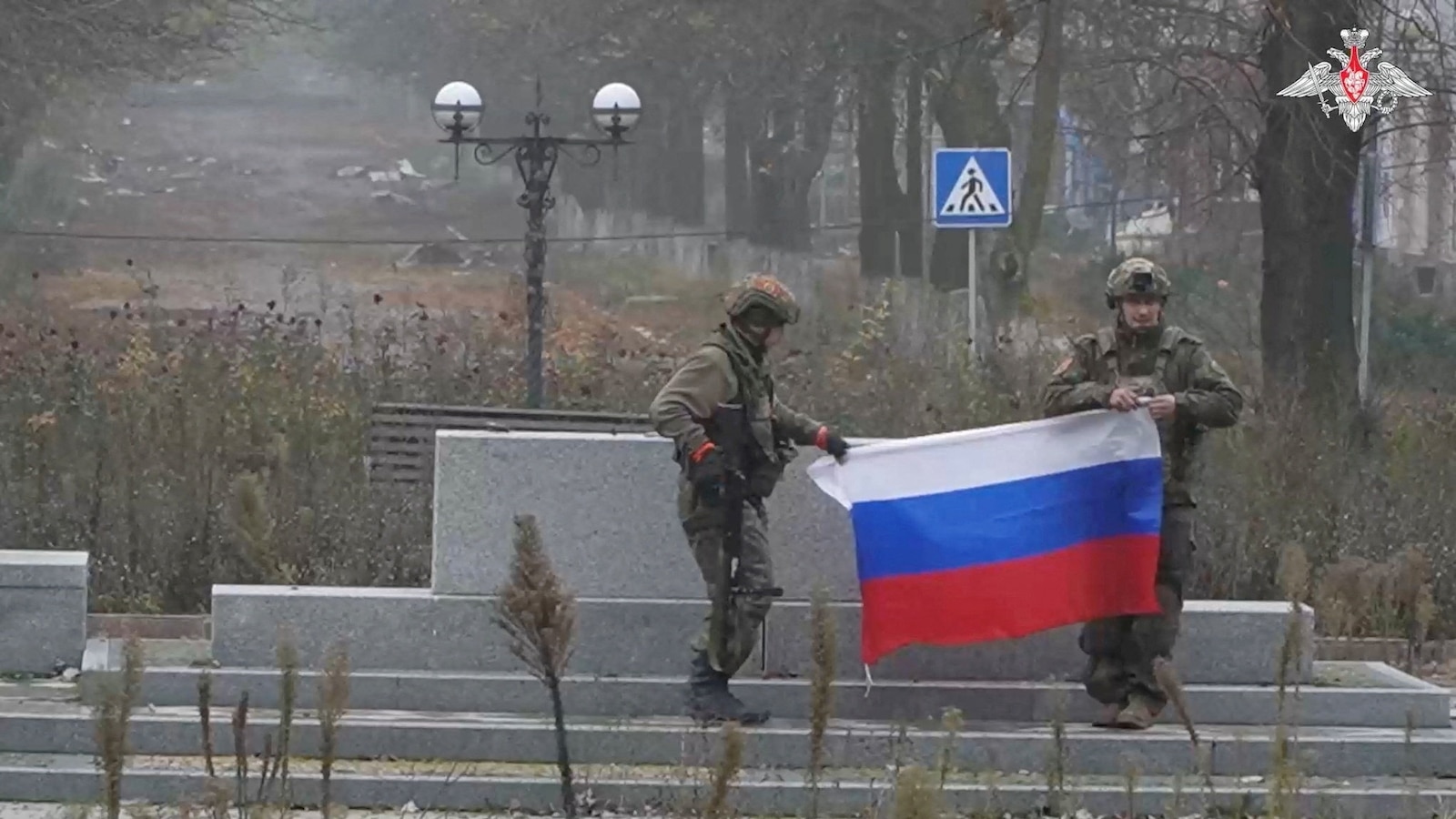
NATO Military Committee chair Adm. Giuseppe Cavo Dragone warned that Russia is sustaining massive casualties—citing roughly 35,000 casualties in November–December and "thousands" lost per kilometer—while still making limited territorial gains along a roughly 750‑mile line of contact. He said Russia could reconstitute pre‑war capabilities within three to five years, may aim to field up to 150% of its pre‑invasion force, and is keeping a war‑focused economy (he estimated more than 40% of the national budget directed to the war), all while testing NATO with hybrid operations and periodic nuclear rhetoric, prolonging geopolitical and defense risks for markets.
Market structure: Prolonged attritional fighting and NATO statements point to sustained increases in Western defense budgets and urgent demand for munitions, ISR, air defenses and cyber for 3–5+ years. Winners: large primes (RTX, LMT, NOC, GD), specialty munitions (OLN, RHM.DE) and cybersecurity vendors (PANW, CRWD); losers: Russian exporters, European utilities exposed to gas cuts, and short-duration cyclicals. Pricing power will shift to suppliers with qualified production lines and export licenses; expect 10–30% price uplift in tactical munitions and steady contract margins for primes over baseline fiscal cycles.
Risk assessment: Tail risks include nuclear escalation (low prob, extreme shock), EU energy embargoes/secondary sanctions triggering >20% spikes in European gas/commodity prices, and major cyberattacks on Western infrastructure. Time horizons: immediate (0–3 months) — volatility, safe-haven flows and oil/gas jumps; short (3–12 months) — award/timing of defense contracts and LNG supply; long (3–5 years) — structural budget increases and Russian reconstitution. Hidden dependencies: procurement lead-times (6–24 months), chip/rare-earth bottlenecks for modern systems and political timing of appropriations are first-order constraints.
Trade implications: Direct tactical trades — overweight US defense (XAR or ITA) and select names RTX, LMT via 6–12 month call spreads, add cyber exposure (PANW, CRWD) and energy majors (XOM, CVX) for commodity tail-risk. Use relative-value trades: long XAR vs short XLI to capture defense budget re-rating; buy 3–9 month call spreads on XLE or WTI calls if Brent/WTI closes >$85 for 3 consecutive sessions. Position sizing: keep concentrated allocations small (1–4% per idea), use option structures to limit capital at risk and set profit targets of 20–40% and stop-losses of 10–15%.
contrarian angles: The market underprices small/mid-cap munitions and ammunition (e.g., OLN, AVD) which can see revenue jumps within 6–12 months vs consensus focus on primes; conversely gold/generic safe-haven trades may be overbought and can mean-revert if liquidity is injected. Historical parallels: post-1999 NATO expansion and post-2014 re-armament cycles led to multi-year outperformance of defense and materials. Unintended consequences: accelerated investment in autonomous systems and semiconductors for defense creates upstream winners (NVDA, AVGO) but also supply bottlenecks that can cap defense delivery timing.
AI-powered research, real-time alerts, and portfolio analytics for institutional investors.
Request TrialOverall Sentiment
moderately negative
Sentiment Score
-0.50
