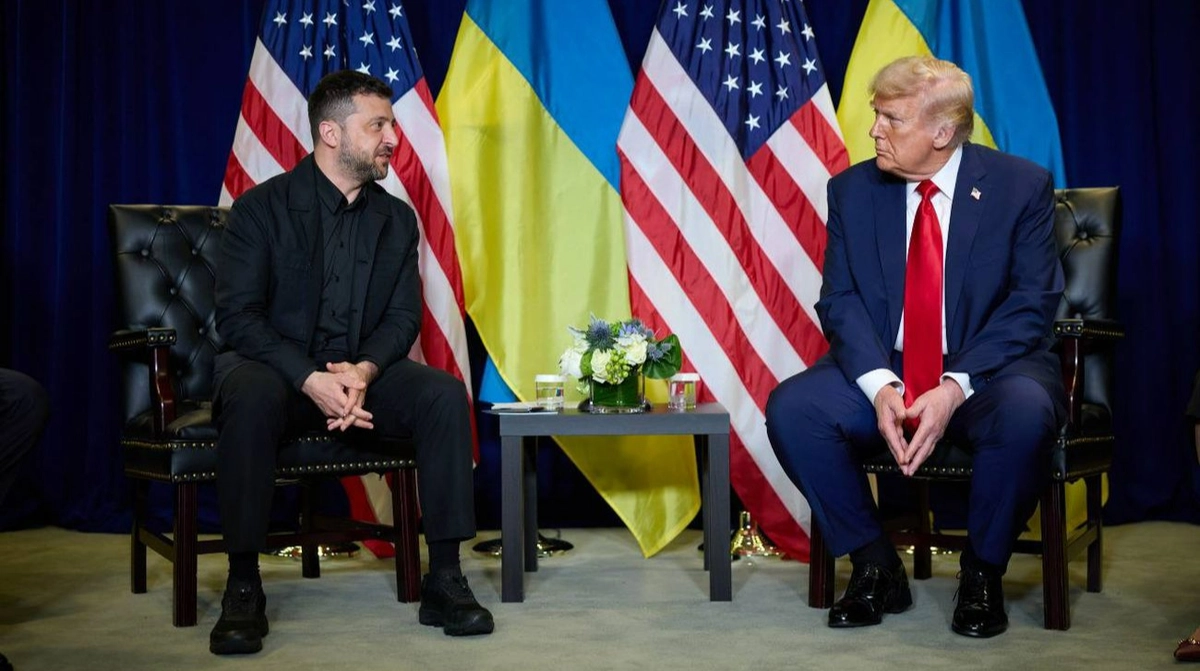
Trump stated on 13 March that the US does not need Ukraine's help to intercept Iranian drones; Zelenskyy responded in Paris that "rhetoric is rhetoric" and emphasized Ukraine knows what it is doing. Zelenskyy thanked the US for continued weapons procurement via the PURL programme, citing purchases that include HIMARS and Patriot air‑defence missiles. Separately, US Army Secretary Dan Driscoll said the Army has sent 10,000 Merops interceptor drones to the Middle East.
The immediate market implication is not a binary US vs Ukraine story but a procurement choreography shift: validation of Ukraine-tested tactical interceptor concepts accelerates demand for mass-producible, low-cost counter-UAS systems across multiple theaters. Expect a two-stage revenue effect — near-term (3–12 months) aftermarket and logistics revenue from spare parts and integration work, followed by 12–36 month production ramps as primes and selected mid-caps scale manufacturing lines.
Second-order supply-chain winners are component and subsystems suppliers (RF front-ends, MEMS IMUs, EO/IR sensors, and power-dense battery suppliers) rather than flagship platform integrators alone. These components are capacity-constrained and semiconductor-sensitive; a sustained procurement push would shift margin capture down the stack toward nimble manufacturers and EMS partners, creating a durable aftermarket revenue pool that compounds annually.
Key risk vectors: a geopolitical de-escalation in the Middle East, rapid reprioritization of US stockpiles, or a change in US funding flows post-election could unwind the procurement acceleration within weeks to months. Conversely, an escalation or demonstrable success of cheap interceptors in theatre could trigger export orders from allied governments, crystallizing upside over 6–24 months.
Consensus blind spot: investors are focused on big-ticket Patriots/HIMARS line items, underweighting the commercial-scale economics of interceptor drones and component suppliers. Political rhetoric that appears to downplay Ukraine’s role actually increases domestic procurement inertia — a subtle cue that domestic primes and validated exporters (those with Ukrainian combat-proven pedigree) will capture incremental, multi-year revenue streams that the market currently underprices.
AI-powered research, real-time alerts, and portfolio analytics for institutional investors.
Request DemoOverall Sentiment
neutral
Sentiment Score
0.00
