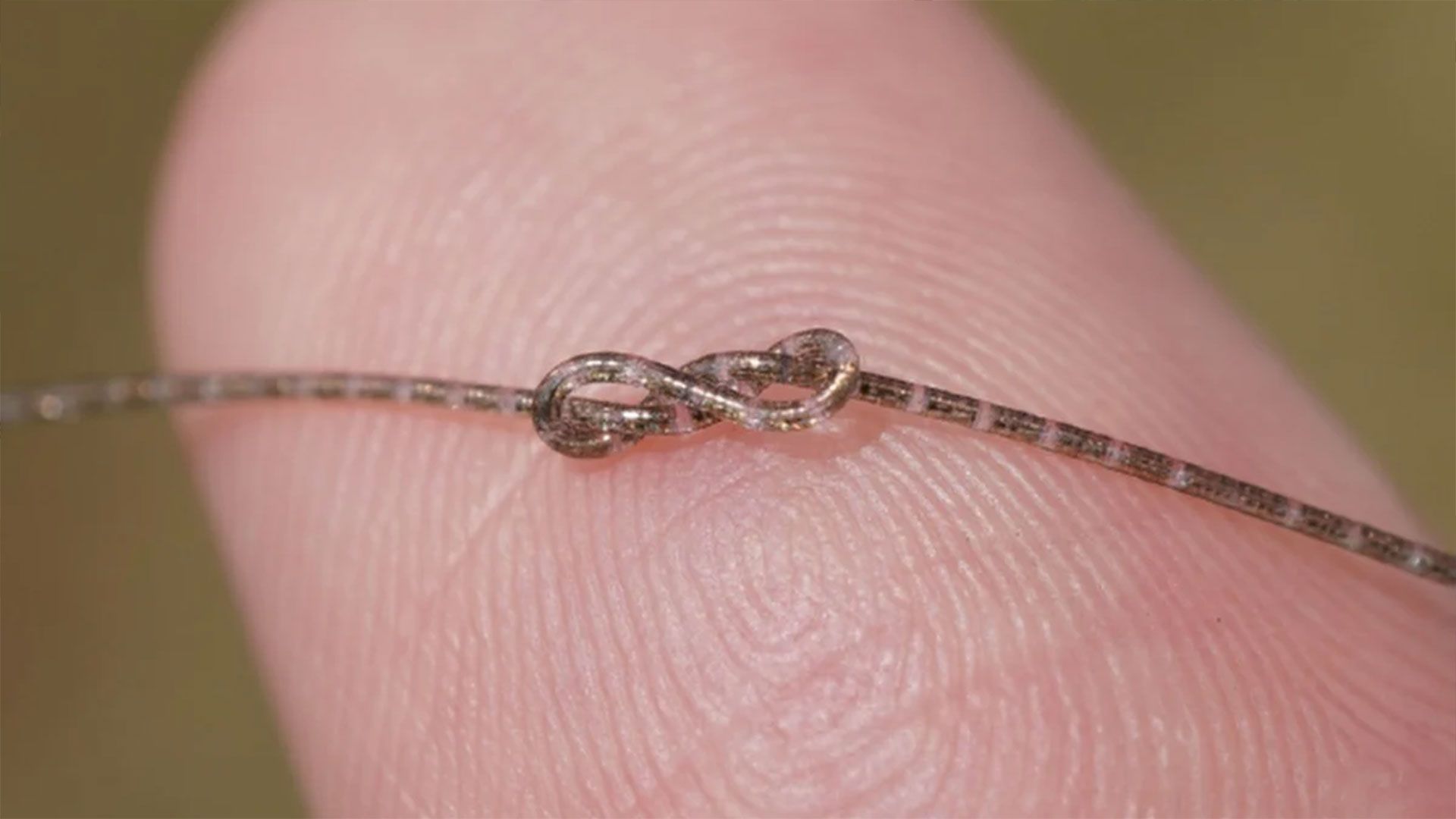
Fudan University researchers have developed a multilayered Fiber Integrated Circuit (FIC) roughly 50 μm in diameter that they report can integrate about 100,000 transistors per centimeter (≈10 million per meter), perform in-fiber digital/analog and neural-style computing, and endure 10,000 bending/abrasion cycles, 30% stretch, severe twisting and even a reported 15.6-ton crushing test. The team claims a viable mass-production method and positions the technology for applications from brain–computer interfaces to VR gloves and smart textiles; commercialization would be material for wearable and medical-device supply chains but remains speculative pending independent validation and real-world manufacturing scale-up.
Winners are specialty materials and roll-to-roll manufacturing suppliers, medical-device and wearable OEMs, and XR/BCI integrators that can adopt centimeter-scale transistor fibers; losers are niche suppliers of rigid-packaged sensors and low-margin component intermediaries. Competitive dynamics will be gradual — this is a potential new product layer, not an immediate replacement for high-performance CPUs — so pricing power will accrue to firms that control manufacturing scale, yields and IP, not to commodity silicon makers. Cross-asset effects: expect modest relative tightening in credit spreads for Chinese advanced-manufacturing names if scale is proven (basis points, not hundreds), selective upside for materials equities (DuPont-like names) and minimal near-term Treasury impact; specialty chemicals and polymer feedstocks could see 5–15% demand growth in a multi-year adoption scenario.
Tail risks include technical non-reproducibility, exaggerated academic claims, and geopolitical export controls that could ban commercialization outside China; a single negative replication result or U.S./EU sanctions would be high-impact. Time horizons: days — no market reaction; weeks–months — venture funding and small-cap repricing around partnerships or pilot lines; 1–5 years — potential product-market fit in medical implants, VR gloves and smart textiles if yields >80% and costs fall to <$1 per meter equivalent. Hidden dependencies: thermal management, interconnects, test/repair economics, and standards for wearable integration that could delay commercialization by 24–48 months. Key catalysts: industrial partnerships, pilot fabs, published yield curves, and cross-licensing deals.
Trade implications: establish small, tactical positions — use LEAPS and pair trades to express asymmetric upside while limiting downside. Favor 1–2% notional long in META via 12–18 month call spreads to play XR device acceleration and 0.5–1% long in DuPont (DD) for materials exposure; consider a 0.5% long in AMAT versus 0.5% short INTC as a relative-value play over 6–18 months if AMAT signals tooling demand for non-wafers. Use options: buy-calendar spreads on small-cap med-tech names with upcoming investor days to capture positive adoption signals and sell implied vol for large-cap semis if you expect muted near-term impact.
Contrarian view: the market will likely overstate threat to mainstream CPU makers and understate the multi-year, capital-intensive nature of scaling FICs — history (flexible OLED, printed photovoltaics) shows 3–7 year commercialization lags with heavy attrition. Current enthusiasm is underestimating integration costs (packaging, testing, certification) that can compress margins for first movers; conversely, beaten-down suppliers of specialty polymers may be underpriced if FIC pilots succeed. Unintended consequences include fragmentation of supply chains, making single-source fab partnerships politically sensitive and creating arbitrage opportunities in niche suppliers over 12–36 months.
AI-powered research, real-time alerts, and portfolio analytics for institutional investors.
Request DemoOverall Sentiment
mildly positive
Sentiment Score
0.30
Ticker Sentiment
