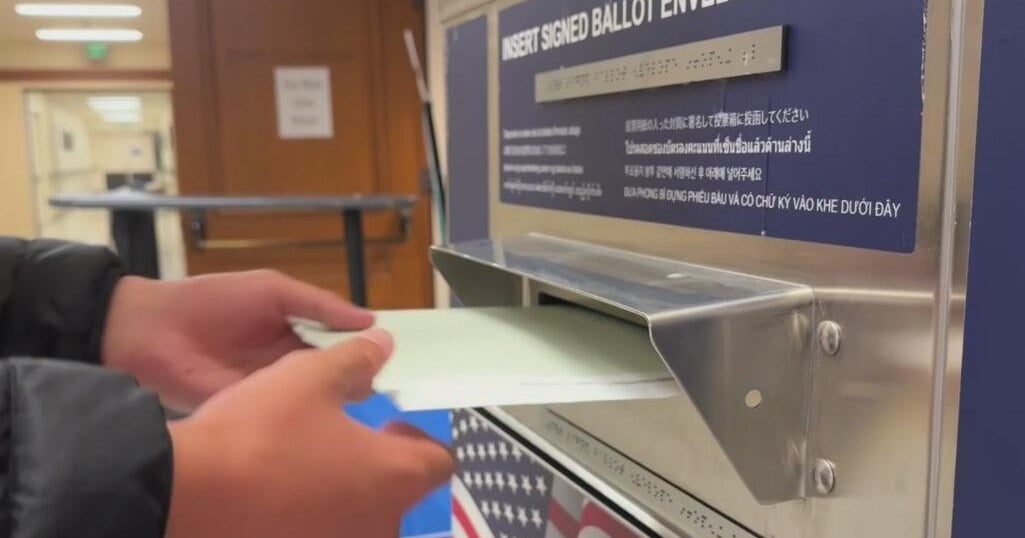
California's June 2 primary is approaching with early turnout at 14.5% statewide and 17% in San Francisco, where about 90,000 ballots have been returned. The article highlights voter concern over a crowded governor's race with more than 60 candidates, plus some younger voters using AI tools to help choose candidates and ballot measures. This is routine election coverage with little direct market impact.
The market implication here is not the election itself, but the probability of a low-information, low-turnout outcome in a state where ballot completion is increasingly passive. That tends to amplify name recognition, late momentum, and ballot-order effects, which is a net advantage for incumbents and any candidate with existing donor/institutional infrastructure. For policy-sensitive sectors, the bigger issue is that a crowded field dilutes the odds of a clean mandate, increasing the probability of a fractured governing coalition and slower execution on housing supply reforms.
The second-order trade is in California housing and municipal-linked exposure. If the eventual winner lacks a clear housing platform, the state is more likely to remain in a status quo stance on permitting, labor constraints, and local zoning vetoes, which is mildly positive for incumbent residential REITs and homebuilders with limited California dependency, but negative for land banks and entitlement-sensitive developers. The AI angle is more incremental: voter-assist tools are a distribution win for consumer-facing AI applications, but the monetization signal is weak; this is more about adoption breadth than near-term revenue.
The contrarian point is that a crowded ballot does not necessarily depress participation further if it reduces the perceived cost of voting by encouraging heuristic decision-making and same-day registration. That means the near-term turnout surprise risk is asymmetric to the upside, especially if media coverage converts the race into a binary identity contest. The real catalyst window is the next 24-72 hours: if turnout accelerates, the market should expect a stronger showing from better-organized campaigns rather than a broad policy reset, which lowers the odds of a tradable regime shift but raises the odds of idiosyncratic polling surprises.
AI-powered research, real-time alerts, and portfolio analytics for institutional investors.
Request TrialOverall Sentiment
neutral
Sentiment Score
0.00
