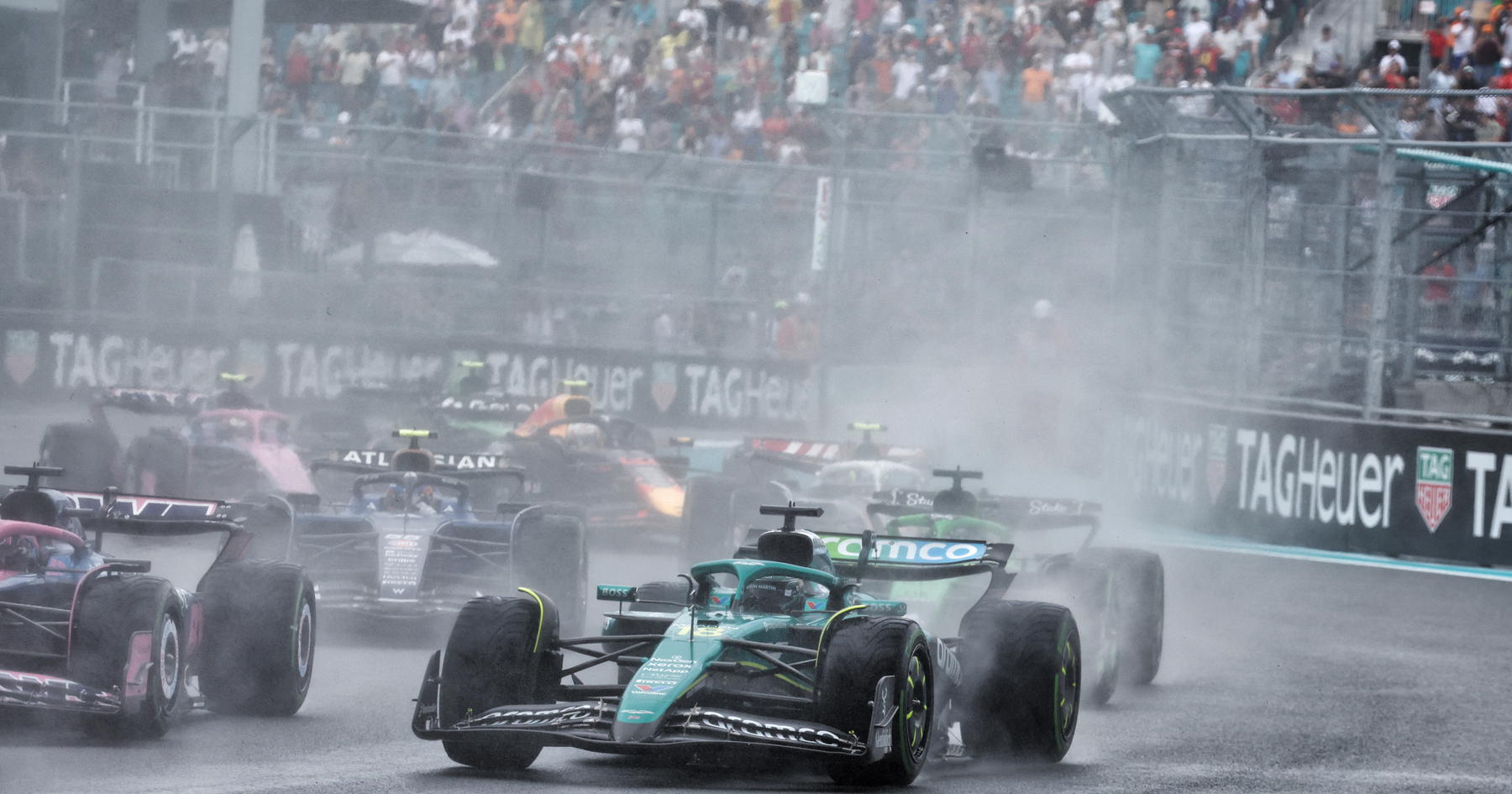
Heavy rain, thunderstorms, lightning, and hail are forecast for Miami Grand Prix race day, prompting organizers to move the start time forward by three hours to 13:00 local time. The key risk is whether weather disruption will allow the race to be completed as scheduled. The update is event-specific and largely operational, with limited broader market impact.
Weather risk here is less about one race and more about the market signaling around event-day execution risk across live sports and destination travel. The immediate winners are the most flexible operators: local ride-hailing, last-minute hospitality, and broadcasters that can monetize volatility through extended pre-race coverage, while the losers are businesses with fixed staffing and inventory assumptions tied to a narrow attendance window. A shortened or disrupted event also tends to shift spend away from premium on-site concessions toward adjacent indoor venues and short-notice room nights, which benefits the broader hotel ecosystem more than the venue itself.
The second-order effect is operational, not just economic: thunderstorms create a high-friction environment where delay probability compounds with safety protocols, traffic snarls, and cancellation cascades. Even if the race completes, the real margin pressure shows up in incremental overtime, security, transportation rerouting, and refund liabilities, which can outstrip the direct revenue impact from a single session. That makes this a short-duration but high-variance catalyst for any travel/leisure or logistics exposure tied to South Florida demand elasticity.
Consensus likely underweights how quickly weather risk can invert into pricing power for nearby suppliers while damaging the venue’s premium-experience economics. If attendance or premium hospitality utilization drops, the market may overreact on the headline and miss that spend often gets reallocated rather than destroyed over a 24-48 hour window. The bigger medium-term question is whether repeated weather disruptions force event planners and sponsors to demand more contractual protection, which would slowly compress margins for live-event operators and increase the value of more diversified entertainment platforms.
AI-powered research, real-time alerts, and portfolio analytics for institutional investors.
Request DemoOverall Sentiment
neutral
Sentiment Score
-0.10
