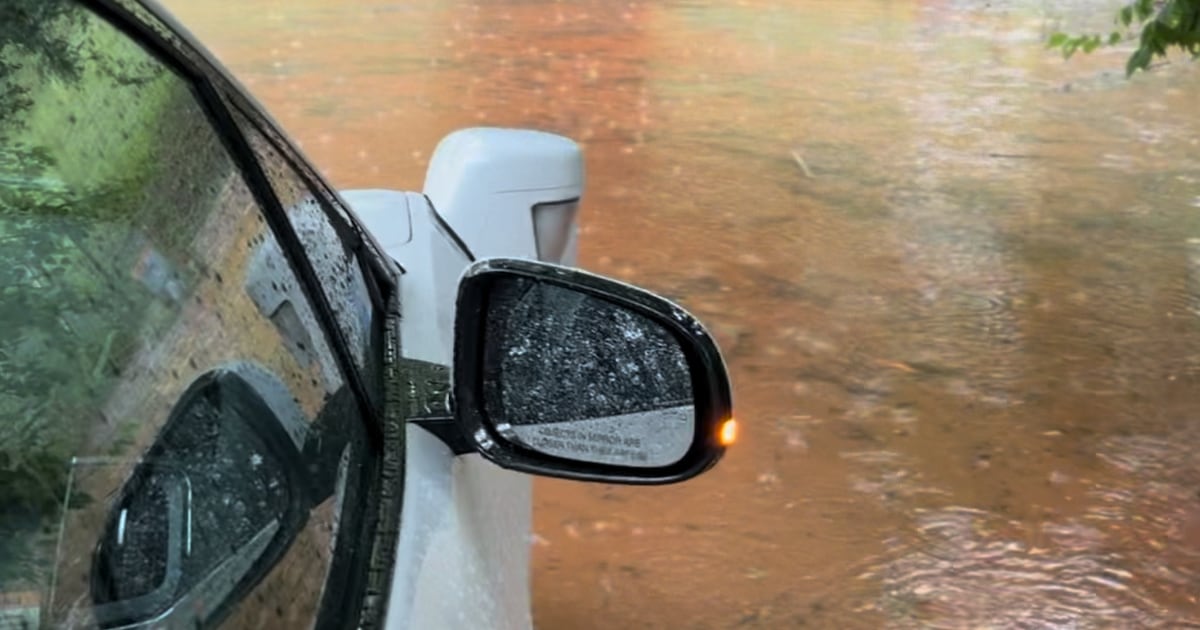
Waymo paused Atlanta operations after several driverless taxis became stranded in flash-flooded roadways, including one carrying a journalist. The company said it is using the incident to refine weather-response software and safety monitoring, but the event highlights a near-term operational weakness rather than a broader business disruption. Market impact should be limited, though it may modestly pressure perceptions of autonomous-vehicle reliability.
This is a reminder that autonomous fleets still have a very narrow operating envelope when the failure mode is fast-changing surface water rather than a stable obstacle. The immediate loser is not just the robotaxi operator’s utilization rate; it is the “availability premium” narrative that supports premium fleet valuations, because incidents like this compress public tolerance for edge-case autonomy and can force more conservative geofencing and weather-triggered shutdowns. That usually lowers short-term incident rates, but it also slows gross bookings growth and raises per-mile fixed costs by pushing more trips back to human-driven networks.
The second-order effect is potentially positive for incumbent ride-hail platforms that can dynamically route demand across multiple supply types. If autonomous fleets become more weather-constrained, dispatch systems with larger human-driver backstops gain share precisely when demand is most operationally stressful. That is a subtle competitive advantage for the scaled marketplace model versus a pure autonomy-first deployment model, because the latter has worse tail-risk economics in low-frequency, high-disruption conditions.
The key catalyst window is the next 1-2 weeks, not months: investor reaction should be driven by whether the operator frames this as a one-off weather exception or expands the operating restrictions. If they respond by materially tightening weather policies, the near-term damage is to revenue throughput; if they do not, the tail-risk of another highly visible stuck-vehicle event remains elevated throughout storm season. The broader thesis only breaks if the company demonstrates reliable flood detection and faster remote triage, which would reduce the need for conservative shutdowns and preserve utilization.
Consensus may be overestimating the bearishness for the ride-hail ecosystem and underestimating the importance of weather resilience as a moat. The market often treats autonomy setbacks as binary failures, but the real issue is operational architecture: systems that can degrade gracefully in bad weather will compound share, while those that cannot will see their addressable market capped well before full autonomy arrives.
AI-powered research, real-time alerts, and portfolio analytics for institutional investors.
Request DemoOverall Sentiment
mildly negative
Sentiment Score
-0.18
Ticker Sentiment
