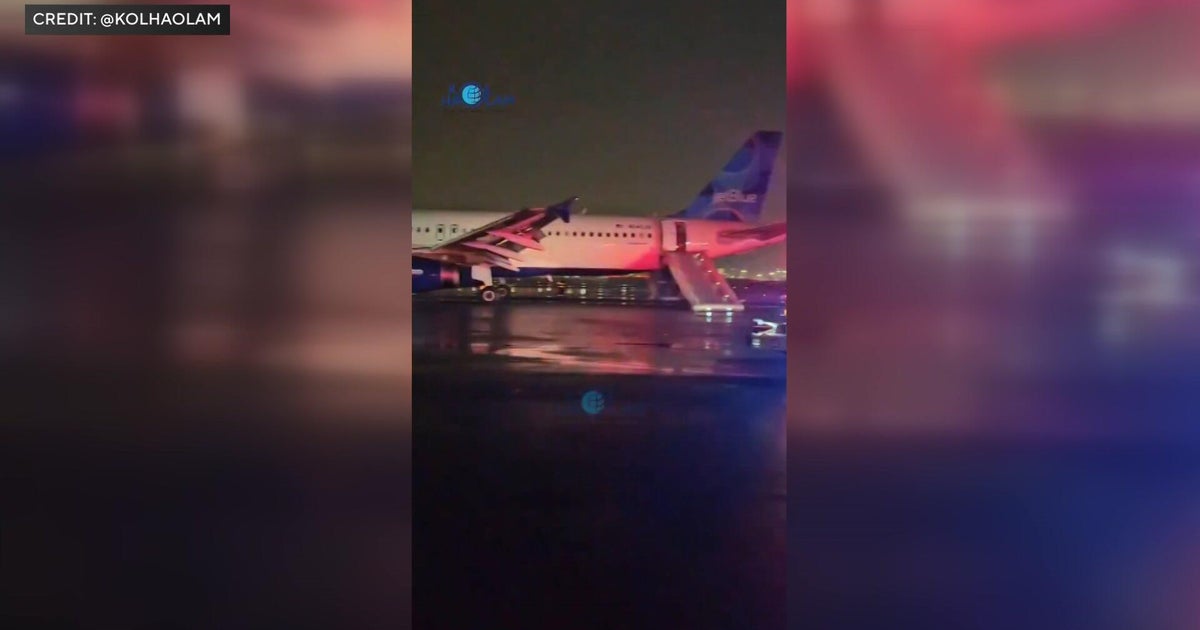
A JetBlue Airbus A320 (Flight 543) experienced an engine failure after takeoff from Newark Liberty International Airport, returned and evacuated 122 passengers via slides around 5:55 p.m.; one passenger was taken to a hospital with chest pains. The evacuation triggered an automatic ground stop and temporary suspension of arrivals while the aircraft was removed; Newark reopened and operations resumed around 7:00 p.m. The FAA has opened an investigation and JetBlue said it will cooperate, creating short-term operational disruption risk and potential regulatory scrutiny but no immediate material financial impact identified.
Market structure: This is an idiosyncratic operational disruption concentrated at EWR and a single A320/engine event; direct winners are MRO/aftermarket suppliers and spare-parts sellers, losers are the operating airline (JetBlue, JBLU) and near-term Newark throughput (minutes-to-hours of lost capacity). If investigators impose inspections/ADs affecting A320-class engines, expect a 0.5–3% U.S. capacity hit for affected types for 1–8 weeks, pressuring RASM slightly (~0.5–2%) for exposed carriers.
Risk assessment: Tail risk of a fleetwide grounding or broad AD is low-probability (estimate 1–5%) but high-impact: a 1–3% capacity reduction across major US carriers could depress industry quarterly EPS by 5–15%. Immediate effects (hours–days) are operational delays and localized reputational hits; short-term (30–90 days) brings inspections, spare-parts demand, and potential regulatory fines; long-term (quarters) could raise maintenance/OPEX by 1–3% if rules change.
Trade implications: Favor small, tactical hedges on airline exposure while taking selective longs in aftermarket plays. Relative-value: long aftermarket/MRO suppliers (HEI) vs short airline demand-sensitive plays (JETS ETF or weak carriers). Options: use 30–90 day puts to hedge event-volatility and 3–6 month call spreads on OEMs/engine-part suppliers to capture aftermarket upside if ADs follow.
Contrarian angles: Consensus will treat this as transitory; that understates aftermarket upside if even limited inspections occur. Historical parallels (localized evacuations vs. fleet ADs) show markets often over-penalize airlines initially and underprice component-repair orders; this creates a 4–12 week window to buy suppliers and hedge carriers before fundamentals fully reprice.
AI-powered research, real-time alerts, and portfolio analytics for institutional investors.
Request DemoOverall Sentiment
mildly negative
Sentiment Score
-0.25
