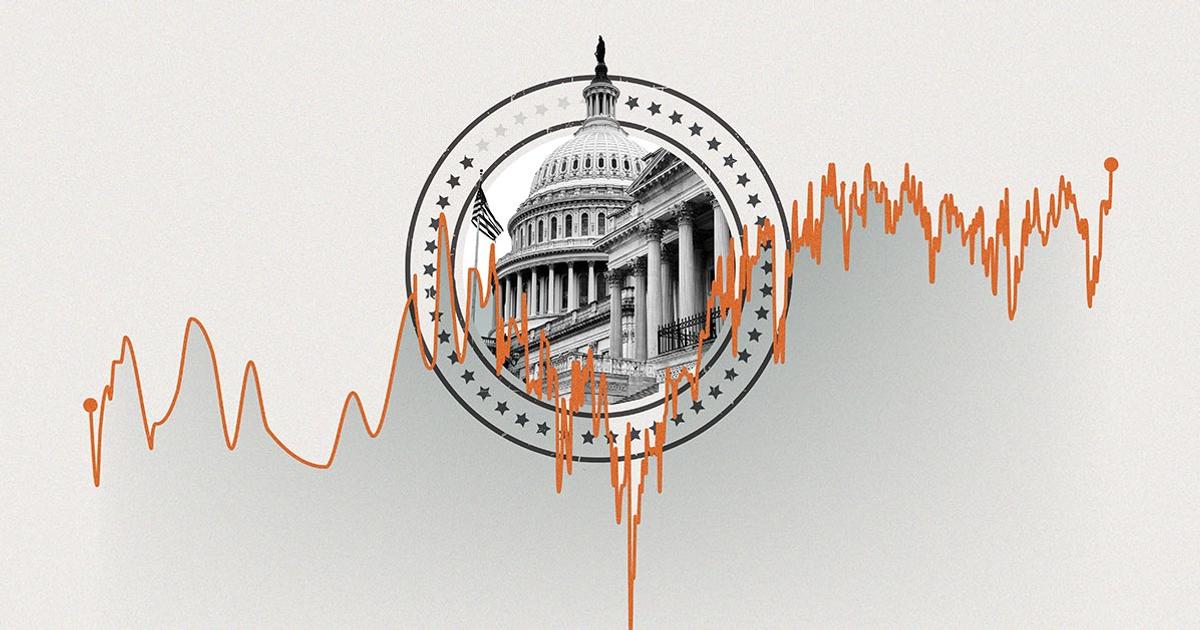
Americans’ approval of Congress has fallen to 10%, near the all-time low of 9%, while disapproval has risen to 86%, matching the record high. The decline is tied to the ongoing DHS shutdown, budget stalemates, the SAVE Act debate, Iran-related war powers tensions, high gas prices, and ethics scandals. The article is mostly political sentiment data, with limited direct market impact, though it reinforces a risk-off backdrop around fiscal and legislative dysfunction.
The immediate market read-through is not about Congress per se; it is about the growing odds of recurring governance friction becoming a persistent volatility premium. When institutional approval is this damaged, lawmakers have less latitude to negotiate cleanly on spending, debt-ceiling-style brinkmanship, or sector-specific policy, which means lower policy visibility for rate-sensitive and regulation-sensitive assets over the next 1-3 months. The second-order effect is that markets start pricing a higher probability of short shutdowns, temporary agency pauses, and headline-driven risk-off bursts even if the macro data remain stable.
The most actionable spillover is into defensives and cash-generative balance sheets. A dysfunctional fiscal backdrop tends to reward companies that are less dependent on Washington for demand, reimbursement, or permitting, while punishing groups with direct exposure to appropriations timing, federal procurement, or regulatory sign-off. That creates a cleaner relative-value setup than outright index shorts: the risk is not a deep bear market, but a narrower leadership regime where quality and self-help outperform while politically exposed cyclicals lag on every new headline.
The contrarian view is that sentiment is already so poor that additional deterioration in congressional approval may have limited incremental market impact unless it translates into a concrete funding deadline or war-powers escalation. In other words, the signal is strongest as a catalyst monitor, not a standalone macro factor. If the next 2-6 weeks bring a funding resolution or any bipartisan procedural progress, the market could quickly compress the governance risk premium, especially in small caps and domestic cyclicals that are most sensitive to Washington uncertainty.
AI-powered research, real-time alerts, and portfolio analytics for institutional investors.
Request DemoOverall Sentiment
moderately negative
Sentiment Score
-0.35
