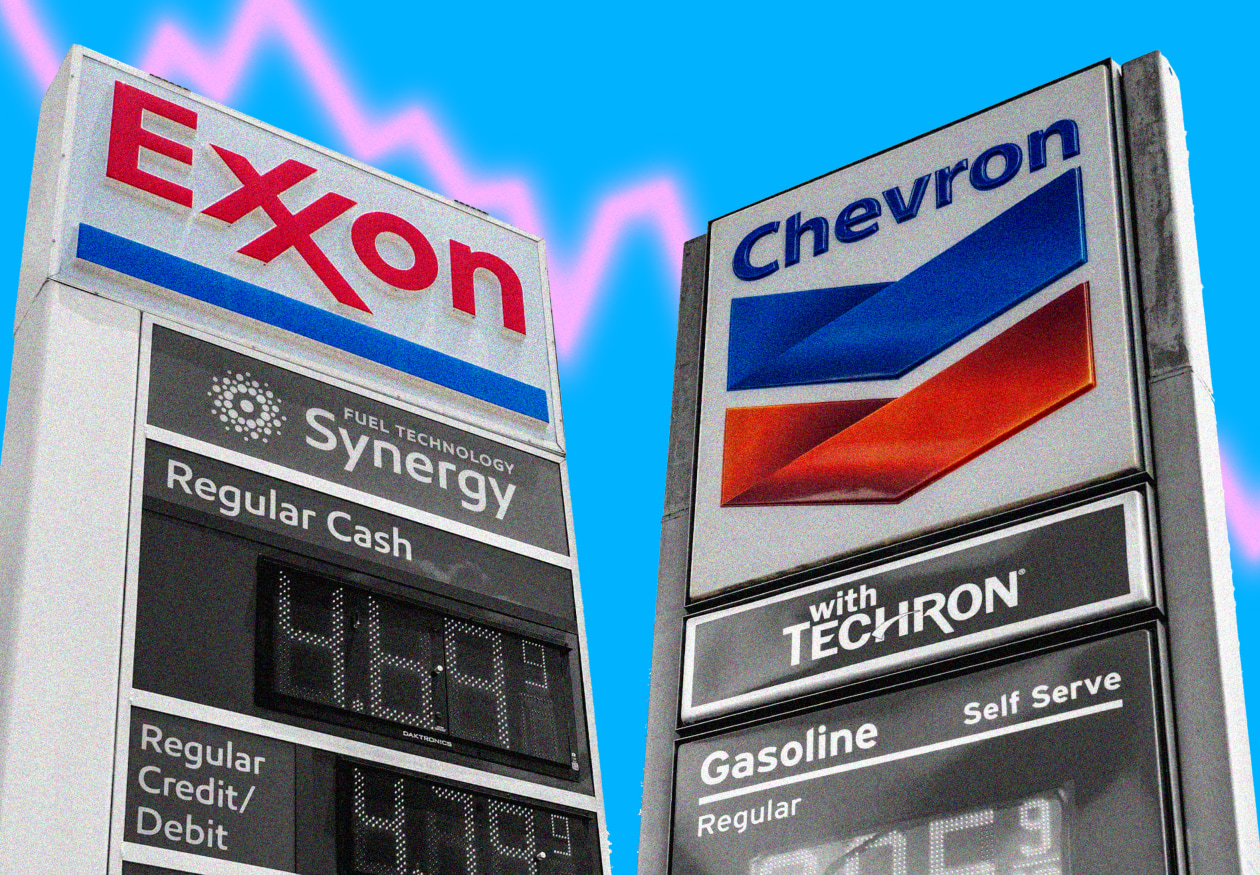
Exxon Mobil and Chevron said latest-quarter profits fell despite a spike in crude prices, as the Iran war disrupted operations and left barrels stuck in the Persian Gulf. Both companies warned that even after the Strait of Hormuz reopens, oil and gas flows could take months to normalize, delaying deliveries and pressuring sales. The conflict is creating sector-wide supply chain dislocations, but the article suggests limited immediate windfall for U.S. integrated oil majors.
The immediate read-through is not “higher oil prices equal higher XOM/CVX earnings,” but rather that physical disruption is temporarily impairing capture of price strength. When cargoes are delayed or trapped, the majors lose the quarter-specific monetization even if the upstream mark-to-market improves, so headline crude volatility can coexist with weaker reported profits. That creates a near-term disconnect between commodity beta and equity alpha: the market may bid the sector on geopolitics while the actual cash conversion lags by 1-2 reporting periods.
The second-order winner is anyone with less exposure to Gulf logistics and more optionality in unconstrained basins, storage, or trading. Independent producers with domestic takeaway and shorter cycle times should monetize sooner, while integrateds with larger shipping exposure see working-capital drag and inventory noise. Midstream names with Gulf-linked throughput are also at risk of temporary volume distortion, but the real vulnerability is in refiners and marketers that may face uneven crude sourcing without a clean pass-through to product prices.
The key risk is that the market extrapolates a supply shock that is real in price but delayed in cash flow; if the Strait reopens and flows normalize faster than expected, the geopolitical premium can unwind sharply before the operational backlog clears. Conversely, if disruptions persist for multiple months, the earnings revisions could arrive later but be larger, especially for firms with inventory sitting in transit and deferred sales recognition. The consensus may be underestimating duration: logistics recovery often takes longer than the headline ceasefire or reopening, but the equity market typically prices the headline, not the cleanup.
This sets up a tactical relative-value trade more than a clean directional long. XOM/CVX look vulnerable to underperform higher-beta upstream names until the backlog clears, but outright shorting is dangerous if crude keeps rallying on fresh disruption headlines. Best risk/reward is to own the commodity exposure through a vehicle with faster earnings transmission while fading the majors’ near-term operating leverage until there is evidence of normalized Gulf routing and inventory liquidation.
AI-powered research, real-time alerts, and portfolio analytics for institutional investors.
Request DemoOverall Sentiment
mildly negative
Sentiment Score
-0.25
Ticker Sentiment
