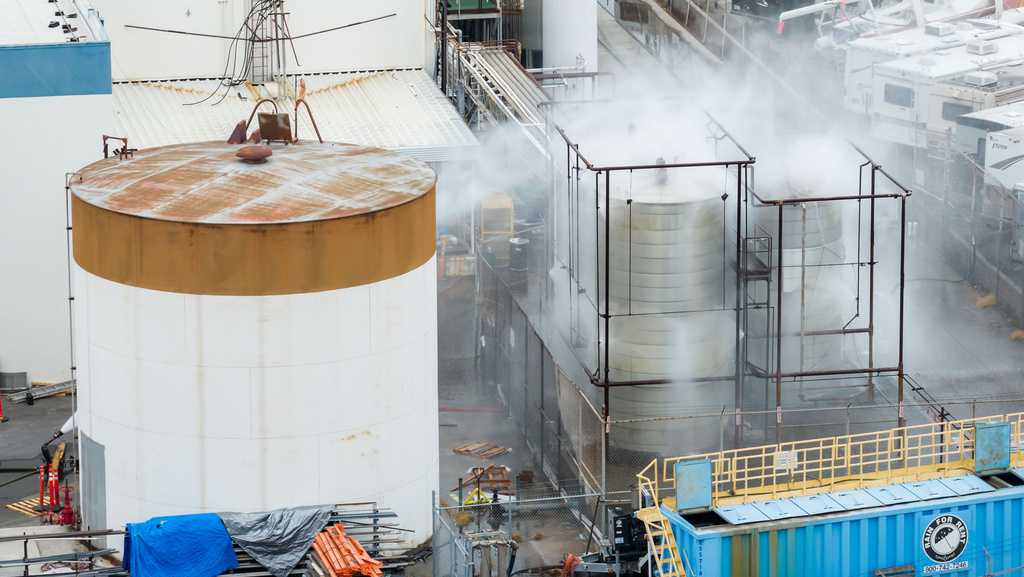
Officials lifted evacuation orders for 16,000 residents after a damaged chemical tank at GKN Aerospace Transparency Systems stabilized, ending a crisis that displaced 50,000 people in Orange County. The tank contained 6,000 to 7,000 gallons of methyl methacrylate, a highly flammable chemical, and authorities said they will monitor air, sewer and storm drains for months. The incident has triggered public backlash over plant safety, with residents and officials pressing for accountability and stricter regulation.
The immediate market read is not about the event itself but about regulatory friction reverting one notch higher for industrial facilities embedded in dense housing stock. That raises the option value of “license to operate” for companies with similar aboveground chemical storage exposure, while increasing the probability of delayed permitting, higher insurance premia, and forced capex on monitoring/containment over the next 6-18 months. In practice, the earnings hit is usually not from the incident clean-up; it comes from recurring compliance costs and the risk that local jurisdictions begin rejecting or restricting expansions. The second-order beneficiary is the inspection, environmental monitoring, and industrial safety stack. Firms selling detection, remediation, sensor, and emergency response services should see a modest but durable tailwind as municipalities and plant operators respond to heightened public scrutiny and new state-level inspection regimes. The losers are operators with small-margin, legacy facilities in urban corridors; their replacement cost burden rises faster than their pricing power, which can compress ROIC even if no contamination is found. From a trading standpoint, the key is that this is a slow-burn governance story rather than an acute liability event. The market often underprices the probability of follow-on enforcement once attention shifts, especially where there is a prior violations record, so the more durable move is in sentiment and cost of capital rather than direct damages. The main downside catalyst would be any later air/soil/sewer detection, which could turn a contained operational incident into a litigation and remediation overhang with a multi-quarter impact. Consensus likely underestimates how often local backlash translates into harder zoning and permit conditions after the headlines fade. That means the broader basket of industrials with chemical handling, depot storage, and defense/aerospace adjacent manufacturing may face multiple compression even if fundamentals are unaffected in the near term. The asymmetry is better expressed as a relative-value short against cleaner asset-light industrial names than as an outright short on the isolated operator.
AI-powered research, real-time alerts, and portfolio analytics for institutional investors.
Request DemoOverall Sentiment
moderately negative
Sentiment Score
-0.35
