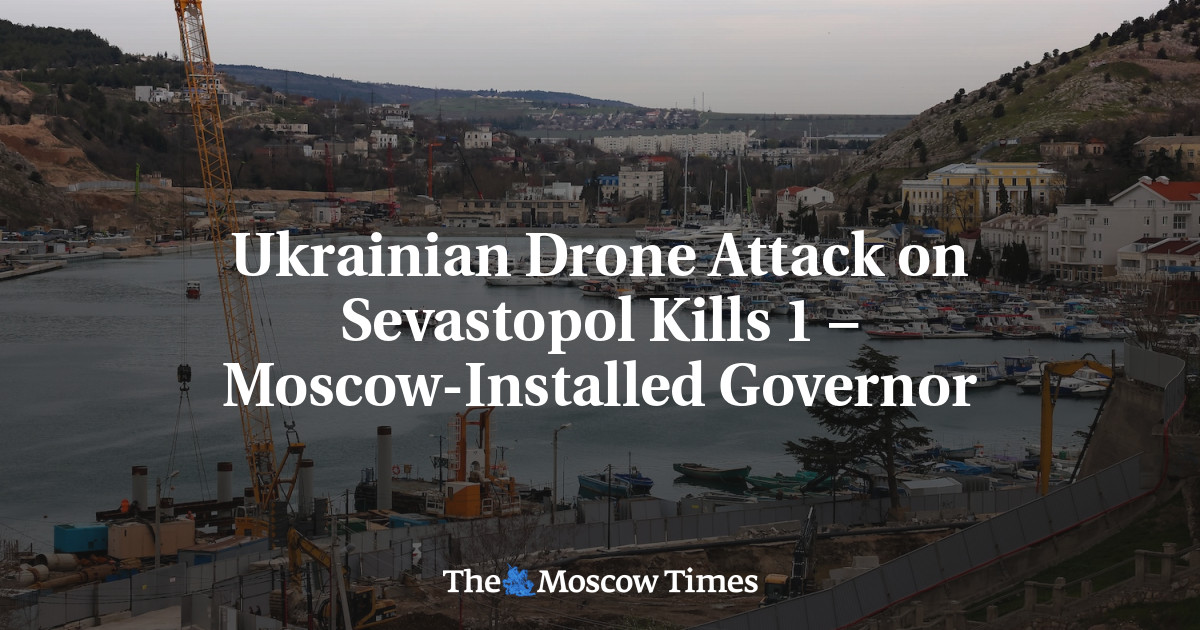
A Ukrainian drone attack on Sevastopol in annexed Crimea killed 1 man and wounded 3 others, with 43 drones reportedly shot down. The strike damaged several homes and a dance school in the port city, highlighting ongoing escalation in the Russia-Ukraine war. The broader conflict remains a significant geopolitical risk with potential spillovers for defense, energy, and regional markets.
The immediate market read is not about casualties; it is about escalation durability. Sustained drone pressure on a strategic Black Sea node raises the probability of a longer campaign aimed at degrading logistics, air defenses, and military-support infrastructure rather than one-off headline risk. That matters because repeated penetrations force Russia to spend disproportionately on interception, dispersal, repair, and point defense, creating a slow-burn margin squeeze on the defense/industrial complex rather than a clean shock to any single asset.
The second-order beneficiary set is broader than the usual defense trade. Firms tied to counter-UAS systems, electronic warfare, sensors, and hardened infrastructure should see budget priority drift upward as governments reallocate toward layered air defense and rapid-repair capability; the procurement cycle can accelerate within weeks, but revenue conversion typically lags 1-3 quarters. On the hurt side, any asset, insurer, or shipping corridor exposed to the Black Sea security premium faces higher disruption risk, with knock-on effects for commodity routing, port utilization, and war-risk insurance costs.
The contrarian point is that markets may be over-assuming linear escalation. Drone attacks that fail to materially impair throughput can actually strengthen the case for Russia to overinvest in defensive systems while preserving core logistics, limiting immediate economic damage. The real tail risk is not the current attack itself but a miscalculation that broadens the target set to energy or maritime infrastructure, which would shift the time horizon from tactical to strategic and force a repricing in European energy and defense multiples.
From a trading lens, the asymmetric setup is long select defense beneficiaries versus broader Europe exposure, with the catalyst window over the next 1-3 months as procurement guidance updates and budget revisions filter through. The short case is any transportation, insurer, or Europe-sensitive industrial basket that is already priced for stable logistics and low volatility. Risk management should assume headline whipsaws: if the conflict de-escalates or diplomacy constrains target selection, the premium on defense names can compress quickly even if the geopolitical backdrop remains unresolved.
AI-powered research, real-time alerts, and portfolio analytics for institutional investors.
Request DemoOverall Sentiment
strongly negative
Sentiment Score
-0.70
