Former President Donald Trump has reignited the contentious debate surrounding H-1B visas, advocating for their role in attracting essential talent and supporting U.S. educational institutions, a stance that has provoked significant opposition from his "America First" base. Critics, spanning Republicans like Marjorie Taylor Greene and Senator Bernie Sanders, contend the program displaces American workers and is exploited by tech companies for lower-cost labor, despite the Trump administration's prior initiatives to prevent abuse through measures like a $100,000 annual fee and Project Firewall. This escalating political division underscores potential future policy shifts impacting the availability of skilled foreign labor, which could significantly influence U.S. companies reliant on such talent across various sectors.
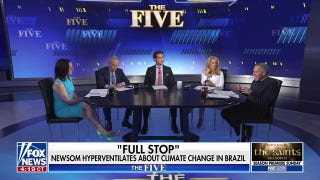
Former President Donald Trump has reignited the contentious debate surrounding H-1B visas, advocating for their importance in attracting "talent" and supporting U.S. colleges, a stance articulated in a recent Fox News interview. This position contrasts sharply with his "America First" base, who argue against foreign labor displacing American workers. The issue highlights a significant policy divergence within the Republican party, indicating potential future legislative battles.
The H-1B program faces broad criticism, with figures like Rep. Marjorie Taylor Greene and Sen. Bernie Sanders contending it displaces American jobs or is exploited by "tech overlords" for cheaper labor. Despite the Trump administration's past efforts to curb abuse through measures like a $100,000 annual fee and "Project Firewall," the renewed debate signals persistent regulatory uncertainty. This bipartisan opposition underscores the complex legislative environment for companies reliant on skilled foreign workers.
The controversy directly impacts companies like Tesla (TSLA), whose CEO Elon Musk strongly supports H-1B visas as crucial for innovation and growth, having used one himself. The overall sentiment surrounding the issue is moderately negative and uncertain, with a moderate market impact score, reflecting the potential for policy changes to influence labor costs and talent acquisition strategies. This political division could create headwinds for sectors heavily dependent on foreign skilled labor.
AI-powered research, real-time alerts, and portfolio analytics for institutional investors.
Request DemoOverall Sentiment
moderately negative
Sentiment Score
-0.50
Ticker Sentiment
