


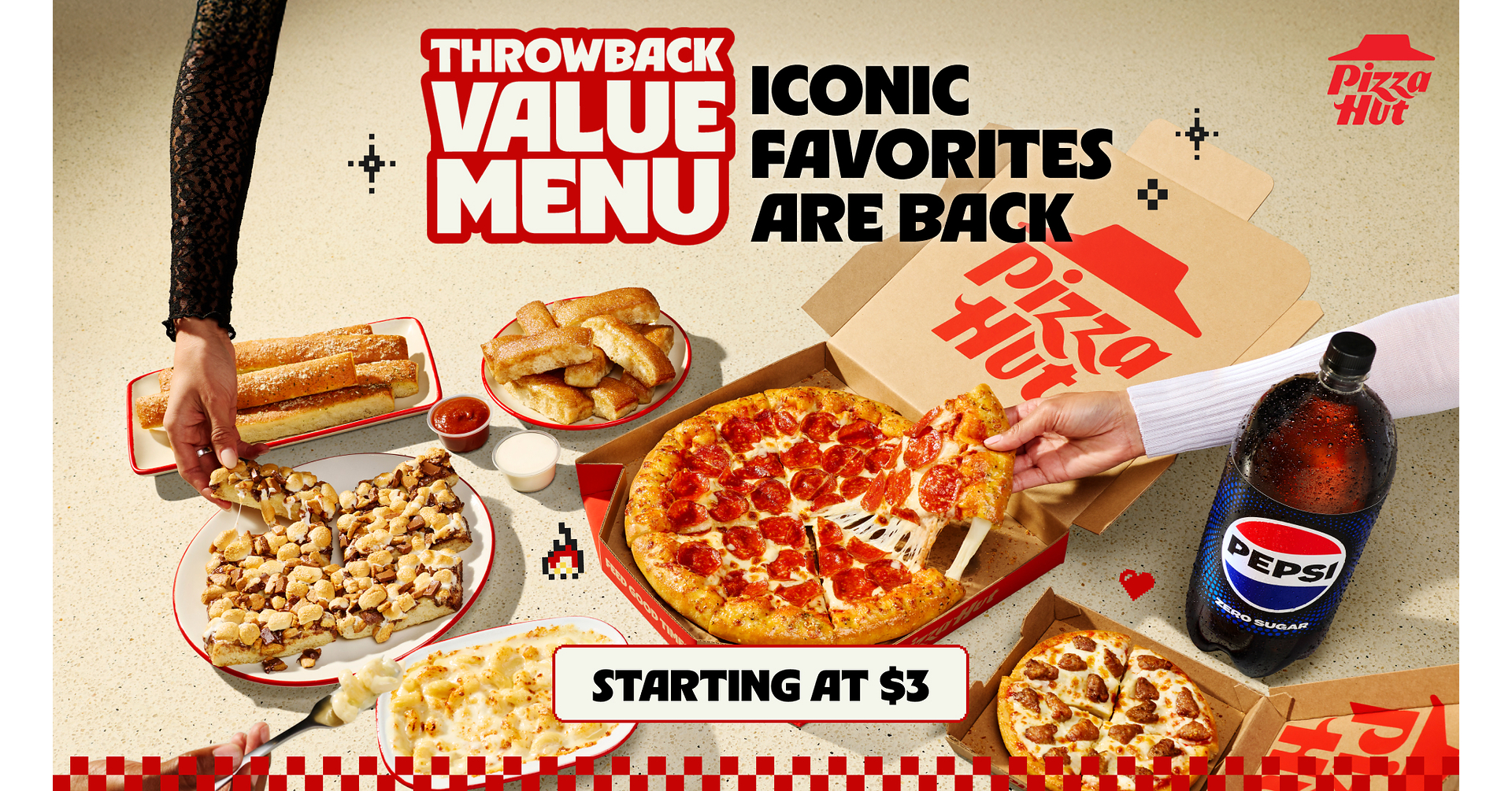
Pizza Hut launched a limited-time Throwback Value Menu built around Hut Originals, with items starting at $3, including a $10 Medium 1-Topping Stuffed Crust Pizza and new $6 Triple Cheese Mac and $5 S'mores Sticks. The brand also rolled out a Dinner Service NY streetwear collaboration and a “Back to the Hut” Hut Rewards digital trivia experience to drive engagement. Overall, the initiative is a promotional push likely to support consumer traffic rather than signal financial or earnings changes.
This is a defensive brand-relevance move, not an earnings inflection by itself. The economics matter more than the nostalgia: Pizza Hut is trying to protect frequency in a category where consumers have become highly price-elastic and app-driven, but the cheapest items are also the most dilutive to franchisee unit economics. The market should treat this as a traffic-preservation initiative unless management can show mix-up, not just transaction count up.
The second-order read-through is competitive rather than company-specific. If the campaign works, it pressures other pizza chains to re-arm their value architecture, but the biggest incremental pressure is on operators with weaker digital loyalty and less efficient delivery economics, not on the category leader. The first-party-app emphasis is important: keeping demand off aggregators protects margin and customer data, but it also caps the total volume lift from the promotion.
Contrarian view: investors may overestimate the ability of nostalgia marketing to repair a value gap. These campaigns can stabilize comps for a quarter or two, but they rarely change the long-run brand trajectory unless they translate into repeat behavior after the discount window closes. For YUM, the key falsifier is not the PR itself but the next comp print and franchise margin commentary; if traffic does not improve without a larger promotional step-up, this becomes evidence of brand maintenance spending rather than rejuvenation.
AI-powered research, real-time alerts, and portfolio analytics for institutional investors.
Overall Sentiment
mildly positive
Sentiment Score
0.12
Ticker Sentiment
