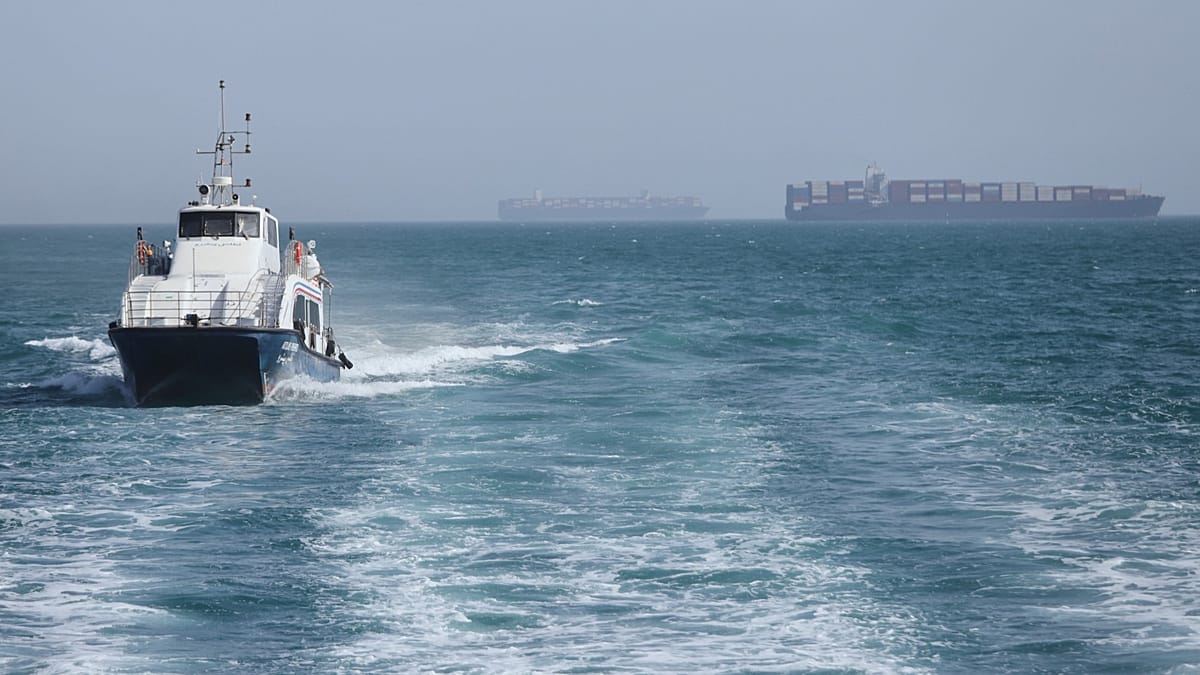
Iran warned Europe against sending warships to the Strait of Hormuz, raising the risk of further escalation in a critical global oil chokepoint. Tehran also outlined conditional nuclear terms including a temporary enrichment pause, uranium dilution, sanctions relief, and a Lebanon ceasefire, but major gaps remain with the US and Israel. The rhetoric points to heightened geopolitical and energy-market volatility, with potential support for oil prices and broader risk assets under pressure.
The market should treat this less as a binary peace/proxy-war headline and more as a volatility regime shift in Gulf logistics. Even without a kinetic escalation, the mere prospect of maritime interdiction or foreign naval deployment raises the embedded risk premium for crude, LNG, and regional shipping insurance; the second-order beneficiary is any producer with low transport sensitivity and spare non-Gulf export optionality. The clearest loser is the global industrial complex via a higher input-cost floor, but the more immediate pressure point is Asian refiners and freight-linked businesses that cannot hedge basis risk cleanly.
The negotiation structure itself matters: Iran appears to be using a phased-de-escalation template to preserve bargaining leverage while narrowing concessions to reversible steps. That increases the odds of a near-term headline-driven whipsaw rather than a durable resolution, because any pause can be broken by disputes over verification, asset release, or naval posture. From a timing perspective, the next 1-3 weeks are the highest gamma window; after that, the market either recalibrates toward a higher steady-state risk premium or re-prices sharply lower if a mediated channel produces a formal pause.
A key underappreciated risk is that the most market-sensitive outcome is not a full blockade but partial friction: insurance withdrawals, rerouting, and selective harassment. That would be enough to tighten prompt crude and distillate markets without needing a headline-grabbing supply shock, which means the first move could be underreaction followed by a slower, stickier repricing in energy equities and tanker rates. Conversely, if third-party mediation forces a visible de-escalation, the trade unwinds fast because positioning will likely be crowded into a short-duration geopolitical hedge.
The contrarian read is that the market may be overestimating the probability of immediate physical disruption and underestimating the likelihood of a managed, ugly stalemate. That argues for owning convexity rather than outright directional beta: the downside of implied volatility compressing is limited if the story cools, while the upside from any shipping incident remains large. The highest-quality expression is to own assets that benefit from higher risk premia without requiring a full energy spike.
AI-powered research, real-time alerts, and portfolio analytics for institutional investors.
Request DemoOverall Sentiment
strongly negative
Sentiment Score
-0.65
