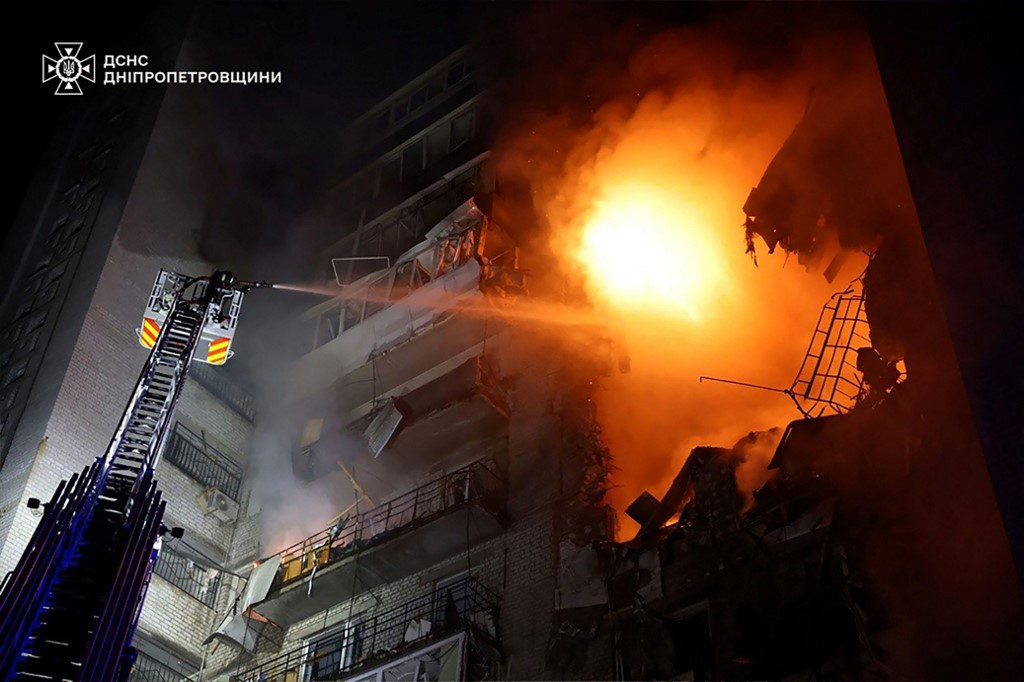
Russia launched a large-scale combined strike on Ukraine early Saturday using drones, cruise missiles and ballistic missiles, with air raid alerts across most regions and explosions reported in Kharkiv and Dnipro. Ukraine’s Air Force said Tu-95MS bombers fired cruise missiles from the Caspian Sea area around 2:30 a.m. Casualties were not immediately available, but the escalation is a clear geopolitical shock with potential broader market risk implications.
This kind of overnight escalation is less about the immediate headlines and more about forcing a higher baseline of operating risk across the Black Sea and broader Eastern European logistics network. The first-order impact is localized damage, but the second-order effect is a persistent tax on industrial uptime: grid hardening, backup power spend, repair crews, and insurance premia all move higher, which benefits defense electrification, unmanned systems, and critical-infrastructure suppliers more than headline military contractors alone.
The market usually underprices the duration of disruption after a single large strike wave. Even if kinetic intensity fades in days, the repair cycle can stretch for months because utilities, rail nodes, and industrial plants need imported transformers, switchgear, cables, and control systems—areas where capacity is already tight globally. That creates a stealth demand impulse for European electrical equipment and U.S. defense electronics, while marginally hurting Europe-heavy cyclicals exposed to regional freight, energy, and metallurgical inputs.
The contrarian read is that the move may be over-discounted in broad risk assets because investors have become numb to war headlines, but under-discounted in specific supply-chain beneficiaries. The biggest tail risk is not a one-day equity selloff; it is a prolonged tightening of physical security that embeds a higher capex run-rate into utilities, telecoms, and industrial operators across the region, with consequences that can last into 2025 if infrastructure replacement accelerates. Any diplomatic pause would likely reverse sentiment quickly, but it would not unwind the backlog of hardening and repair orders already created.
AI-powered research, real-time alerts, and portfolio analytics for institutional investors.
Request DemoOverall Sentiment
strongly negative
Sentiment Score
-0.80
