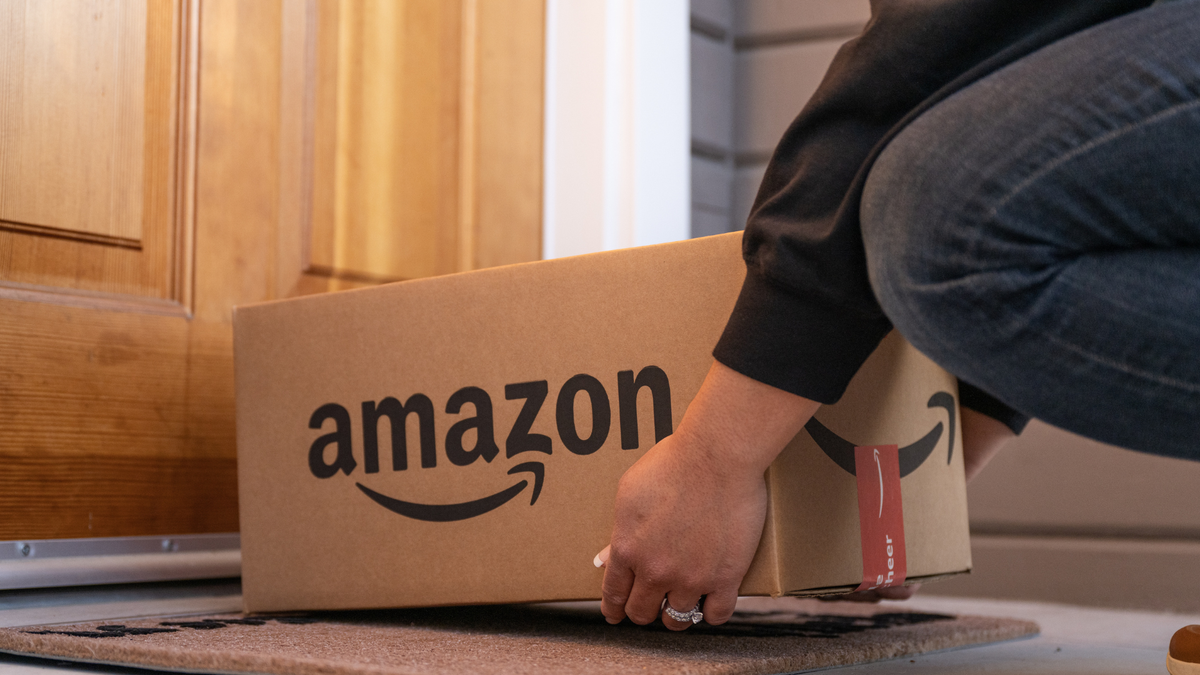
Amazon launched an under-the-radar "Winter Sale" ahead of Christmas Eve, advertising discounts up to ~40% and many items at their lowest price of the year. Highlighted offers include the Apple 2025 MacBook Air 13-inch at $749, Apple Watch Ultra 2 (GPS + Cellular) at $549, Ring battery doorbell at $50, Shark AV2501S robot vacuum at $249.99, Peloton cycling shoes at $75 and multiple home and tech discounts across categories. The promotion could modestly boost near-term holiday volumes and inventory turnover for Amazon and consumer-electronics brands, but is unlikely to be materially market-moving for investors beyond short-term retail revenue effects.
Market structure: Amazon (AMZN) is the clear short-term winner — steep, broad discounts drive traffic, attach rates and accelerate inventory turnover but compress gross margin by an estimated 100–300bps vs. seasonally normalized pricing. Apple (AAPL) benefits from incremental sell-through but visible discounts on MacBook/AW Ultra signal temporary inventory balance issues; Logitech (LOGI) sees idiosyncratic upside in gaming peripherals but negligible market-moving impact. Traditional mall/department retail and thin-margin third‑party sellers are losers as Amazon reclaims share via price + logistics scale.
Risk assessment: Tail risks include regulatory scrutiny on marketplace pricing and FBA preferential placement, heavy return volume increasing logistics costs, and a weaker-than-expected January retail read that extends discounting into Q1. In days–weeks expect volatility around holiday sales cadence and return metrics; in 1–3 months margins will reveal whether discounts were one-off clearance or a sustained promotional strategy; in 2–4 quarters customer LTV gains or retention will determine ROIC payoff. Hidden dependencies: promotion funding likely comes from ad spend and vendor co-op programs, which can flip quickly if ad CPCs rise.
Trade implications: Direct play — establish a 2–3% long position in AMZN over the next 7–14 days using a 3‑month call spread (defined-cost) to target 12–18% upside by Q1 earnings, with a 6–8% stop. Hedge AAPL exposure by buying a 1–2% portfolio-sized 2‑month 3–6% OTM put spread to protect against continued discounting; avoid outright chase of LOGI, limit to a 0.5% tactical long via 3‑month call if gaming monitor sales data confirms momentum. Rotate overweight to large-cap e‑commerce/tech (+3–5% OW) and underweight specialty retail ETF XRT (-3% UW) until January sell‑throughs confirm stabilization.
Contrarian angles: Consensus underestimates the stickiness of Prime-driven incremental buyers — aggressive clearance can pay off if retention increases >5% and repeat purchase rate holds, producing multi-quarter revenue lift that offsets temporary margin loss. Conversely, market may be underpricing the risk that repeated heavy discounting re-sets consumer price expectations and forces permanent margin pressure; watch SKU-level sell-through and return rates in the next 30 days as the high-signal, low-noise discriminator.
AI-powered research, real-time alerts, and portfolio analytics for institutional investors.
Request DemoOverall Sentiment
mildly positive
Sentiment Score
0.25
Ticker Sentiment
