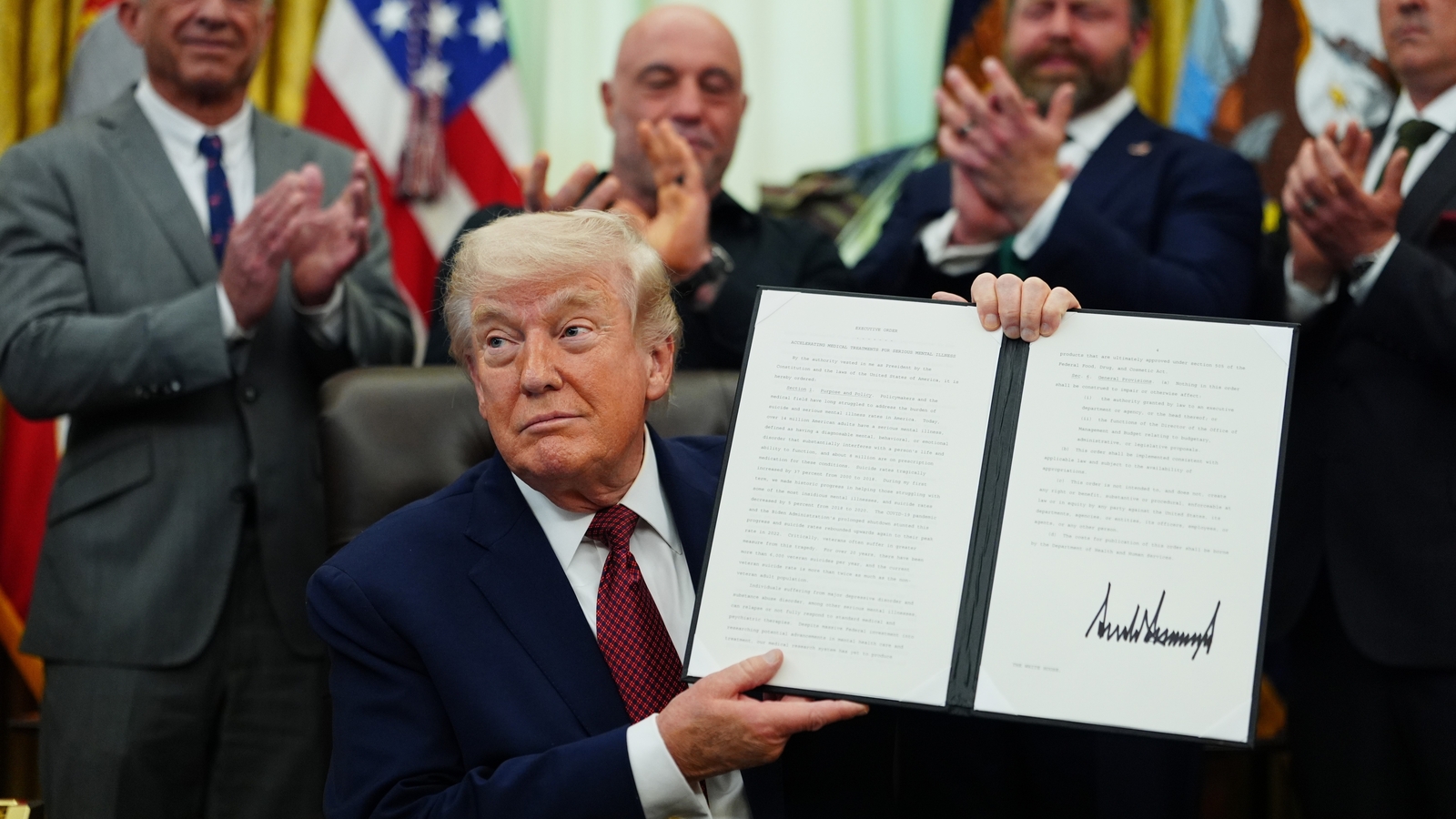
President Trump signed an executive order directing faster reviews of certain psychedelics, including ibogaine, and the FDA will issue three national priority vouchers next week to accelerate approval timelines from months to weeks. The move could speed first-ever U.S. human trials of ibogaine and broaden research into PTSD, depression and opioid addiction, though the drug still carries serious cardiotoxicity risks and remains Schedule I. The policy shift is a meaningful boost for the psychedelic therapy sector and could encourage more state-level research funding.
This is less a near-term commercial catalyst than a regime-change signal: federal legitimacy lowers the probability that psychedelic care stays confined to cash-pay, offshore, or boutique channels. The first-order beneficiaries are research-capitalized platforms, specialty CROs, and clinic operators that can plausibly convert political cover into trial enrollment, state grants, and eventually payer dialogue; the second-order losers are incumbent antidepressant and PTSD treatment pathways if durable efficacy data keeps improving. The bigger market implication is that the bottleneck shifts from legality to evidence generation, which favors the best-funded developers and university-linked trial networks, not the broad field.
The key risk is that the opportunity set may be overestimated relative to the safety bar. Ibogaine’s cardiac liability makes it a poor candidate for rapid mass adoption, so any enthusiasm that prices in a “psychedelic boom” could get repriced when regulators insist on monitoring protocols, restricted sites, or narrow indications. That creates a two-step catalyst path over 6-18 months: policy headlines can lift the group quickly, but the next leg requires clean human data; if early trials show only modest benefit or elevated QT risk, the trade will unwind hard.
The contrarian angle is that this may actually compress the long-run total addressable market for the most controversial compounds while expanding the market for safer substitutes. If policymakers want a politically useful win, they may channel attention toward easier-to-approve molecules and away from ibogaine specifically, making the eventual commercial winner the platform with the broadest pipeline rather than the loudest narrative. In other words, this is a selection market, not a category-wide bull case.
AI-powered research, real-time alerts, and portfolio analytics for institutional investors.
Request TrialOverall Sentiment
mildly positive
Sentiment Score
0.25
