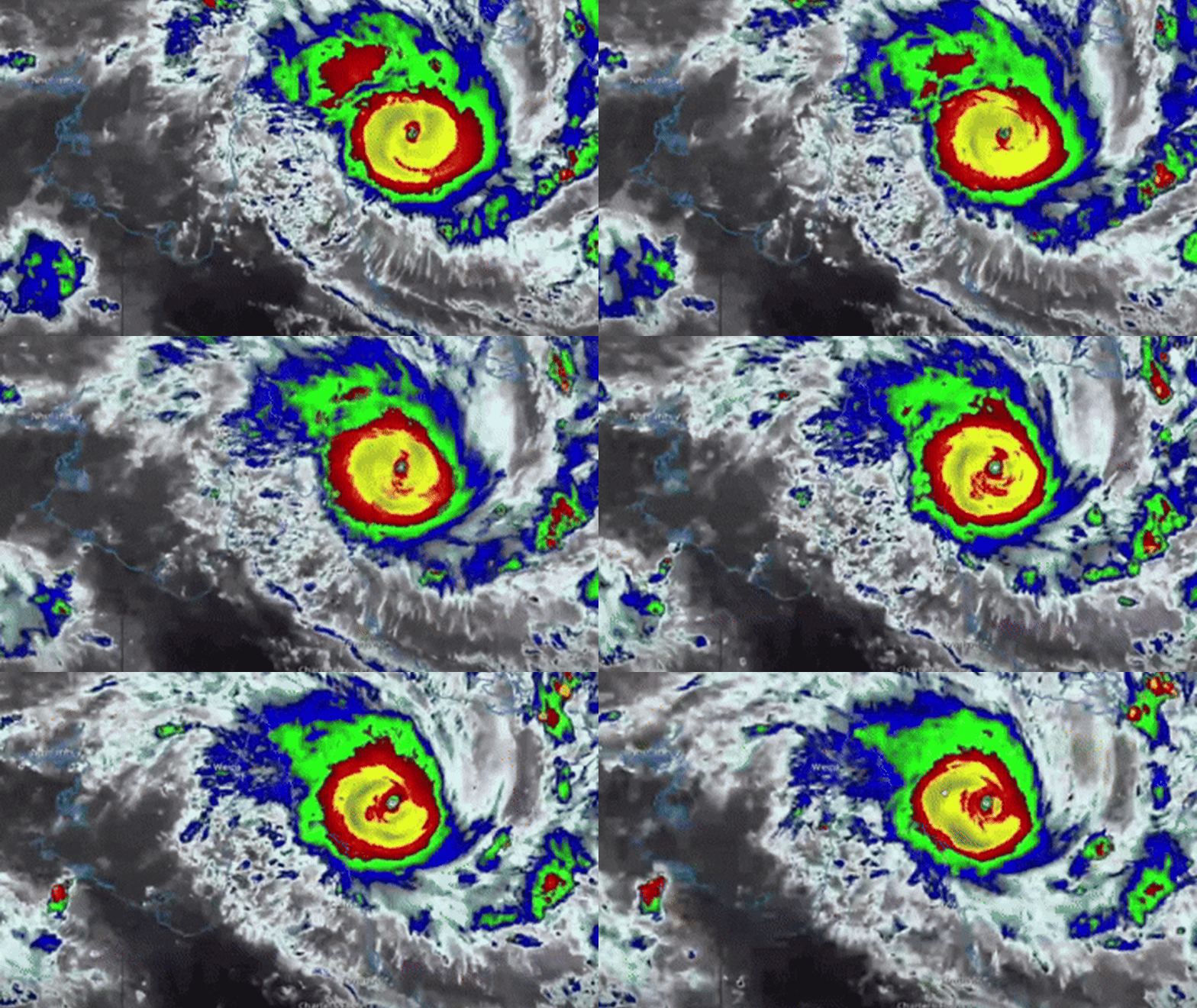
About 40 guests at a resort were unable to get on extra flights and must shelter at the resort until Sunday as roads are closed due to an incoming weather system. The resort's restaurant has been designated a category 3 shelter to provide safety, and local management says the Weipa community is prepared and staffed for the event. Travel remains restricted with flying the only exit option; no financial or market impacts are indicated.
Localized, acute weather disruptions in remote tourism/logistics nodes create concentrated, short-duration arbitrage opportunities rather than broad secular moves. Carriers and charter operators with re-deployable narrowbody/turboprop fleets can monetize stranded passenger flows and urgent cargo via premium ad‑hoc lift; a handful of extra flights over 72 hours can translate to mid-single-digit percent revenue bumps for small regional airlines and meaningful positive variance to monthly RPM/ASK metrics.
Downstream, supply chains that service remote extractive or tourist hubs are non-linear: if disruption persists beyond ~7–14 days, spot freight rates and expediting costs spike, pushing variable operating costs into margins for miners, logistics contractors and perishable goods exporters; insurers and reinsurers absorb claims concentrated in low-insurance-density cohorts, which compresses underwriting margins and forces price resets over the subsequent 6–12 months.
Catalysts to watch are threefold and fast: (1) high-resolution meteorological model updates (48–96h) that change evacuation/repair timelines, (2) government/airline decisions to deploy charters (same-day to 3-day pivots), and (3) early loss notifications from carriers/insurers (1–3 weeks) that re-price near-term cash flows. The asymmetric tail is a slower recovery scenario—infrastructure damage extending to multi-week outages produces outsized losses relative to routine cancellations, creating a convex payout for insurers and persistent demand for alternative lodging and charter services.
AI-powered research, real-time alerts, and portfolio analytics for institutional investors.
Overall Sentiment
neutral
Sentiment Score
0.00
