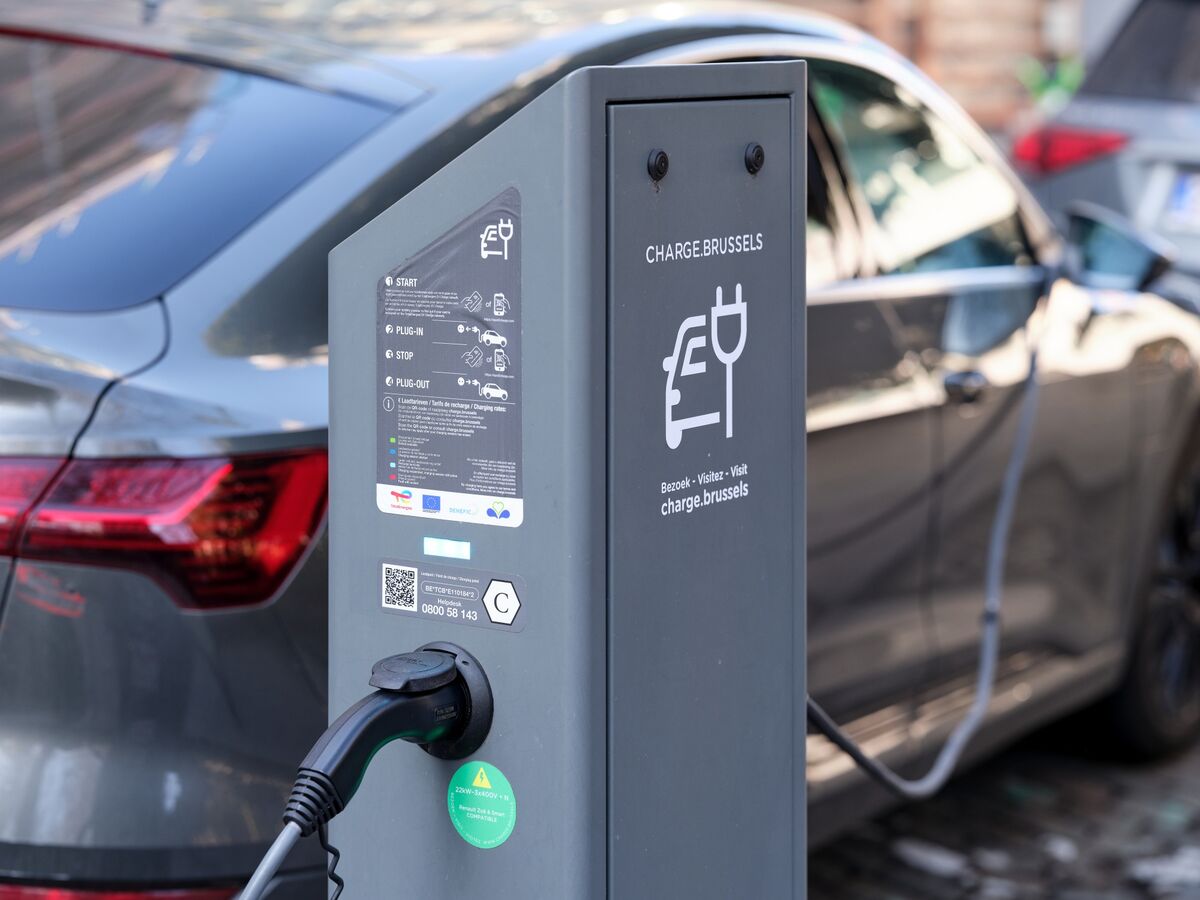
Six EU leaders, including Italy’s Prime Minister Giorgia Meloni and Poland’s Donald Tusk, urged European Commission President Ursula von der Leyen in a letter to soften upcoming vehicle emissions rules to avoid a de-facto ban on combustion engines scheduled for 2035. They specifically requested that future regulation allow plug-in hybrids, range extenders and fuel‑cell technology to remain permissible after 2035, a move that could alter the regulatory trajectory underpinning the EV transition and affect automakers and suppliers exposed to internal combustion and hybrid powertrains.
Market structure: Allowing plug‑in hybrids, range extenders and fuel cells past 2035 revalues incumbents that already monetize hybrid/FCEV IP and global dealer networks (Toyota TM, Stellantis STLA, BorgWarner BWA). Pure‑play BEV supply chain names (battery miners ALB, battery cathode makers) face a longer demand runway to full replacement, preserving pricing power for oil majors (XOM) and ICE parts suppliers in the 3–7 year window.
Risk assessment: Tail risks include a continental policy reversal (EU Commission accepts the letter) that boosts hybrids materially or, conversely, a hardline Commission that ignores national pushes leading to market uncertainty; probability-weighted impact is highest over 6–18 months. Hidden dependency: automakers’ capex already committed to EV factories — partial rule loosening may create stranded BEV capacity and uneven regional market shares.
Trade implications: Tactical plays favor long hybrid/FCEV beneficiaries and select energy names, shorting stretched pure‑play EV growth at the margin; expect flows and volatility around the Commission draft (likely 3–6 months) and final regulation (6–12 months). Options can express asymmetric views (long calls on fuel‑cell names, put spreads on pure EV names) while keeping sizes small because final rule is uncertain.
Contrarian angles: Consensus assumes an EU‑wide 2035 ICE endgame; political pushback suggests a negotiated compromise is likelier, creating a 20–40% re‑rating opportunity for hybrid/FCEV suppliers and a 5–15% cushion for oil demand vs base case. Historical parallel: regulatory carveouts (e.g., diesel exemptions) created multi‑year competitive distortions; expect uneven winners geographically and a multi‑year transition rather than abrupt shift.
AI-powered research, real-time alerts, and portfolio analytics for institutional investors.
Request DemoOverall Sentiment
neutral
Sentiment Score
0.00
