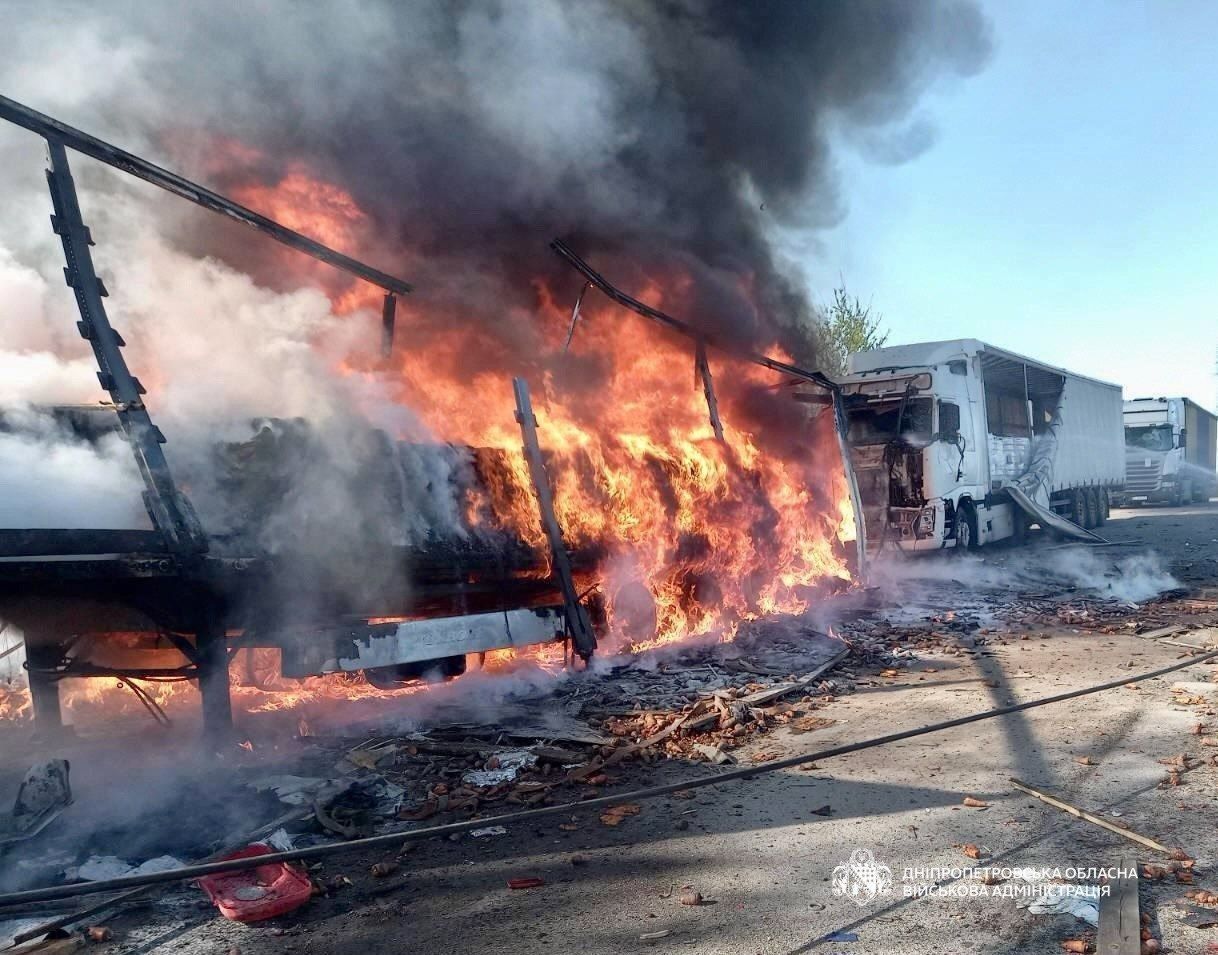
Russian attacks across Ukraine killed 10 people and injured at least 76 in the past day, with strikes reported in Odesa, Sumy, Donetsk, Zaporizhzhia, Kherson, Dnipropetrovsk, Mykolaiv, Chernihiv and other regions. Ukraine said it downed 249 of 268 drones, but a ballistic Iskander-M missile and 19 drones still hit 15 locations, damaging civilian and port infrastructure and causing multiple child casualties. The escalation underscores ongoing wartime risk and continued pressure on regional infrastructure and logistics.
The immediate market read-through is not about headline casualty counts; it is about the transition from episodic disruption to sustained attrition of civilian logistics, energy handling, and transport nodes. That raises the probability of a higher-risk premium across eastern/southern Ukraine over the next several months, with the most durable damage likely showing up in insurance costs, capex deferrals, and the willingness of third-country shippers to maintain schedules through Black Sea and border-adjacent routes.
The more important second-order effect is that Ukraine’s air-defense effectiveness, while still impressive, is becoming economically inefficient against cheap saturation attacks. If Russia can keep forcing defenders to spend high-value interceptors on low-cost drones, the exchange ratio worsens even when physical damage is contained; that is a classic setup for inventory strain and procurement urgency over the next 1-2 quarters. For defense suppliers, this is positive for layered air-defense, radar, EW, and counter-UAS systems rather than legacy high-end platforms alone.
There is also a commodity and logistics implication: repeated strikes on port/industrial infrastructure increase the tail risk of intermittent Black Sea export disruption and raise storage/handling costs for agricultural and metal flows. The market often underestimates how quickly this feeds into regional working capital needs and FX pressure for adjacent EMs through trade insurance and freight spreads, even without a formal blockade. The key contrarian point is that if Western resupply accelerates or Ukraine shifts to cheaper interceptors/EW, the tactical damage-to-defense ratio can improve sharply, making the current fear trade vulnerable to a fast reversal in sentiment.
AI-powered research, real-time alerts, and portfolio analytics for institutional investors.
Request DemoOverall Sentiment
extremely negative
Sentiment Score
-0.95
