President Trump's authority to impose tariffs using the International Emergency Economic Powers Act (IEEPA) faces a critical legal challenge in a federal appeals court this Thursday, with oral arguments preceding new tariff implementations on Friday. This case, expected to reach the Supreme Court, could invalidate trade deals negotiated under IEEPA's threat and force the administration to rely on alternative, potentially less effective, tariff authorities, significantly impacting current U.S. trade policy.
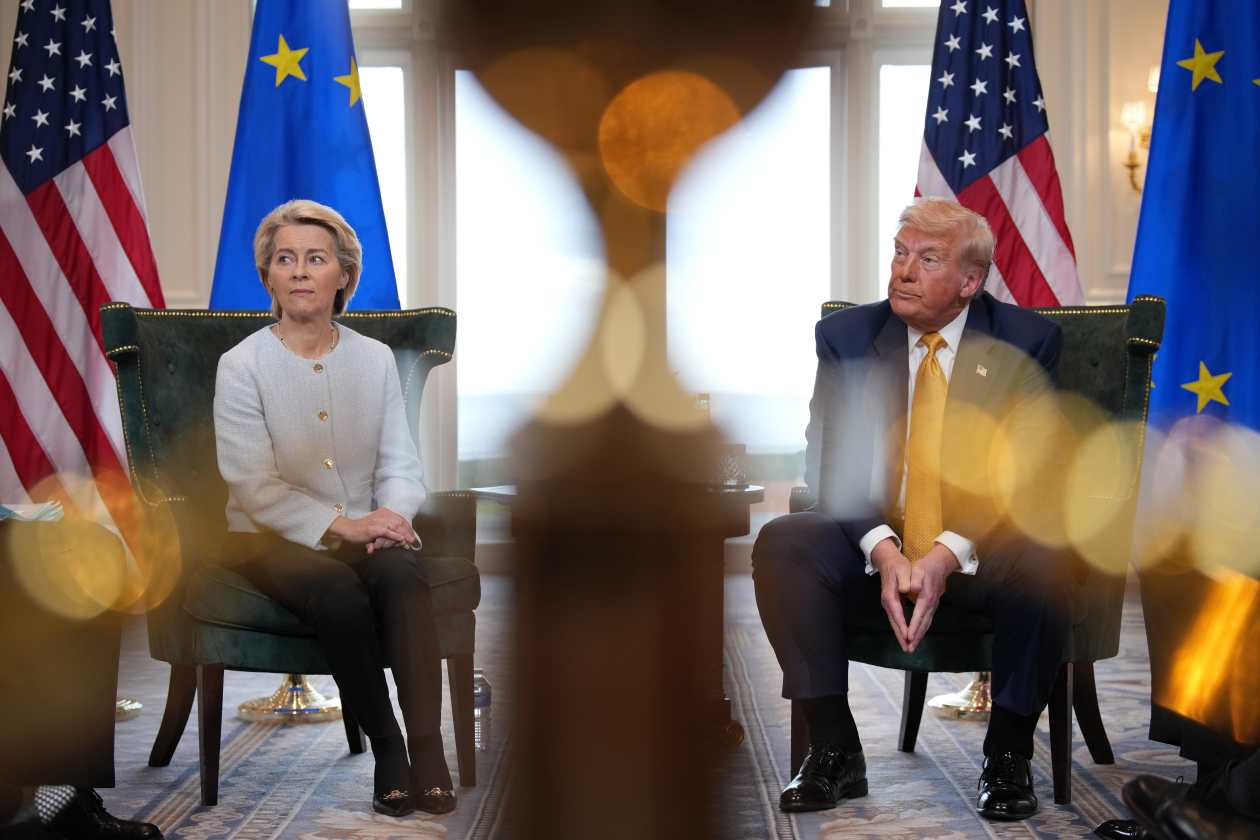
A significant legal challenge to President Trump's use of the International Emergency Economic Powers Act (IEEPA) for imposing tariffs is set for oral arguments in a federal appeals court, introducing substantial uncertainty into U.S. trade policy. The case, brought by several small businesses and expected by analysts to reach the Supreme Court, directly questions the legality of reciprocal tariffs on nations including China, Canada, and Mexico. A prior ruling by the U.S. Court of International Trade found the administration had overstepped its authority, a decision that was subsequently paused. The outcome carries significant weight, as an adverse ruling could nullify trade deals negotiated under the threat of IEEPA, such as the recent framework with the European Union involving 15% tariffs. While the administration possesses alternative tariff authorities like Section 232 of the Trade Expansion Act, these are viewed as less suitable for the stated goal of balancing trade flows and are geared more toward industrial policy, suggesting a loss in court would materially constrain the administration's primary trade strategy.
AI-powered research, real-time alerts, and portfolio analytics for institutional investors.
Request DemoOverall Sentiment
mildly negative
Sentiment Score
-0.35
