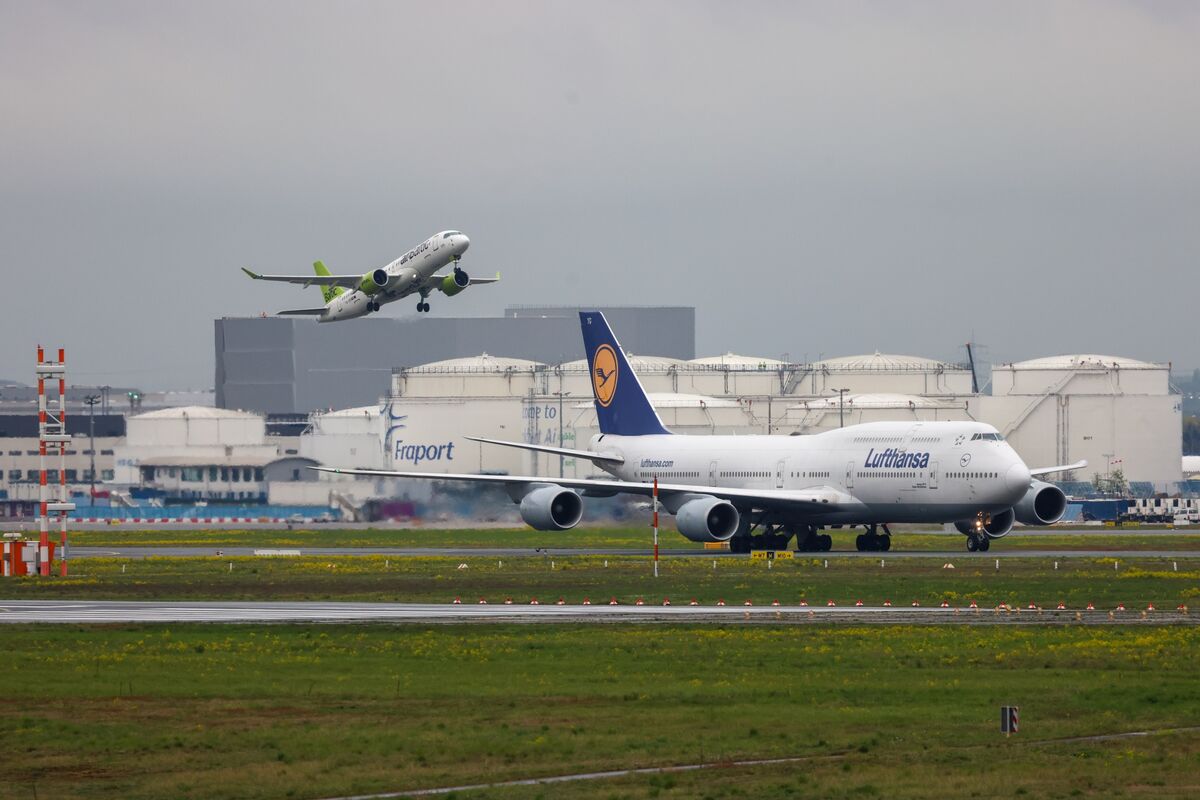
German airlines are warning of potential summer flight cuts unless the government releases strategic kerosene reserves and improves access to NATO pipeline supplies at hubs like Frankfurt and Munich. The industry is also seeking temporary relief on carbon levies, sustainable aviation fuel rules, and passenger compensation costs. The article signals higher operational risk and cost pressure for carriers, but no immediate systemic market shock.
This is less about near-term airline demand and more about a latent supply bottleneck becoming a policy tradeoff. If regulators unlock emergency fuel stocks or pipeline access, the first beneficiaries are the large network carriers with hub concentration and weak pricing power on fuel availability; the real loser is anyone relying on premium summer schedules to preserve yield, because disruption risk turns into cancellation risk fast.
The second-order effect is on the fuel complex itself: any bureaucratic release of strategic kerosene is likely a temporary liquidity fix, not a structural price reset. That means refiners and jet-fuel distributors are insulated, while airlines face margin compression from both fuel cost volatility and potential carbon-policy carveouts being framed as temporary. The market may underappreciate that this is also a logistics story—if German hubs get preferential access, smaller secondary airports and thinner regional routes are the ones most likely to be cut.
Catalyst timing matters: the next few days matter for headline risk, but the operational impact compounds over 4-8 weeks as summer schedules lock in and passenger claims accumulate. A de-escalation in the Middle East would only partially reverse this because the underlying issue is European buffer inventory and infrastructure rigidity; if anything, the episode strengthens the case for higher working-capital buffers and more domestic contingency storage across transport networks.
Contrarian read: the consensus is likely too focused on fuel price spikes and not enough on policy distortion. Emergency relief can actually widen competitive gaps by favoring incumbents with political access and large-hub dominance, while forcing smaller competitors to absorb more cancellations and higher unit costs. That makes this a relative-value event inside European travel rather than a clean sector-wide short.
AI-powered research, real-time alerts, and portfolio analytics for institutional investors.
Request TrialOverall Sentiment
mildly negative
Sentiment Score
-0.22
