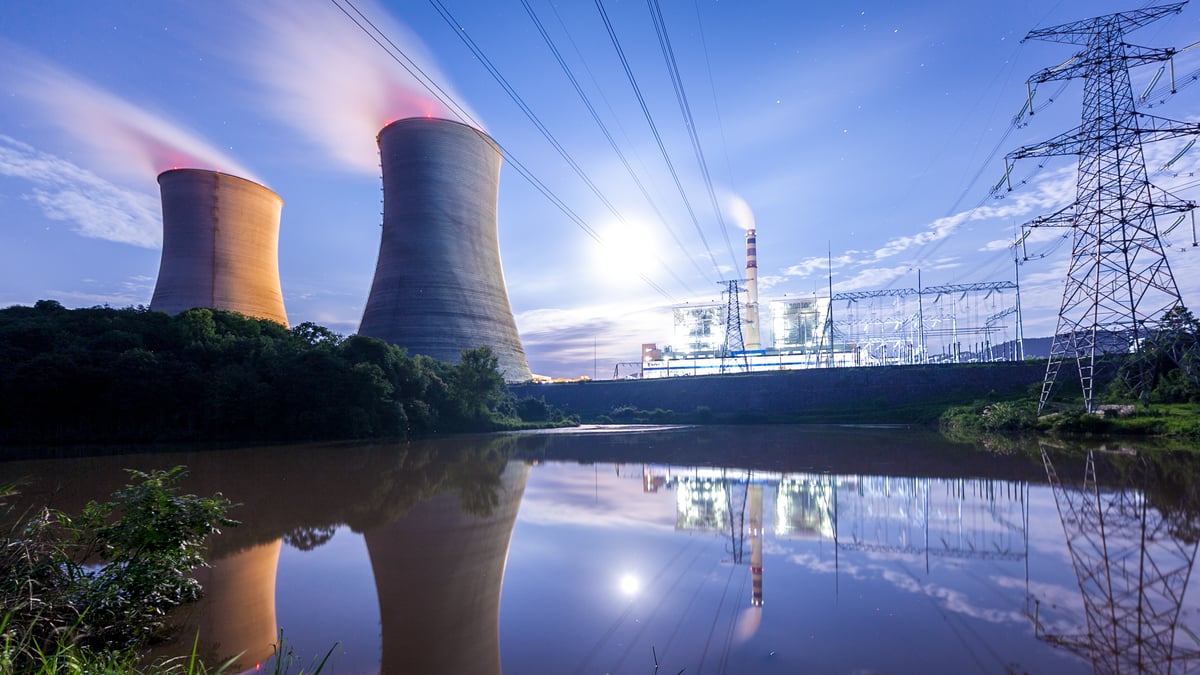
AI data center power demand is expected to triple between 2024 and 2030, and NuScale estimates roughly 300 GW of new nuclear capacity could be needed; NuScale trades at about $4.1B market cap and Oklo at about $9.6B. NuScale has received SMR design approvals but a major project is delayed until ~2034, while Oklo's designs are not yet approved in the U.S., creating regulatory and timing risks. Large long-term upside is cited by analysts (Morgan Stanley projects nuclear capacity could more than double to 860 GW by 2050 and BofA outlines a multi‑trillion-dollar opportunity), but near-term deployment, cost viability, and uncertain demand through 2040 make these high-risk, potentially high-reward investments.
SMR names are effectively an options book on a multi-decade capital cycle: a small set of binary regulatory and first-of-a-kind (FOAK) construction outcomes will compress or explode current valuations. Outside the headline demand story, the real economic battleground will be who controls reactor supply chains (forgings, heat exchangers, control systems) and long‑term service contracts — incumbents that can vertically integrate fabrication and financing will capture the annuity economics, while pure‑play developers face a two‑to‑five year margin squeeze as suppliers scale.
Hyperscalers and colo operators will behave like sophisticated buyers: they will prefer contracts that transfer construction and performance risk off their P&Ls (PPAs, tolling or build‑to‑suit with availability guarantees) rather than owning reactors outright. That buyer behavior favors utilities, large EPC firms, and banks that can underwrite project bonds; it increases the probability that many SMR developers end up as technology licensors or JV partners rather than scaled asset owners, compressing equity upside for standalone developers absent recurring service revenue.
Time horizons are long and binary: expect volatility spikes around regulatory decisions and initial FOAK commissioning (months-to-years cadence), but structural demand (if real) unfolds over a decade. Key reversal triggers are cheaper long‑duration storage or sustained low gas prices that restore merchant economics, protracted supply‑chain lead times and rising capex that force dilution, or financing pullback from banks that reprice project risk — any of which can erase >50% of upside in 12–36 months.
AI-powered research, real-time alerts, and portfolio analytics for institutional investors.
Request DemoOverall Sentiment
mixed
Sentiment Score
0.12
Ticker Sentiment
