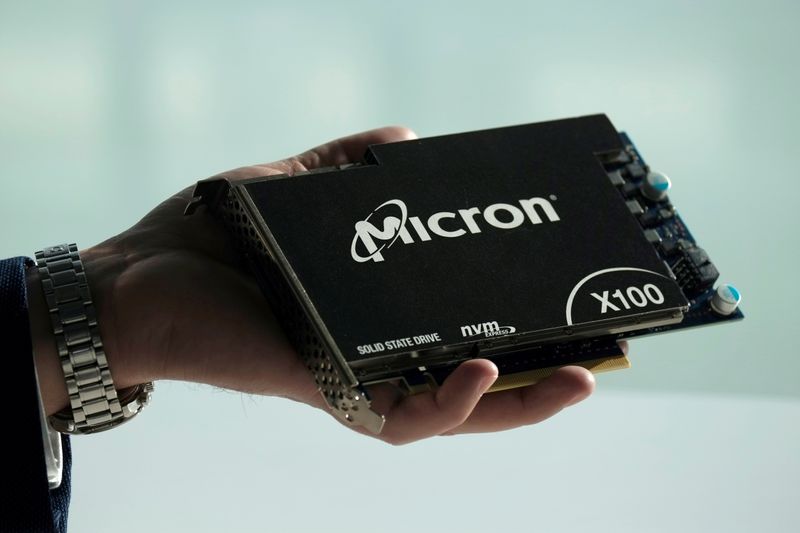
Micron reported fiscal Q2 EPS of $12.20 vs $8.79 expected (38.79% surprise) and revenue of $23.86B vs $19.19B expected (24.34% surprise). Data center strength drove Cloud and Core DC growth of 163% and 211% YoY, DRAM pricing rose ~mid-60% q/q and NAND ~high-70% q/q, and Micron disclosed multi-year (five-year) supply agreement plus volume HBM4 shipments for Nvidia. KeyBanc raised its price target to $600 (from $450) and Barclays to $675 (from $450); management expects free cash flow to double to $13.7B in fiscal Q3 from $5.5B despite ~ $7B capex, underscoring materially improved fundamentals and sector implications.
The market is re-pricing memory as a strategic bottleneck rather than a commoditized input. That elevates suppliers with HBM4 and DRAM scale into quasi-duopoly pricing power for high-performance AI stacks, which should compress the payback period on incremental FCF into a much shorter window (quarters rather than years) and force downstream OEMs to prioritize supplier allocation over spot-channel buying.
Second-order beneficiaries will be server OEMs and systems integrators who can secure multi-quarter supply commitments; conversely, GPU incumbents without guaranteed HBM allocation face product cadence and ASP risk even if compute demand remains healthy. Tight HBM pushes yield optimization and packaging services up the value chain, creating margin opportunities for foundry/OSAT partners and potential arbitrage for companies that can convert die-to-module faster.
Key risks are classic cycle reversals and structural shifts: a large cloud capex pause, architectural moves to reduce HBM dependence, or an aggressive capacity response from other memory suppliers would quickly unwind current pricing. Regulatory/export shocks or a sudden move to more inference-focused workloads (which use less HBM per TFLOP) could also flip tailwinds into headwinds within 1-4 quarters.
Consensus is underestimating duration risk of supply discipline: tight markets that drive outsized returns also incentivize capex acceleration, but that lag gives a clear, tradeable runway. If you believe the current tightness persists through the next 12 months, there is a path for asymmetric returns; if not, downside from a cyclical overshoot is large and fast.
AI-powered research, real-time alerts, and portfolio analytics for institutional investors.
Request DemoOverall Sentiment
strongly positive
Sentiment Score
0.75
Ticker Sentiment
