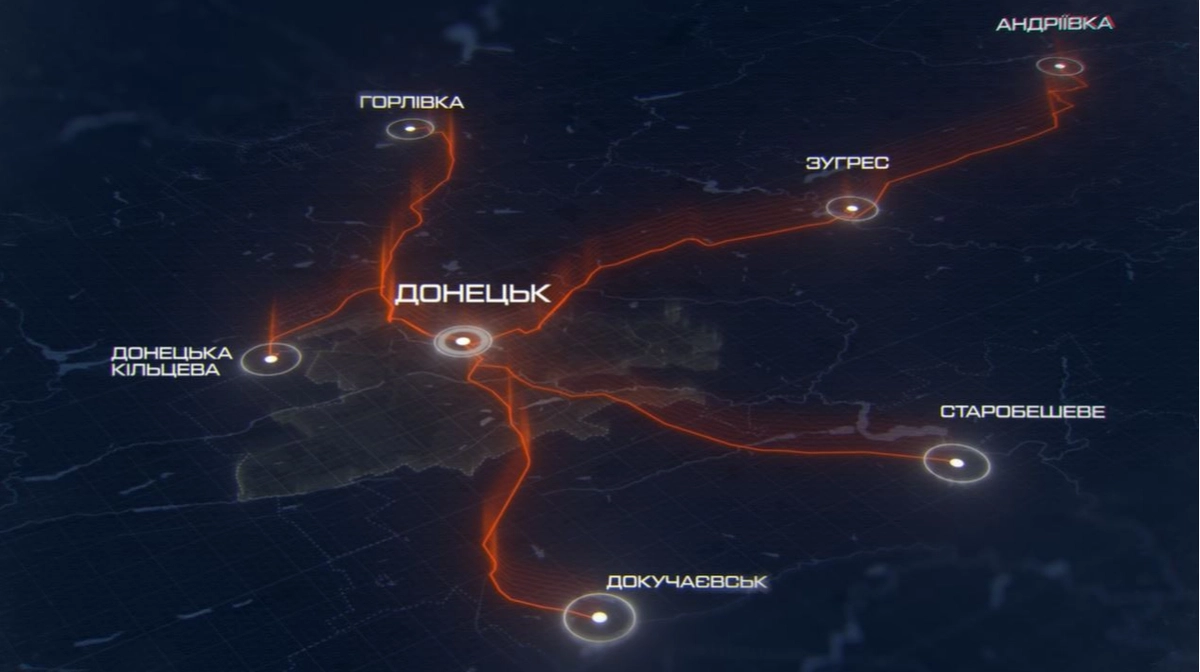
Ukraine's 1st Azov Corps says it has placed Russian logistics routes near occupied Donetsk under drone control and will destroy moving military targets along those roads. The reported UAV activity spans routes around Zuhres, Andriivka, Starobesheve, Horlivka, Lysychansk and the Donetsk ring road, underscoring persistent disruption to Russian supply lines. The development is materially relevant to the war effort and could raise near-term operational risk in the region.
This is a local but material degradation in Russian rear-area logistics, and the second-order effect is not just higher transport attrition but a forced rerouting and fragmentation of supply discipline. When a drone umbrella can reliably contest road corridors, the marginal cost of moving fuel, ammo, and replacement parts rises sharply because convoys need more security, more spacing, and more time — which lowers throughput even before physical destruction becomes the binding constraint. That tends to show up first as tactical ammo/fuel scarcity and only later as visible front-line withdrawals.
The more important market implication is that Ukraine is demonstrating scalable denial rather than symbolic harassment. If the effect persists for weeks, Russia may need to shift to rail-adjacent and night movement, use smaller loads, or accept higher vehicle losses; all of those options are slower and less efficient, and they lengthen the replenishment cycle for units tied to the Donetsk axis. The near-term risk is asymmetric: modest additional drone capacity can create outsized operational friction, while reversing it would require better air defense, more electronic warfare coverage, or a reduction in Ukrainian UAV sortie rates.
For defense and drone supply chains, this is incremental bullishness for low-cost attritable systems, ISR, and EW-resistant navigation rather than exquisite platforms. The contrarian point is that markets often overread battlefield drone success into broad defense upside; the real winners are the suppliers of mass-produced airframes, optics, batteries, comms, and counter-UAS, while traditional heavy platform names benefit less unless the conflict broadens or replenishment cycles accelerate materially. The duration matters: if this remains a 2-6 week disruption, it is mostly a tactical margin story; if it persists through a seasonal operations window, it becomes a genuine logistics attrition regime with broader operational consequences.
AI-powered research, real-time alerts, and portfolio analytics for institutional investors.
Request DemoOverall Sentiment
mildly negative
Sentiment Score
-0.20
