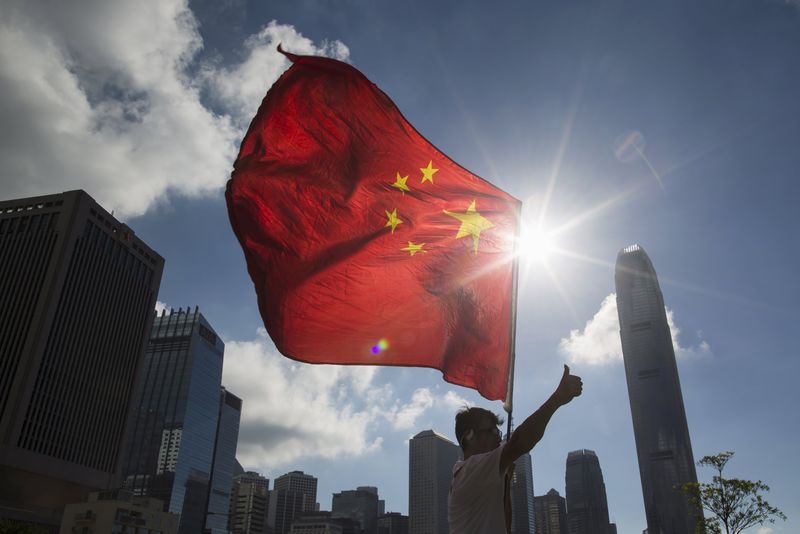
China’s RatingDog Services PMI rose to 52.6 in April from 52.1, beating the 52.0 forecast, while the composite PMI increased to 53.1 from 51.5. Domestic demand and business confidence improved, but new export orders fell for a second month and input costs climbed at the fastest pace so far in 2026, linked to higher oil and fuel prices from Middle East tensions. The article is broadly constructive for China activity but highlights inflationary pressure and geopolitical spillovers.
The key market implication is not a broad China growth reacceleration, but a near-term margin squeeze for transport-heavy and energy-sensitive businesses. When services demand is domestically led while export demand remains soft, the mix favors consumer-facing and platform-heavy sectors over industrial cyclicals; however, the fastest transmission channel is higher input and fuel costs, which usually hit airlines, logistics, parcel, and delivery networks within days to weeks via fuel surcharges that lag spot prices.
For equities, the second-order winner is upstream energy and select freight pass-through names, while the loser set is broader than the headline suggests: refiners with weak crack spreads, airlines with limited hedge cover, and China-facing discretionary names that cannot fully pass along cost inflation. If Middle East risk keeps oil elevated, the market may initially treat this as a one-off cost shock, but sustained pressure on services margins would likely show up in April/May earnings revisions before it is reflected in macro prints.
The contrarian angle is that this may be an underappreciated inflation impulse rather than a pure growth story. A services PMI above 50 can coexist with deteriorating real margins if firms are forced to absorb fuel costs to defend share; that typically compresses small-cap and high-labor-intensity business valuations first. The consensus mistake is assuming stronger domestic demand is automatically bullish for all China exposure, when in practice it can widen the spread between pricing-power winners and volume-dependent losers.
Catalyst-wise, the key horizon is 1-3 months: oil volatility, shipping insurance, and freight rates will determine whether this becomes a transitory input-cost event or a broader earnings downgrade cycle. A de-escalation in the Middle East or a drop in crude would reverse the pressure quickly; absent that, the market should expect a slow bleed in margin guidance rather than an abrupt macro downturn.
AI-powered research, real-time alerts, and portfolio analytics for institutional investors.
Request DemoOverall Sentiment
neutral
Sentiment Score
0.15
