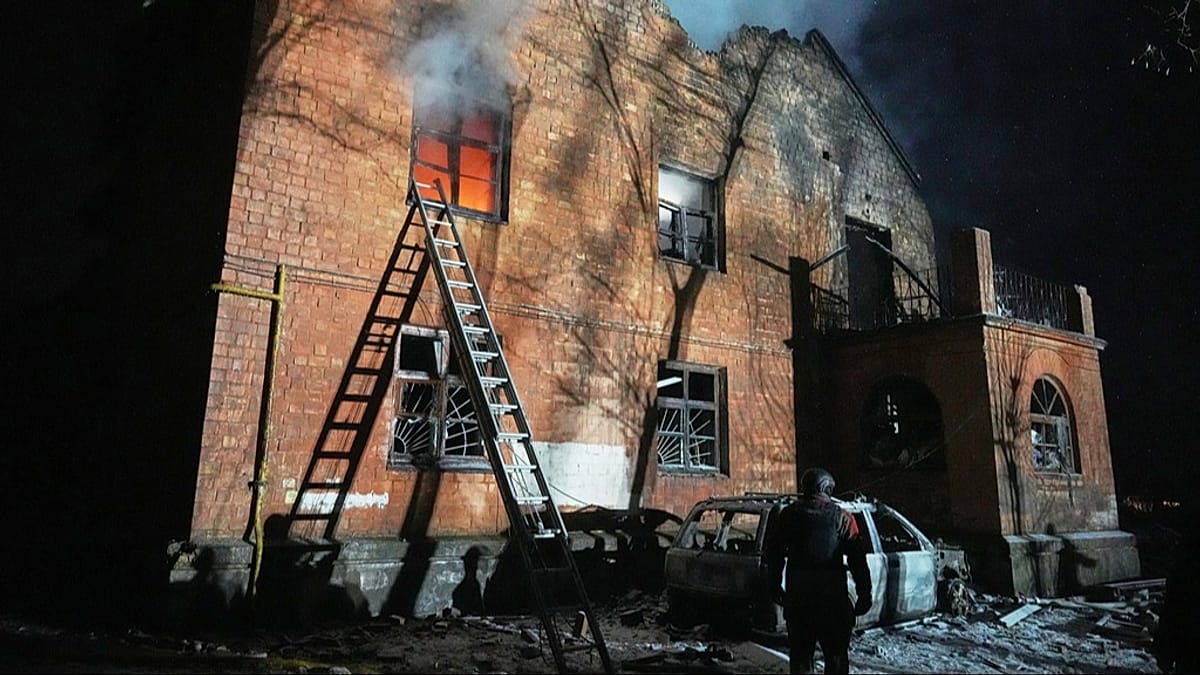
Russian overnight strikes comprising over 100 drones and missiles (including an Iskander ballistic variant) hit at least 15 locations across Ukraine, with Ukrainian air defenses reportedly intercepting or jamming 94 drones while 27 drones and a ballistic missile struck targets. At least two people were killed and more than 15 injured; attacks damaged residential buildings and energy infrastructure, causing power and gas outages affecting roughly 100,000 families in Dnipropetrovsk and about 600,000 residents in Russia’s Belgorod region, with forecasts of temperatures near -10°C. The strikes sustain acute near-term downside risks for Ukrainian energy delivery and civilian infrastructure, supporting regional energy stress and defense-sector sensitivity while raising the probability of further escalation.
Market structure: Near-term winners are defense contractors and NATO suppliers (e.g., RTX, LMT, NOC) as fresh strikes increase demand visibility for munitions and air-defence systems; European energy exporters and LNG shippers also benefit from tighter winter supply, while Ukrainian utilities, regional retail/residential property and Russian border-region services are direct losers. Competitive dynamics favor large-cap defence names with backlog and export channels; smaller suppliers may be capacity-constrained, supporting price-insulating power for incumbents over 3–12 months. Cross-asset: expect EM sovereign and corporate spreads (Ukraine/Russia) to widen by +100–300bp in stressed windows, RUB weakness vs USD (target +5–15% downside shock), safe-haven bids in USD/CHF/JPY and gold, and episodic spikes in European TTF gas and prompt oil (WTI/Brent) of +5–20% if infrastructure damage persists.
Risk assessment: Tail risks include NATO escalation or major pipeline/port destruction that could trigger systemic commodity shock and sanctions broadening — low probability but high impact, potentially moving European gas prices >+50% for months and forcing fiscal interventions. Time horizons: immediate (days) = volatility spikes, options re-pricing; short-term (weeks–months) = energy price and defence budget repricing; long-term (quarters–years) = re-shoring and sustained defence capex. Hidden dependencies: weather (forecasted -10°C) amplifies humanitarian and policy responses; fertilizer/grain export disruption could feed into CPI and central bank reactions. Catalysts: confirmed large-scale pipeline damage, NATO policy shifts, EU emergency energy releases, or a mild warm spell that would reverse energy moves.
Trade implications: Favor convex exposure (options/spreads) on defence rather than naked longs — buy 3–6 month call spreads on RTX/LMT sized 2–3% portfolio each instead of outright 5–10% buys; hold GLD (1–2%) as an inflation/safety hedge for 1–3 months and add on a >3% intraday gold move. Short RSX (or buy 1–3 month put protection) sized 1–2% to capture RUB/regional risk; selectively buy short-dated European TTF call options (small size 0.5–1%) if TTF >€60/MWh or 5-day weather models confirm -5°C average. Trim/avoid Ukrainian sovereign/eurobond exposure now — reduce holdings by 50% within 2 weeks to limit spread shock exposure.
Contrarian angles: Consensus may overpay for large defence names after rallies — valuation compression risk; prefer call-spreads to capture upside while limiting delta. Energy moves may be transitory if EU emergency measures (storage drawdowns, LNG cargo reroutes) arrive within 2–6 weeks — avoid aggressive long-term gas exposure unless damage is structural. Historical parallel: 2014–15 regional escalations produced sharp commodity spikes then partial mean reversion within 3–6 months; position sizes should reflect that tendency with tight stop-losses (e.g., 12–15%). Unintended consequences include accelerated Russia–China trade pivot and long-run commodity realignment which would benefit diversified commodity producers more than single-country plays.
AI-powered research, real-time alerts, and portfolio analytics for institutional investors.
Request DemoOverall Sentiment
strongly negative
Sentiment Score
-0.60
