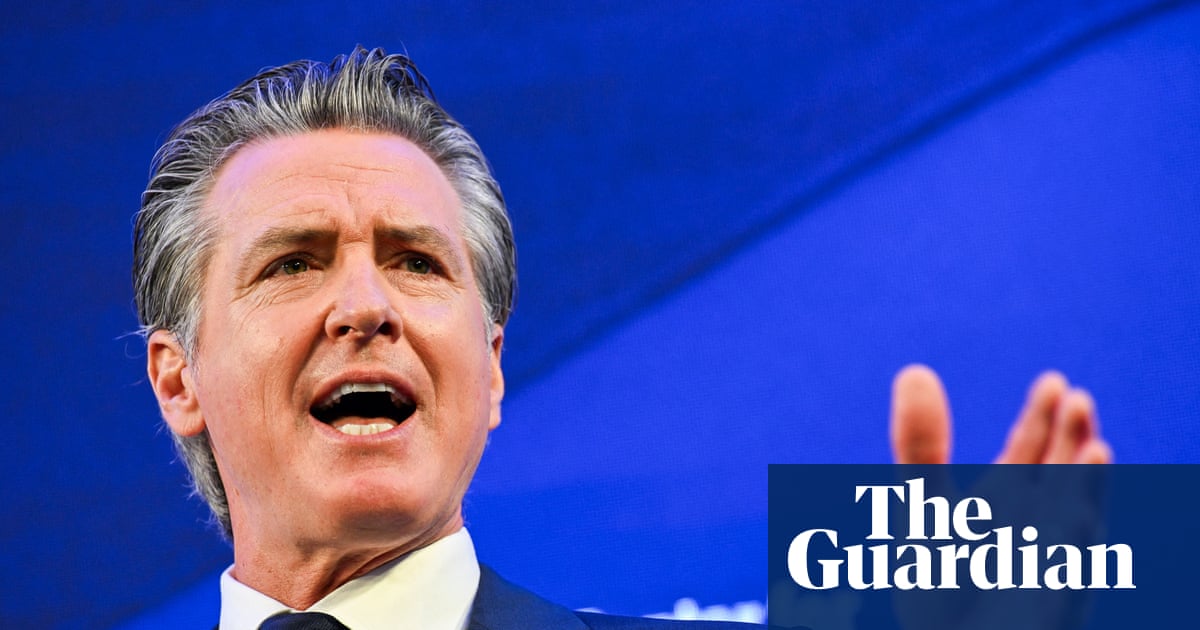
California certified a ballot measure that would impose a one-time 5% tax on residents worth more than $1bn to fund healthcare, education and food assistance, while Gov. Gavin Newsom countered with a proposed national minimum tax on people with net worth above $100m. Newsom also backed higher corporate taxes, tighter rules on borrowing against stock portfolios, and a national public equity fund tied to AI. The article is primarily a policy and political debate with limited near-term market impact.
The near-term market read-through is less about whether California adopts a wealth tax and more about the signaling effect on large-cap growth and private-market incumbents. GOOGL is the cleanest public-market proxy because any credible path toward a federal minimum wealth tax or tighter borrowing-against-stock rules raises the effective friction on founder liquidity, buybacks, and tax-efficient equity comp at the top end of the cap table. That does not impair AI demand in the next quarter, but it can compress terminal multiples if investors start assigning a higher political-tax discount to mega-cap platforms that are perceived as “wealth machines.”
The second-order effect is a re-pricing of geographic optionality. If the policy debate shifts from state-level symbolism to federal enforcement, the advantage tilts toward firms with diffuse ownership and less concentration of executive wealth in stock collateral, while companies with founder-heavy structures and heavy employee equity usage face headline overhang. In practice, this is more relevant for sentiment and valuation than fundamentals; the real transmission channel is whether top-tier talent and founders become more aggressive about diversifying domicile, which could modestly slow Bay Area deal activity and secondary-market flows over 6-18 months rather than days.
Contrarian angle: the market may be overestimating the probability of immediate policy implementation but underestimating how quickly this becomes a 2028 campaign issue that keeps reappearing. That means the trade is not a binary election bet; it is a slow-burn multiple headwind for the most visible AI beneficiaries, especially if the narrative shifts from “tax the rich” to “tax the AI rent-extractors.” If investors treat this as non-economic, they may miss that repeated political attacks can widen the governance discount on GOOGL even with no earnings revision.
AI-powered research, real-time alerts, and portfolio analytics for institutional investors.
Request DemoOverall Sentiment
neutral
Sentiment Score
-0.05
Ticker Sentiment
