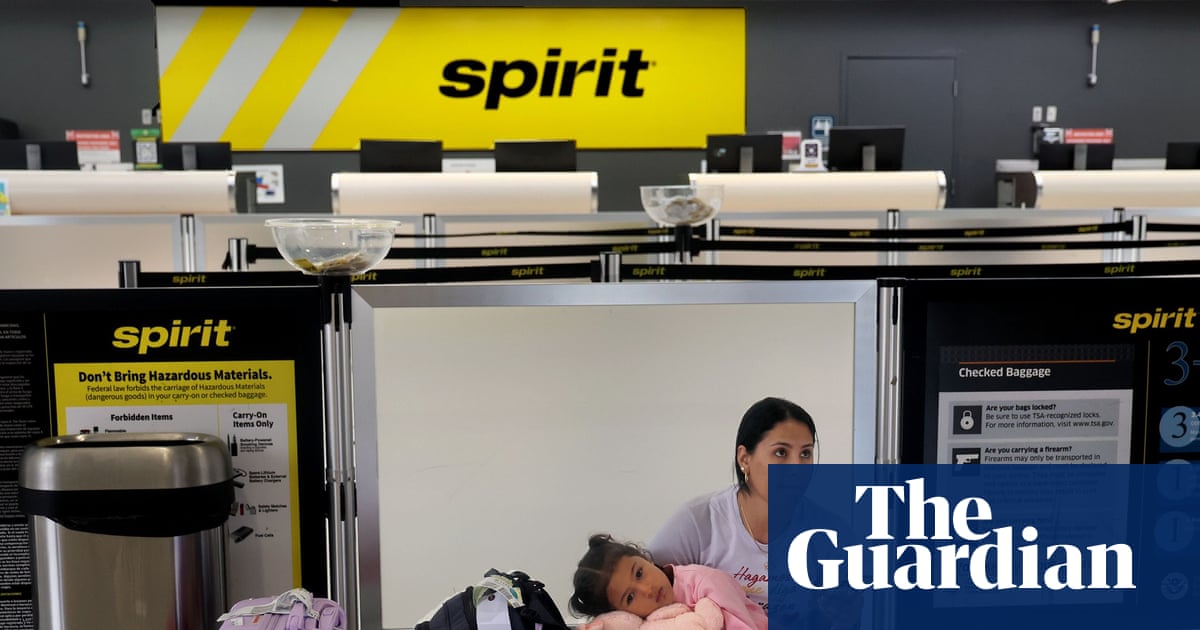
Spirit Airlines’ collapse and orderly wind-down are creating immediate disruption for stranded travelers, with refunds expected for credit/debit card bookings and chargeback options advised for unresolved cases. Competing carriers including American, United, Delta, JetBlue, Frontier and Southwest are offering limited-time rescue fares, while some are adding capacity, status matches, and hiring support for displaced Spirit employees. The article is primarily a consumer/travel disruption story with modest sector implications rather than a broad market event.
The immediate winners are not the majors on a volume basis, but the carriers with the best short-haul network density and the lowest cost of incremental lift. The key second-order effect is yield reset: stranded ULCC demand tends to flow into the cheapest remaining option, but once those passengers book through a higher-cost carrier, a meaningful slice of them never fully returns to the ULCC channel. That creates a modest but durable pricing tailwind for LUV and UAL on overlapping leisure routes, while AAL and DAL benefit more from schedule flexibility and larger-gauge upgauging than from pure fare capture.
The more important medium-term issue is capacity discipline. A carrier failure removes not just seats but also aggressive price competition, which can improve domestic RASM for 1-2 quarters even if total traffic is flat. The risk to the winners is self-inflicted: if the majors overextend with rescue capacity or choose to match too much of Spirit’s fare architecture, the revenue benefit gets diluted and load factors on marginal routes become a trap rather than an opportunity. The cleanest monetization is likely in carriers that can add capacity selectively without changing their overall unit cost curve.
For the industry, this is also a labor and regulatory reset. Former Spirit staff and aircraft will not disappear instantly; talent migration may temporarily ease staffing friction across the system, but the bigger structural effect is that competitors can recruit experienced crews while screening for stronger productivity, which subtly improves labor availability at the margin. The contrarian take is that the market may be underestimating how fast the fare gap closes: rescue fares are a short-lived bridge, not a structural substitute, so the demand that matters is the portion of Spirit’s customer base that has to reprice into the broader market over the next several booking cycles.
AI-powered research, real-time alerts, and portfolio analytics for institutional investors.
Request DemoOverall Sentiment
strongly negative
Sentiment Score
-0.55
Ticker Sentiment
