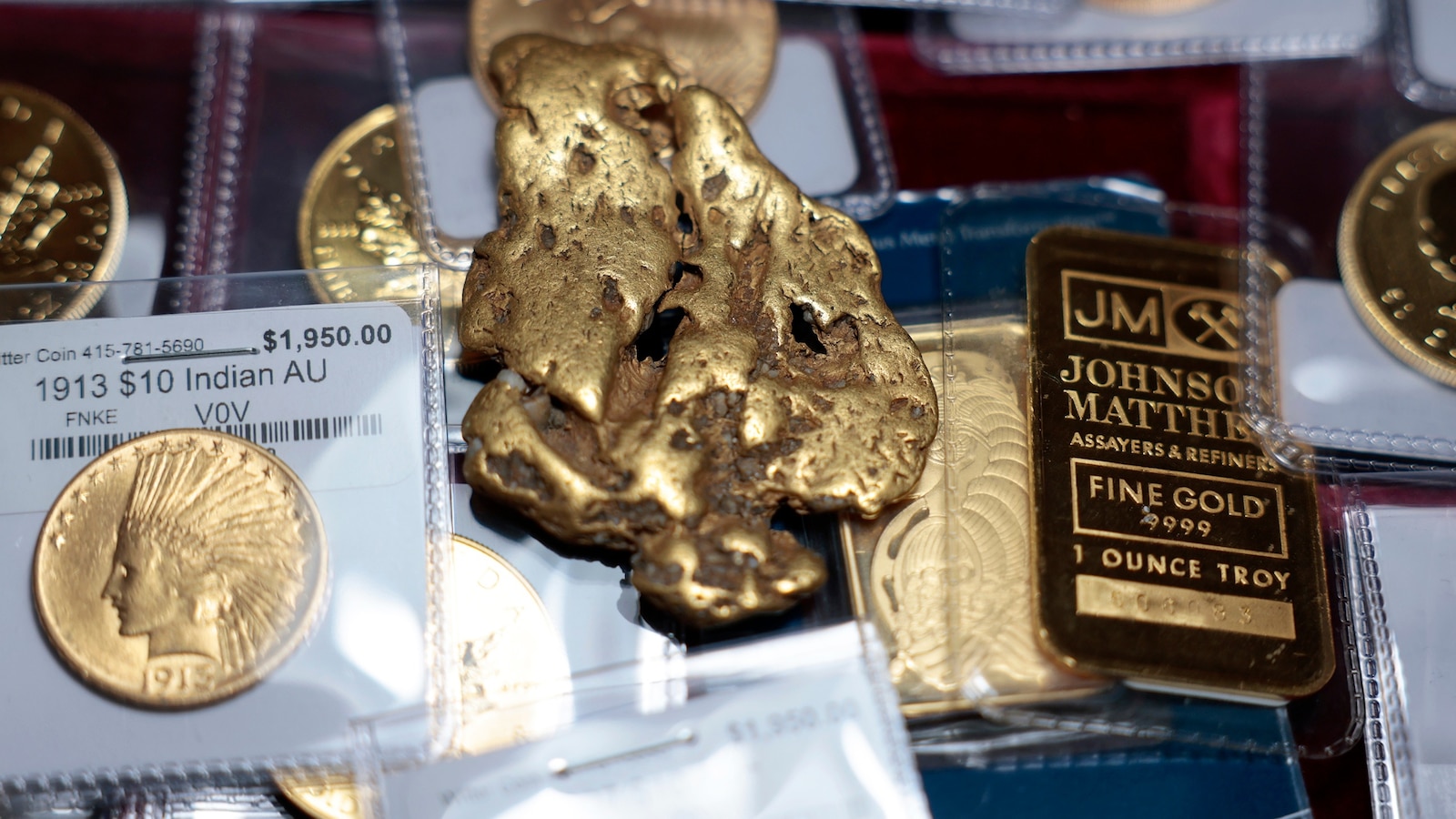
Gold prices have surged over 50% this year, with a significant recent acceleration, prompting analysts to interpret this as a potential warning sign for the U.S. economy. This rally coincides with a sharp labor market slowdown, increased government shutdown risks, and stress in long-term bond markets, leading some experts, including Ray Dalio, to suggest impending economic troubles and advocate for gold as a hedge. Concurrently, expectations of Federal Reserve interest rate cuts, which diminish the appeal of interest-bearing assets, and a substantial depreciation of the U.S. dollar are also driving demand for gold, though some caution about its inherent volatility.
Gold prices have surged over 50% year-to-date, with a notable 20% increase since mid-August, significantly outpacing the U.S. stock market. Analysts, including Paolo Pasquariello, interpret this substantial rally as a critical warning sign for the U.S. economy, indicating potential "troublesome times ahead." This safe-haven asset's performance reflects heightened investor anxiety regarding economic stability.
The gold surge coincides with several concerning economic indicators, including a sharp labor market slowdown, evidenced by a steep drop in monthly hiring and downward revisions of prior job growth estimates for 2024 and early 2025. Further contributing to economic risk are a potential government shutdown and observed stress in long-term bond markets, collectively suggesting a deteriorating economic outlook.
Expectations of Federal Reserve interest rate cuts, potentially a second consecutive reduction this month, are fueling gold demand by reducing the comparative attractiveness of interest-bearing investments. Concurrently, the U.S. dollar has depreciated approximately 11% in the first half of 2025, its largest decline in over 50 years, as reported by Morgan Stanley. This dollar weakness, coupled with investor nervousness about traditional U.S. safe assets, drives capital towards gold.
Billionaire hedge fund founder Ray Dalio has advised investors to buy gold as a hedge against market turmoil, reflecting a broader flight to safety amidst economic and political uncertainty. However, despite its strong performance, gold remains a volatile asset, with analysts like Jim Wyckoff cautioning that buyers entering at high points risk significant losses. This inherent volatility necessitates careful consideration.
AI-powered research, real-time alerts, and portfolio analytics for institutional investors.
Request DemoOverall Sentiment
strongly negative
Sentiment Score
-0.75
Ticker Sentiment
