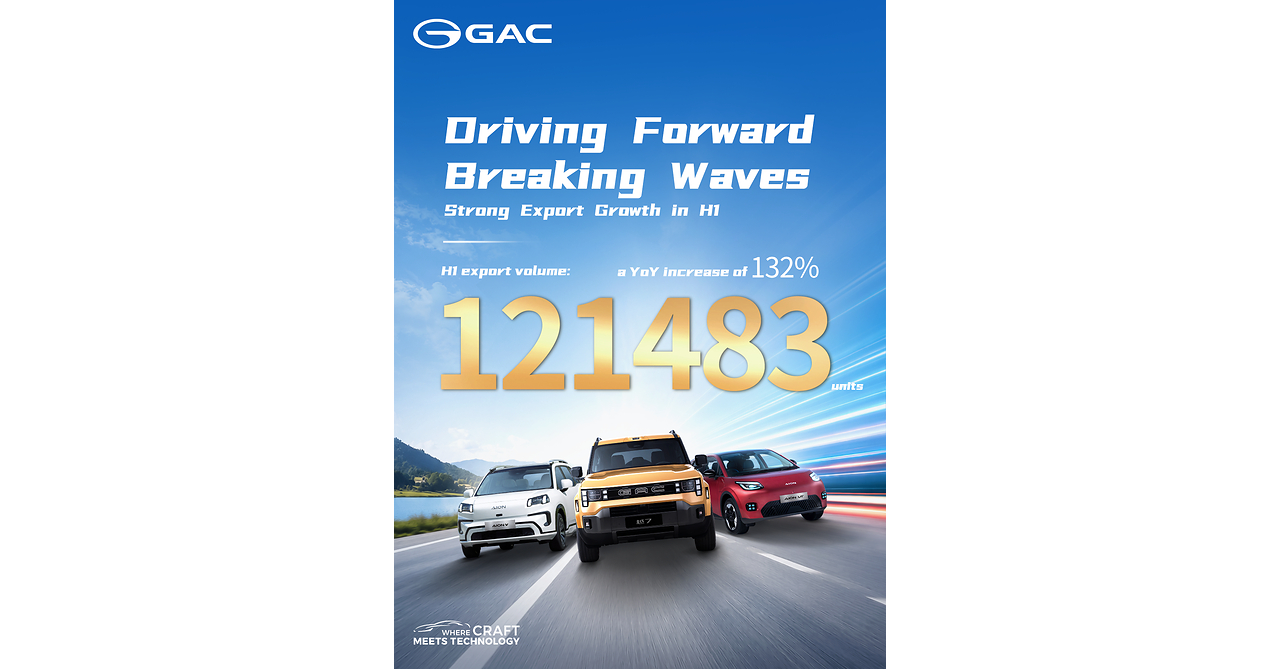
GAC International reported 1H26 export volume of 121,483 units, nearly matching the prior full-year level, up 132% YoY. The article also highlights strong BEV sales wins across multiple markets (e.g., Hong Kong private EV share >11% Jan–May, ~7% in Singapore for April), alongside new European production/launch steps for the AION UT in Austria and debuts in Milan, UK, and Spain.
The market should read this as evidence that GAC is no longer just shipping units; it is building a repeatable overseas distribution machine. That matters because a durable export franchise can re-rate an automaker only if it lifts mix, not just volume: more international sales can improve factory utilization and bargaining power with suppliers, but only after the channel matures and warranty/after-sales costs normalize. Near term, the beneficiaries are GAC’s local dealers, logistics partners, and component suppliers with export exposure; the competitive losers are low-priced EV incumbents in Mexico, Southeast Asia, and parts of Europe that now face a Chinese OEM with a broader geographic footprint.
The contrarian point is that the headline growth is likely ahead of earnings. Overseas launches typically absorb cash through homologation, incentives, inventory support, and localized assembly, so the next 1-2 quarters may show margin noise even if unit momentum stays strong. The real catalyst is whether Austria-based production and EU market entries convert into sustained order books; if not, this could revert to a low-return growth story quickly, especially if Europe tightens trade barriers or FX moves against them.
From a 6-18 month lens, the key question is whether this proves a scalable template for other Chinese automakers and forces a new pricing regime in emerging markets. If GAC maintains share while improving residual values, it can pressure rivals’ lease economics and fleet penetration; if residuals slip or incentives rise, the market will discount the whole narrative as subsidy-led share gain. Watch monthly registration data, gross margin, and working capital—those will tell us whether this is structural internationalization or just an unusually good shipment cycle.
AI-powered research, real-time alerts, and portfolio analytics for institutional investors.
Overall Sentiment
moderately positive
Sentiment Score
0.45
