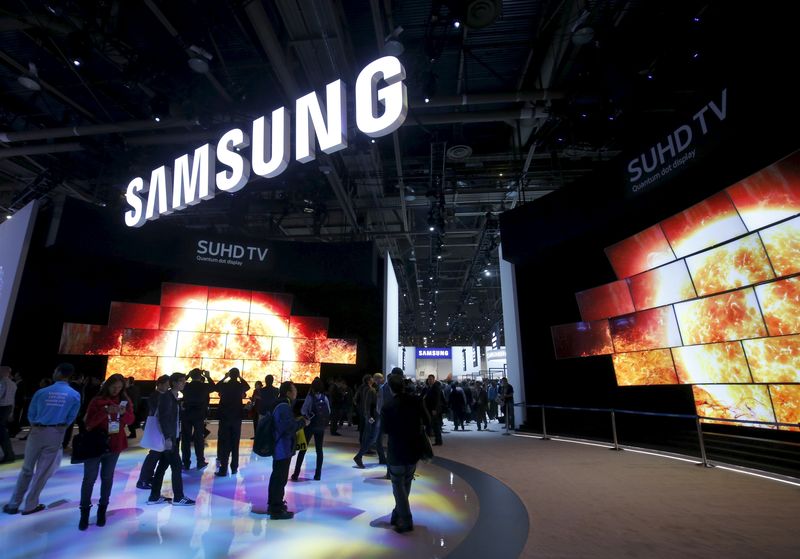
Samsung Electronics crossed a $1 trillion market valuation for the first time, with shares up more than 11% on Wednesday to a record 261,500 won and more than doubling this year. The rally was driven by strong memory-chip demand and a Bloomberg report that Apple has held exploratory talks with Samsung and Intel to make main processors, though no orders have been placed. The move underscores robust AI-related chip demand and improving sentiment toward Samsung's long-term chip leadership.
The market is treating the Samsung move as a generic semiconductor beta trade, but the bigger implication is a redistribution of bargaining power across the AI hardware stack. If Apple meaningfully diversifies processor sourcing, it weakens the single-vendor moat around TSM’s advanced-node demand and increases the probability of multi-sourcing economics becoming the norm for premium device makers. That is structurally positive for foundry competition, but in the near term it may compress pricing power and raise qualification costs across the ecosystem.
For INTC, the opportunity is less about winning a full design and more about narrative re-rating: even exploratory engagement with Apple can reset expectations on its foundry credibility and improve multiple expansion if investors start pricing a second-source role. The second-order effect is that Intel could become a strategic hedge for customers worried about Taiwan concentration risk, which is a valuable option-like asset even before revenue shows up. Samsung benefits twice: from memory tightness and from any foundry credibility halo, but the foundry upside is likely lagged and more volatile than the memory cycle.
The main risk is that this story outruns the actual tape-out cycle. Any real revenue contribution from a new processor relationship is measured in years, while the memory upcycle is a months-to-quarters phenomenon that can unwind quickly if cloud capex pauses or HBM supply normalizes. That creates a tactical asymmetry: memory names can keep moving on scarcity, but the foundry narrative is vulnerable to disappointment if there is no concrete order flow within the next 1-2 quarters.
The consensus may be underestimating how much this hurts TSM at the margin, not via immediate earnings loss but via strategic dilution of exclusivity. If top-tier customers increasingly treat TSM as one node among several, valuation should rely more on execution and less on franchise premium. The move looks underpriced in INTC optionality and slightly overextended in TSM if the market is extrapolating a durable share shift from an early-stage conversation.
AI-powered research, real-time alerts, and portfolio analytics for institutional investors.
Request DemoOverall Sentiment
strongly positive
Sentiment Score
0.72
Ticker Sentiment
