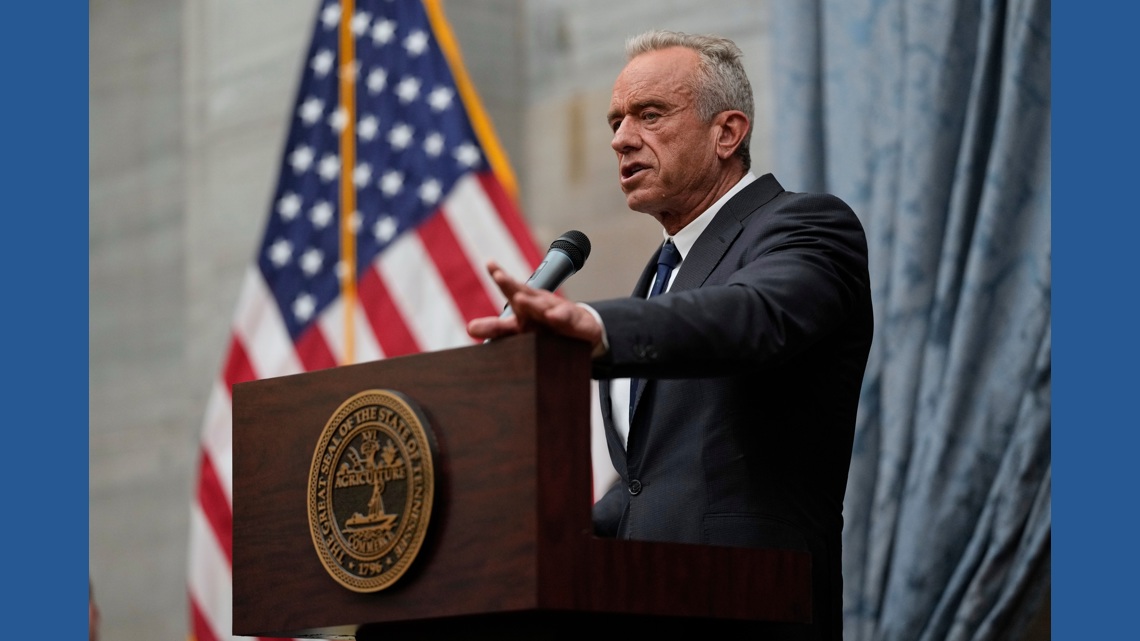
A federal judge ruled HHS's December declaration labeling puberty blockers and related surgeries for youth as unsafe overreached and was issued without proper administrative procedure, denying the defendants' motion to dismiss. The case, led by New York AG Letitia James and joined by a coalition of 19 states plus D.C., represents a procedural win for providers and patients but awaits a written opinion and potential appeals. Although it is a significant legal setback for HHS and Secretary Robert F. Kennedy Jr., the ruling is expected to have limited direct market impact beyond policy-sensitive healthcare stakeholders.
This judicial rebuke raises the effective cost of unilateral federal health-policy experimentation: agencies must now internalize litigation and procedural delay as an explicit regulatory tax. Expect a multi-quarter shift from headline-driven instantaneous policy changes to slower, lawyer-heavy transitions; that favors large, vertically integrated payers and national providers that can absorb administration and compliance complexity while smaller specialty clinics face higher relative compliance/legal overhead.
Second-order: the ruling increases the probability of a durable, state-by-state policy mosaic rather than a single federal standard. That raises operating complexity for Medicaid-heavy managed care and specialty behavioral-health chains (billing rules, prior-authorizations, credentialing variance), increasing admin spend by an estimated several percentage points of margins for high-state-concentration operators over 6–18 months.
Risk picture: appeals and higher-court reversals are the main tail risk (timeline: 6–24 months). A reversal would re-introduce regulatory shock and could compress multiples of insurers/providers that had repriced for policy clarity. Conversely, a sustained precedent reduces policy tail-risk and could support multiple expansion for defensive healthcare franchises.
Catalysts to watch: appeals docket calendar, state-level legislation in the 19 coalition states, Medicaid guidance memos, and 2H earnings commentary on prior-authorization/admin cost trends. Each catalyst can move relative winners/losers in 1–6 month windows depending on state take-up and payer contracting cadence.
AI-powered research, real-time alerts, and portfolio analytics for institutional investors.
Request DemoOverall Sentiment
neutral
Sentiment Score
0.00
Ticker Sentiment
