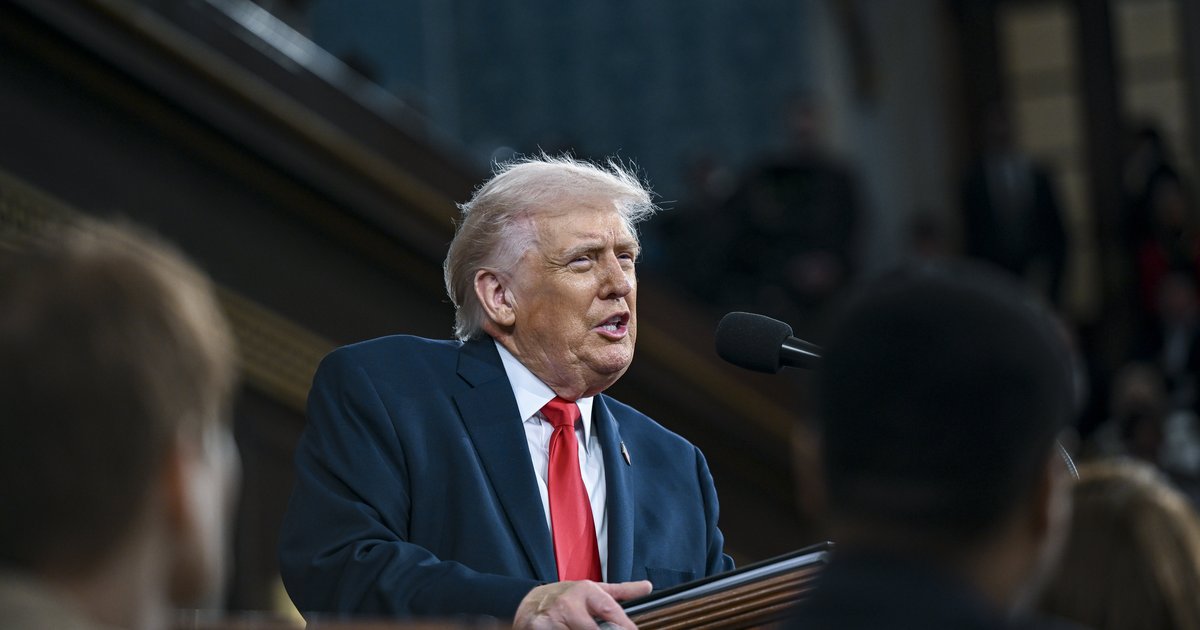
A coalition led by Pennsylvania Gov. Josh Shapiro and 22 state attorneys general has sued President Trump, arguing he lacks constitutional authority to impose recent tariffs and that the Trade Act of 1974 does not authorize the administration's sweeping duties. The suit follows a Feb. 20 Supreme Court ruling that the IEEPA did not permit tariffs; the administration imposed 10% global duties four days later, which Treasury says will rise to 15%. Plaintiffs seek a declaration that the tariffs violate separation of powers and refunds for paid duties, raising ongoing legal and policy uncertainty that could sustain higher input costs for farmers, small businesses and trade-exposed sectors.
Market structure: If the 10→15% global duties persist, import-intensive consumer names (TGT, WMT, COST, BBY) and electronics supply-chain incumbents (AAPL, SWKS) suffer margin pressure of ~2–5% EPS hit over 12 months; domestic producers of steel, aluminum and some agricultural inputs (NUE, X, AA, MOS) gain pricing power and volume domestically. Legal uncertainty creates two-sided exposure: an upheld tariff regime supports cyclicals and commodity prices, while a judicial rollback would produce a sharp one-time rally in importers via refunds and margin restoration.
Risk assessment: Tail risks include (1) escalation to country-specific retaliatory tariffs (~low prob, high impact) that reduce US export demand by >5% for affected sectors within 6–12 months, and (2) a court-mandated clawback/refund to importers causing material P&L re-rating. Key catalysts over 30–90 days are district court rulings on state suit, Treasury collection start dates, and Treasury confirmation of 15% effective date; volatility likely concentrated around these events.
Trade implications: Tactical pair trades favored: long domestic-materials (NUE, X) vs short import-reliant retail (TGT, WMT) for 3–9 months; use defined-risk options to limit policy-timing risk (6-month call spreads on NUE, 3–6 month put spreads on TGT). Allocate 1–3% portfolio to TIP (TIP) for 3–12 months to hedge tariff-driven inflation; reduce EM-Asia semiconductor exposure by 25% vs benchmark until legal clarity.
Contrarian angles: Consensus assumes tariffs permanently raise costs; but a court refund scenario creates asymmetric upside for importers—target names could gap +8–15% on a favorable ruling. Historical parallel: 2018–19 tariff skirmishes produced short-lived margins impact and strong rebound on rollback; therefore prefer defined-risk, event-driven plays (options spreads) over naked directional exposure.
AI-powered research, real-time alerts, and portfolio analytics for institutional investors.
Request TrialOverall Sentiment
moderately negative
Sentiment Score
-0.40
