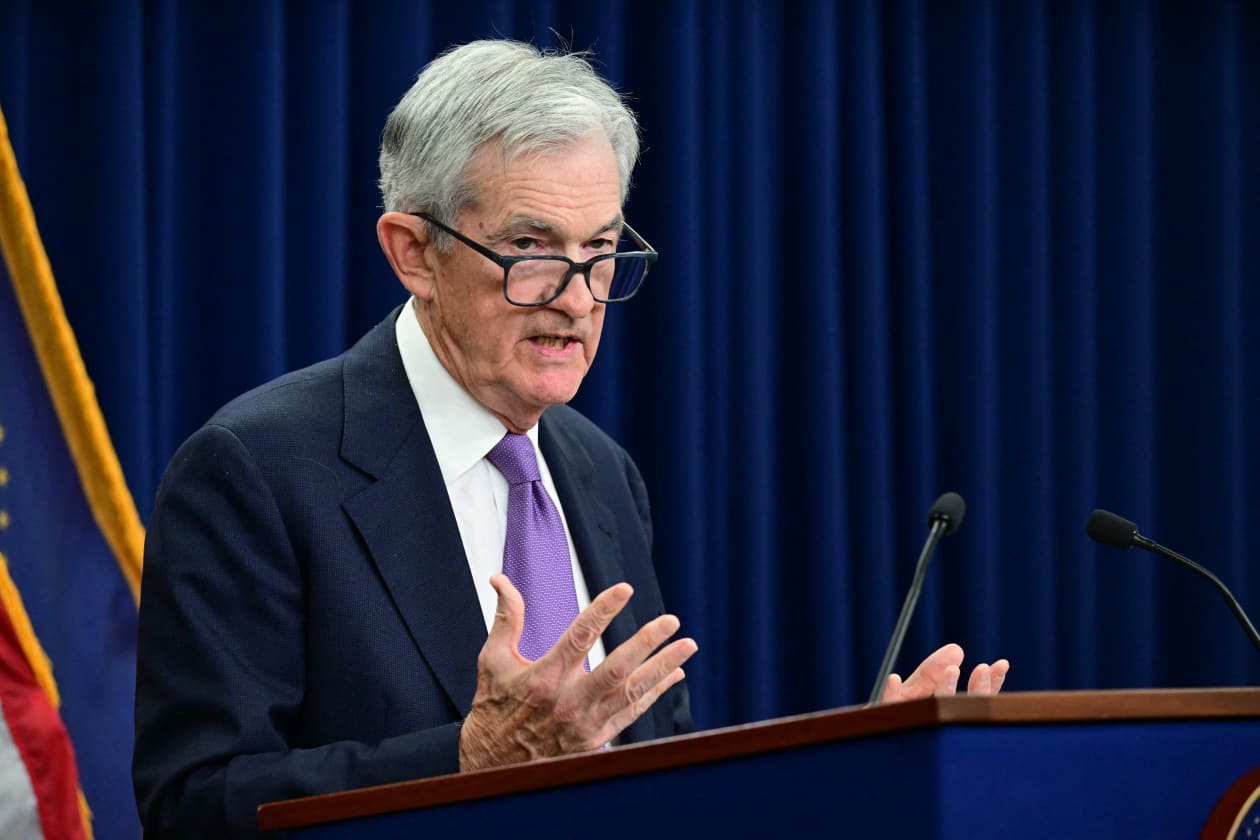
The Fed is widely expected to cut rates by 25 bps at its Dec. 9-10 meeting, bringing the policy range toward 3.50%–3.75% after prior hikes to 5.25%–5.50% in 2023, driven largely by a weakening labor market (unemployment rose to 4.4% in September) even as inflation remains above target (around 3% in September). Policymakers are balancing recession risk against persistent inflation, so the statement and Powell’s press conference are likely to signal a high bar for further cuts amid potential dissents and market pricing volatility; markets currently imply additional cuts later, while politics (pressure from President Trump and talk of a potential Fed replacement) complicate the outlook.
Market structure: A 25bp cut at the Dec 9-10 meeting and a softer labor market shift the marginal pricing power toward rate-sensitive assets: long-duration growth, REITs (VNQ), and gold (GLD) get a boost while banks (KRE/KBE) and money-market yields suffer via NIM compression. Front-end yields should fall quickly (2s, 3s), steepening or flattening the curve depending on inflation expectations; expect 2y to move down ~15–40bp near-term if cut is confirmed and markets price January. Corporate credit will bifurcate — IG should tighten modestly, while CCC and regional-bank-heavy CLOs widen on recession fears.
Risk assessment: Tail risk includes a hawkish surprise if inflation re-accelerates (CPI >3.5% or core CPI MOM >0.4% in next two prints) or a political regime change (Chair replacement) that spikes term premiums; either would lift long yields >50bp quickly. Time horizons: immediate (days around Dec 9-11) for volatility spikes, short-term (through late Jan jobs/CPI) for potential re-pricing of another cut, long-term (H1–H2 2025) for recession vs. inflation tradeoffs. Hidden dependencies: consumer affordability, fiscal impulse (policy under Trump), and global central bank moves can flip USD and commodity flows unexpectedly.
Trade implications: Tactical plays should be skewed to front-run a measured easing but protected against a hawkish reversal: favor intermediate-duration Treasuries (7–10y, IEF) and growth/REIT exposure funded by short regional-bank positions (KRE/KBE) and disciplined options hedges. Use small-size option structures (debit spreads, collars) to buy convexity into a volatility-rich event window and avoid naked directional exposure into the announcement. Monitor two explicit triggers: 10y yield breaching 4.5% (cut thesis fails -> unwind growth/long-duration) and unemployment >4.6% in next print (add risk-on REITs/growth).
Contrarian angles: Consensus underprices election-driven Fed governance risk and persistent inflation stickiness; markets pricing multiple cuts in 2026 may be too loose — if Powell signals a higher bar, expect short-covering in front-end rates then a retracement in long-duration rallies. Historical parallels (2019 pre-COVID mid-cycle cuts and 2020 emergency moves) show equity multiple expansion on initial cuts but flattening later if growth softens; therefore scale positions (tranche entries) and size hedges to limit drawdowns from a policy regime shift.
AI-powered research, real-time alerts, and portfolio analytics for institutional investors.
Request DemoOverall Sentiment
mixed
Sentiment Score
-0.05
