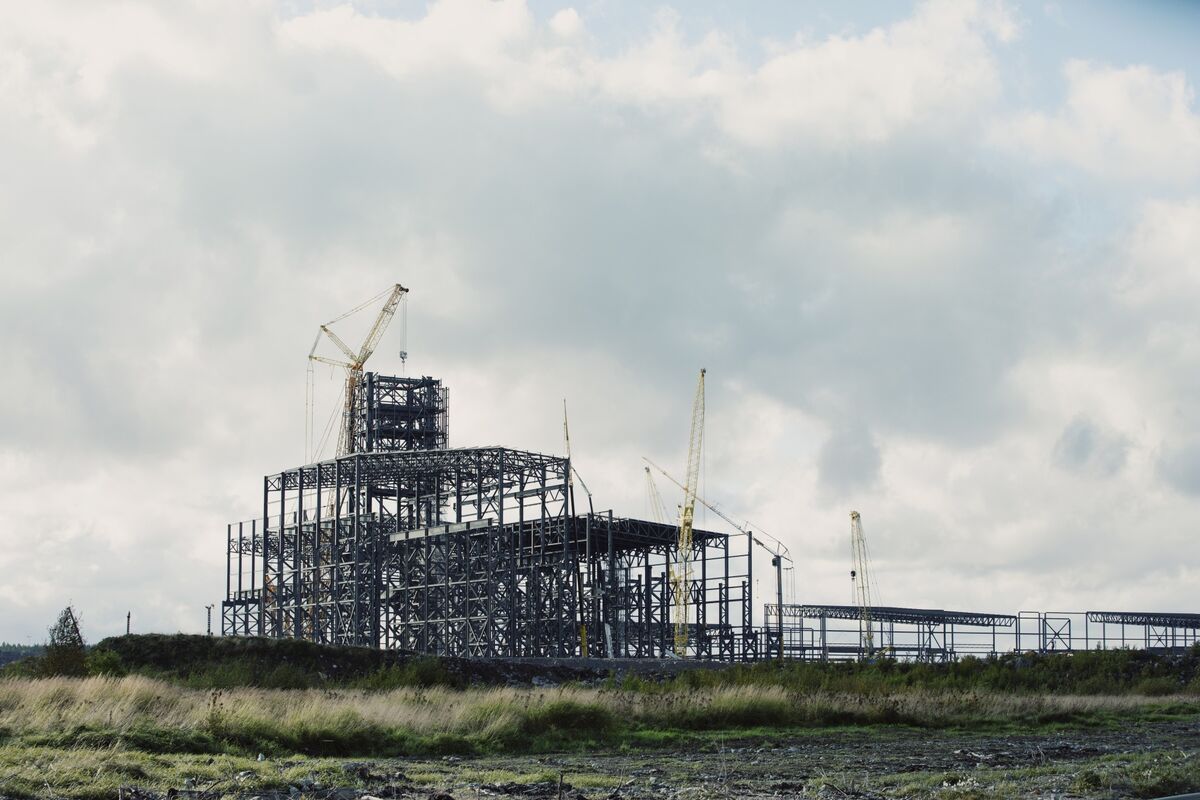
Cash-strapped Swedish green-steel startup Stegra AB was awarded 390 million kronor (~$40.9m) in public grant funding by Sweden’s Energy Agency, conditional on the company securing additional financing by next spring; the grant represents roughly one-quarter of its 1.6 billion kronor support application. The funding follows prior EU state-aid approval but the scaled-back, conditional award highlights a material financing shortfall and execution risk for the project, signaling potential need for further private capital or restructuring to complete the plant.
Market structure: The scaled-back SEK390m grant (vs SEK1.6bn requested) leaves a SEK~1.21bn funding gap that Stegra must close by spring 2026, which benefits large, balance-sheeted incumbents (SSAB, ArcelorMittal MT) and iron‑ore miners (RIO, BHP) who can deliver low‑carbon steel at scale or supply feedstock. Losers are early-stage green‑steel startups, venture investors and equipment suppliers reliant on project pipelines that now face delayed rollouts and higher cost of capital. Competitive dynamics will favor vertically integrated players with existing offtakes and hydrogen partnerships — expect consolidation pressure and stronger pricing power for incumbents over 12–36 months.
Risk assessment: Tail risks include project bankruptcy (Stegra fails to raise SEK>1.2bn), a reversal of EU/state aid, or hydrogen/electrolyzer cost shocks; these could produce a 30–70% write‑down for private green projects. Near term (days–weeks) expect funding news-driven volatility in Swedish small‑cap and clean‑tech names; medium term (3–12 months) funding rounds and EU ETS prices (watch threshold: €70–90/t CO2) are catalysts; long term (1–3 years) adoption hinges on hydrogen supply scaling and carbon pricing certainty. Hidden dependencies: municipal permits, grid/hydrogen pipeline access, and co‑investor syndicate appetite.
Trade implications: Favor liquid exposure to makers and miners: overweight SSAB (SSAB‑B.ST) and global miners (RIO, BHP) for 6–18 months to capture market share shift; hedge with selective protection on small‑cap clean‑tech indices. Use option structures (buy 9–12 month call LEAPs on SSAB, financed by selling 1–3 month calls) to get convexity while capping capital at risk. Reallocate 2–5% of industrials/clean‑energy sleeve toward value steel/miners and reduce direct VC/private allocations to green steel by ~50% until spring 2026 funding outcomes are known.
Contrarian angle: The market underestimates concentration effects — fewer funded pilots likely concentrate subsidy pools on a small number of winners, meaning incumbents could capture a higher green premium (10–25%) once technology risk falls. Historical parallel: early offshore wind subsidy trims led to winner‑take‑most outcomes for large OEMs; similar dynamics can magnify returns for SSAB/Arcelor if they execute. The obvious negative read (green rollback) misses upside from accelerated consolidation and price premia when green steel proves deliverable.
AI-powered research, real-time alerts, and portfolio analytics for institutional investors.
Request DemoOverall Sentiment
mixed
Sentiment Score
-0.15
