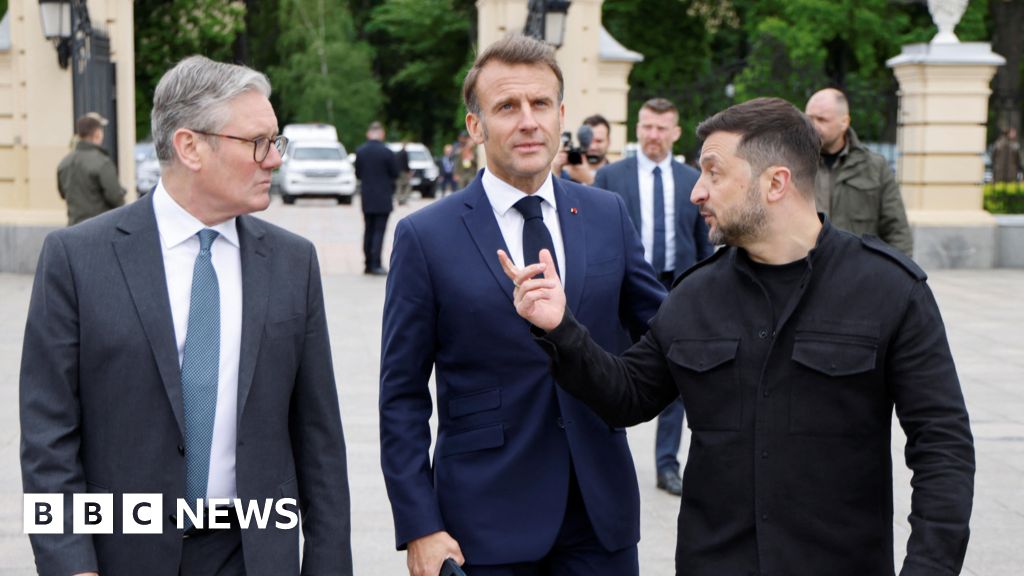
European leaders are urgently in Washington to counter President Trump's significant shift in Ukraine policy following his meeting with President Putin. Trump's reported abandonment of ceasefire preconditions for peace talks and disinterest in further Russian sanctions is viewed by Europe as a move favoring Russia, risking Ukraine's capitulation, and threatening long-term European security. The delegation seeks to impress upon the White House that durable peace requires robust, long-term security guarantees for Ukraine, not mere territorial concessions, underscoring a rapid and unexpected re-alignment in Western diplomatic strategy and heightened geopolitical uncertainty.
A significant and unexpected diplomatic rift has emerged between the US and European allies, prompted by President Trump's abrupt change in strategy regarding the war in Ukraine following a meeting with President Putin. The US has reportedly dropped its demand for a ceasefire as a prerequisite for peace talks and has signaled no intent to impose further sanctions on Russia. This policy shift is viewed by European leaders as a substantial concession that moves the US position closer to Russia's, creating what they term a moment of "extreme jeopardy" and raising fears of a forced "capitulation" by Ukraine. European heads of government are urgently seeking to influence White House thinking, arguing that a lasting peace cannot be achieved through simple territorial concessions like the Donbas and that any security agreement must address the long-term security of the entire European continent. The European objective is to advocate for tangible, long-term military and financial support for Ukraine, including continued access to US intelligence and weaponry, directly contradicting Russian demands for demilitarization. The situation's high-stakes nature is underscored by the "strongly negative" sentiment score (-0.65) and the hastily arranged, potentially "unwieldy" European delegation, which faces the risk of antagonizing the US administration, indicating significant near-term geopolitical volatility.
AI-powered research, real-time alerts, and portfolio analytics for institutional investors.
Request DemoOverall Sentiment
strongly negative
Sentiment Score
-0.65
