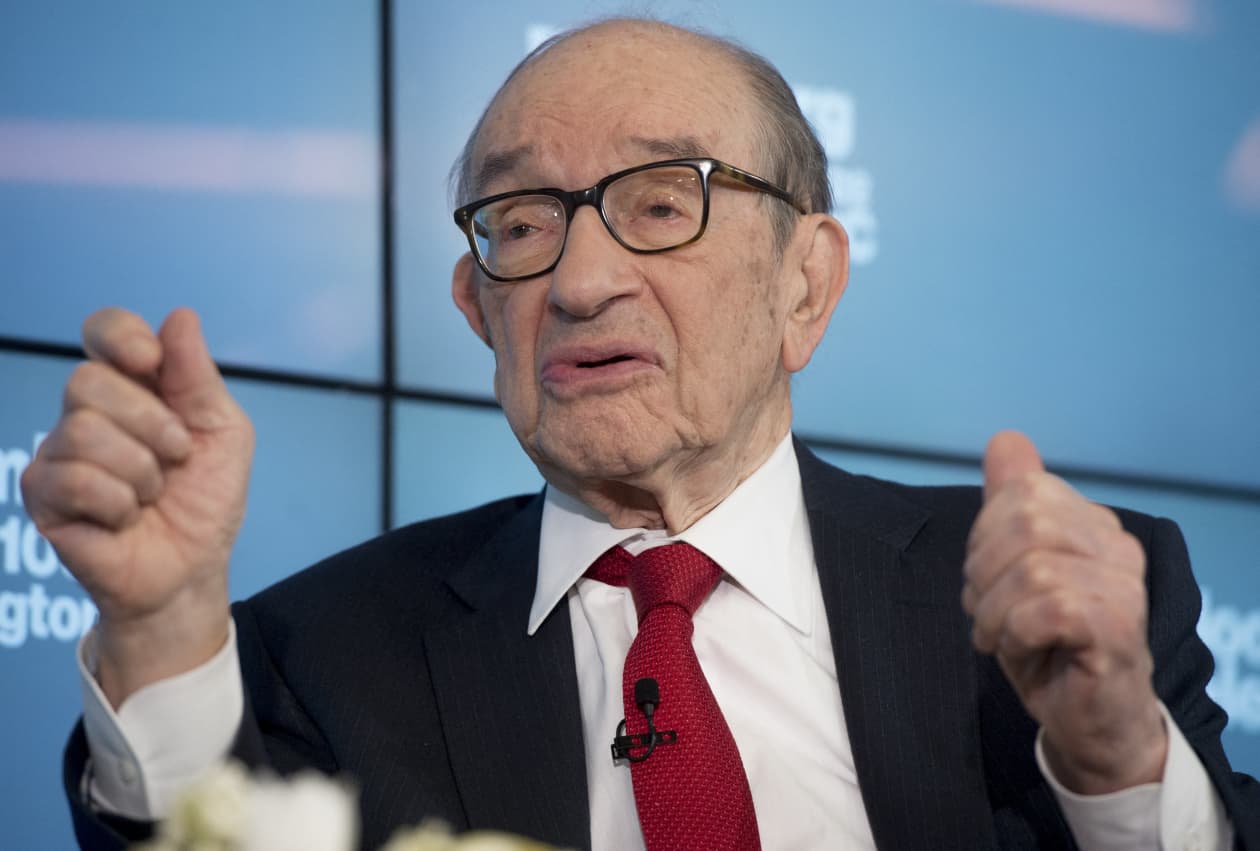
Former Federal Reserve chairman Alan Greenspan has died at age 100 after nearly two decades leading the central bank. The report is a factual obituary with no policy or market implications disclosed. Market impact is minimal.
This is less a market event than a regime-marker: the passing of a symbolic architect of discretionary central banking can briefly re-open debates about the Fed’s reaction function, especially among macro funds that trade narrative as much as data. The investable implication is not directionally obvious for rates, but it does tend to lift demand for historical analogs, Fed interpretation, and “who’s next” positioning around policy credibility, which can widen dispersion in front-end rate volatility and bank stocks sensitive to curve expectations.
The second-order effect is on the Fed’s institutional premium. Any renewed scrutiny of past policy mistakes can increase sensitivity to current communication errors, which matters most when inflation is still above target and growth is slowing: markets may put a higher probability on abrupt policy pivots, benefiting long-duration assets if the next datapoint softens, but hurting financials if term premiums compress faster than expected. In that sense, the real expression is in rate vol rather than outright rates.
Contrarian view: the consensus will likely treat this as a non-event for markets, which is directionally right on the day but may underprice the incremental narrative risk around central-bank independence and “legacy” scoring in election-sensitive environments. If policymakers become more cautious about being seen as either too hawkish or too dovish, the outcome is slower reaction function calibration and more two-way trading in the front end over the next 1-3 months.
Net: the best trade is not to chase a macro view on the obituary itself, but to use it as a trigger to reassess rate-vol exposure and curve-sensitive baskets. If incoming data weakens, the market may lean harder into a lower-for-longer re-pricing because the institutional backdrop feels more fragile than it did last week.
AI-powered research, real-time alerts, and portfolio analytics for institutional investors.
Request DemoOverall Sentiment
neutral
Sentiment Score
-0.10
