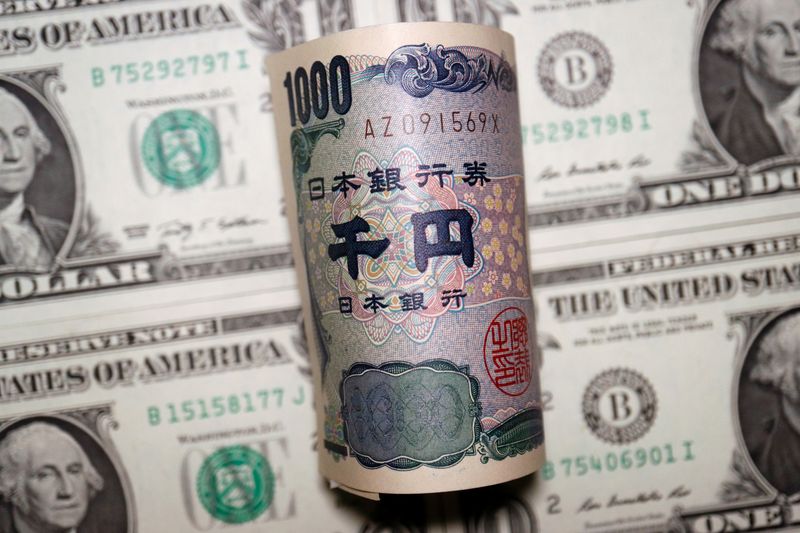
Asian FX traded mostly range-bound as the U.S. dollar held firm near 101.43 on expectations of higher-for-longer U.S. rates, while USD/JPY eased just 0.1% to 161.60 after touching 161.95, its strongest level since 1986. Tokyo core CPI accelerated to 1.6% y/y in June, but the data was not enough to shift expectations for Bank of Japan policy tightening. The ringgit outperformed with USD/MYR down 0.4%, while the Australian dollar fell 0.3% to $0.6889 and the New Zealand dollar lost 0.2%.
The cleanest read-through is that the market is starting to price a more durable dollar/liquidity squeeze, not just a one-day FX move. When U.S. rates stay elevated while local inflation is still sticky, the second-order effect is higher hedging costs for Asian importers and a wider earnings dispersion between domestic-demand names and exporters with natural dollar revenues. That tends to favor balance-sheet strength and penalize crowded growth multiples, especially in Korea where tech is both index-heavy and position-heavy.
The KOSPI volatility is the more important signal than the FX tape: once a market trips a circuit breaker, systematic de-risking can persist for several sessions even if the original macro catalyst is modest. For semis and platform tech, the risk is not just valuation compression; it is forced selling from leveraged retail and risk-parity flows, which can create a 5-10% additional downside overshoot before fundamentals matter. If the won weakens further, foreign ownership pressure can compound the move because global investors often hedge less than they think in practice.
The contrarian angle is that the yen intervention line may be a better tactical trade than a structural one. The market is positioned for the BOJ to stay behind the curve, but the asymmetry shifts sharply once officials act: the first intervention usually produces a fast 2-4% snapback, yet it rarely changes the medium-term trend unless U.S. yields roll over. That makes short-USD/JPY a better event-driven trade than a outright medium-term macro short.
On Asia FX, the ringgit’s relative strength suggests the market is rewarding current-account resilience and cleaner macro data more than pure carry. If U.S. yields stabilize, low-beta Asian currencies could re-rate quickly, but if the next U.S. inflation print stays hot, the more vulnerable currencies are those with weaker external balances and higher imported-energy sensitivity.
AI-powered research, real-time alerts, and portfolio analytics for institutional investors.
Request DemoOverall Sentiment
neutral
Sentiment Score
-0.05
