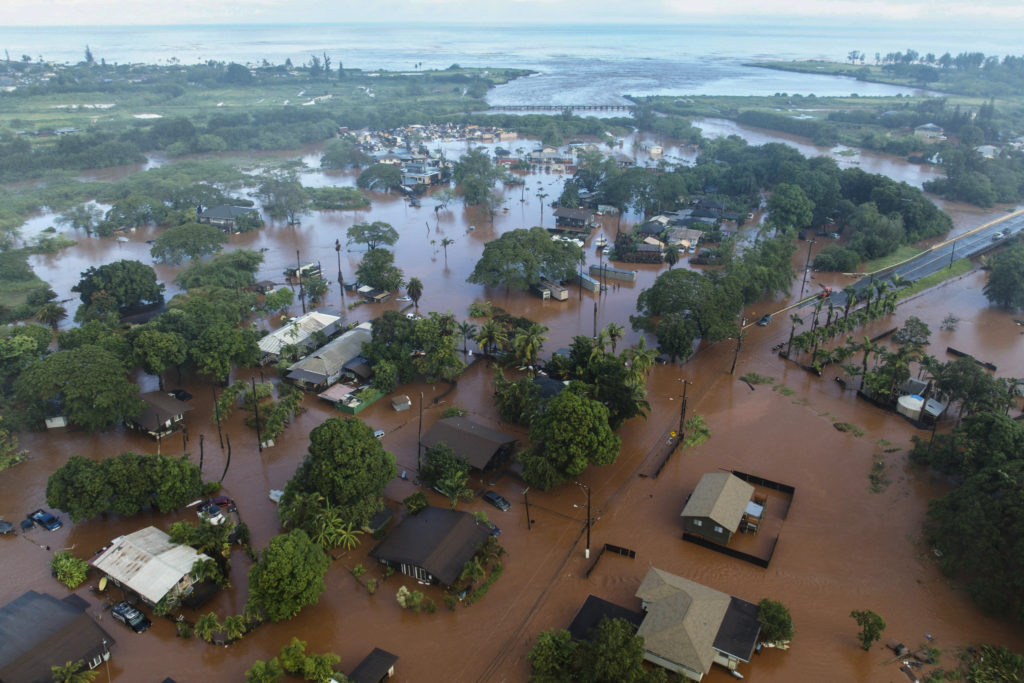
More than 4,000 people were ordered to evacuate downstream of the 120-year-old Wahiawa dam after officials warned it was "at risk of imminent failure," as 8–12 inches (20–30 cm) of rain fell in parts of north Oahu and floodwaters swept homes and vehicles away. Hawaii has activated the National Guard and is moving shelter populations as emergency crews search for stranded residents; the event highlights vulnerabilities in aging dam infrastructure (state oversees 132 dams) and follows past fatal dam collapse history in the state. Impact is currently localized to Oahu's North Shore but poses significant downside risk to local housing, tourism and transport infrastructure until waters and structural risks stabilize.
Market reactions will be driven in the near term by liquidity and sentiment shocks rather than fundamental reallocations: travel bookings to the region will reprice within days-to-weeks, while insurance and municipal-credit repricing plays out over quarters. Localized supply bottlenecks—aggregate, ready-mix concrete, short-haul trucking and qualified heavy-civil crews—create a wedge where unit rebuild prices can rise 10–25% versus mainland averages for 6–18 months, favoring firms with pre-positioned assets and crews.
Primary insurers face claim-model uncertainty that will temporarily compress underwriting margins; reinsurers and specialty cat capacity, however, should be able to push through material rate increases at the next renewal cycle (6–12 months), turning a near-term earnings hit into mid-cycle tailwind. Rating-agency scrutiny of state and county balance sheets increases the chance of localized muni-spread widening; expect a 25–75bp repricing in Hawaii-linked paper if federal backstop timing is slow.
The policy response vector matters: a fast federal emergency declaration plus accelerated USACE/FEMA contracting (0–90 days) materially shortens recovery timelines and benefits large national contractors and materials suppliers, whereas delayed federal action shifts benefits to local subs and raises project execution risk. Labor/permitting friction will be the critical bottleneck — companies with modular capability, stockpiles, or island-based inventory will capture outsized margins for 12–36 months.
Catalysts to watch: (1) initial insurer loss estimates and reinsurer reserve releases over the next 30–90 days, (2) FEMA/USACE award announcements and timing, and (3) airline/hotel booking trends for the next two travel seasons. Reversals occur if claims run below modeled scenarios or if rapid federal funding eliminates credit risk for municipal issuers.
AI-powered research, real-time alerts, and portfolio analytics for institutional investors.
Request DemoOverall Sentiment
strongly negative
Sentiment Score
-0.65
