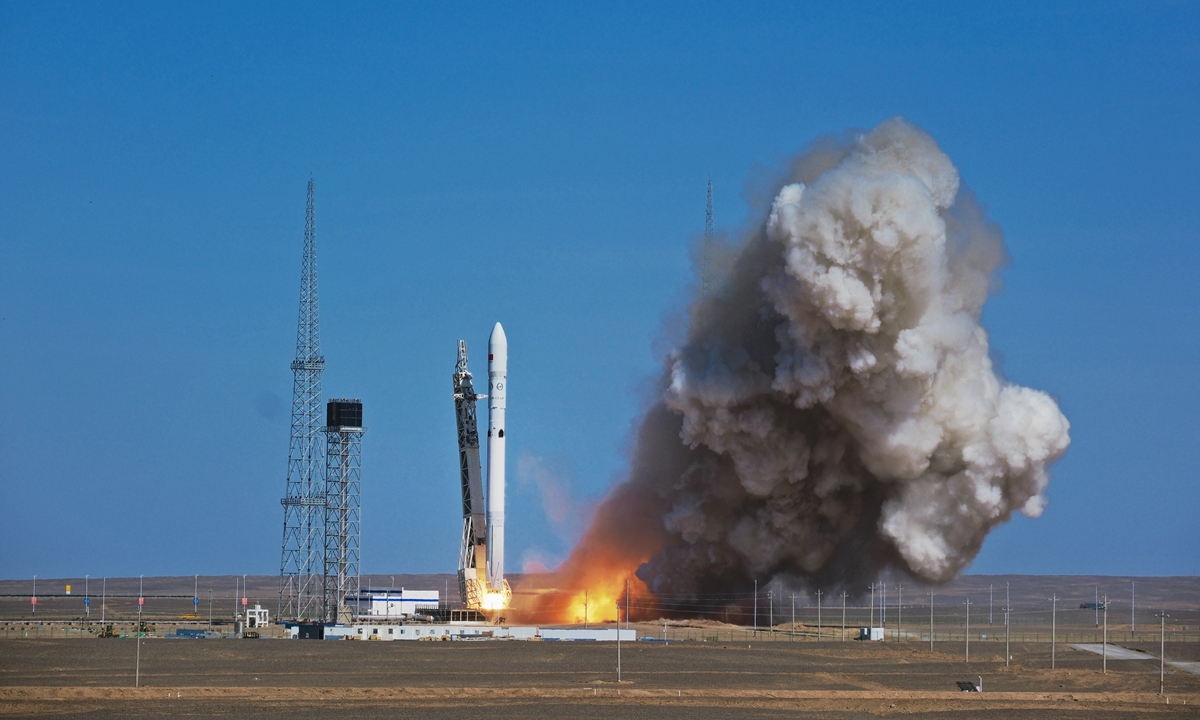
China successfully launched the Long March-12B Y1 rocket, deploying Qianfan Constellation networking satellites into preset orbits. The new-generation reusable vehicle is designed for commercial launches and future recovery, with a reported lift capacity of around 20 tons to low-Earth orbit and a 72-meter single-core, two-stage design. The mission highlights advances in reusable rocketry, autonomous flight control, and low-Earth-orbit satellite deployment, but near-term market impact appears limited.
This launch is less about one rocket and more about China moving from “state-led access to space” toward an industrialized, repeatable launch stack for LEO buildout. The real second-order winner is the domestic space supply chain: propulsion, avionics, composite structures, thermal protection, and launch telemetry vendors should see more revenue visibility as cadence rises and reusable systems lower marginal launch cost. If the vehicle proves out even partial reusability, it compresses the economics of China’s satellite internet ambitions and raises the bar for smaller Chinese launch startups that lack scale, tooling depth, or test throughput.
The competitive dynamic is most relevant for the constellation ecosystem, not just launch services. Lower-cost heavier-lift capacity should accelerate procurement of mass-produced satellites, ground terminals, and network software, but it also increases the risk of near-term bottlenecks in spectrum coordination, orbital slot management, and satellite manufacturing quality control. That means the next bottleneck shifts from “can China launch?” to “can it integrate, refresh, and monetize LEO capacity fast enough?”—a multi-quarter execution test rather than a headline catalyst.
The contrarian point is that investors may overestimate how quickly reusability changes economics. A successful first flight with no recovery attempt does not validate turnaround time, refurbishment cost, or engine reliability under repeated cycles; those are the variables that matter to unit economics over the next 12–24 months. For now, the more durable impact is signaling: China is institutionalizing aerospace autonomy and reducing dependence on foreign launch-era know-how, which is strategically bullish for domestic industrial policy but only modestly investable until repeat launches prove the learning curve.
AI-powered research, real-time alerts, and portfolio analytics for institutional investors.
Request DemoOverall Sentiment
mildly positive
Sentiment Score
0.20
