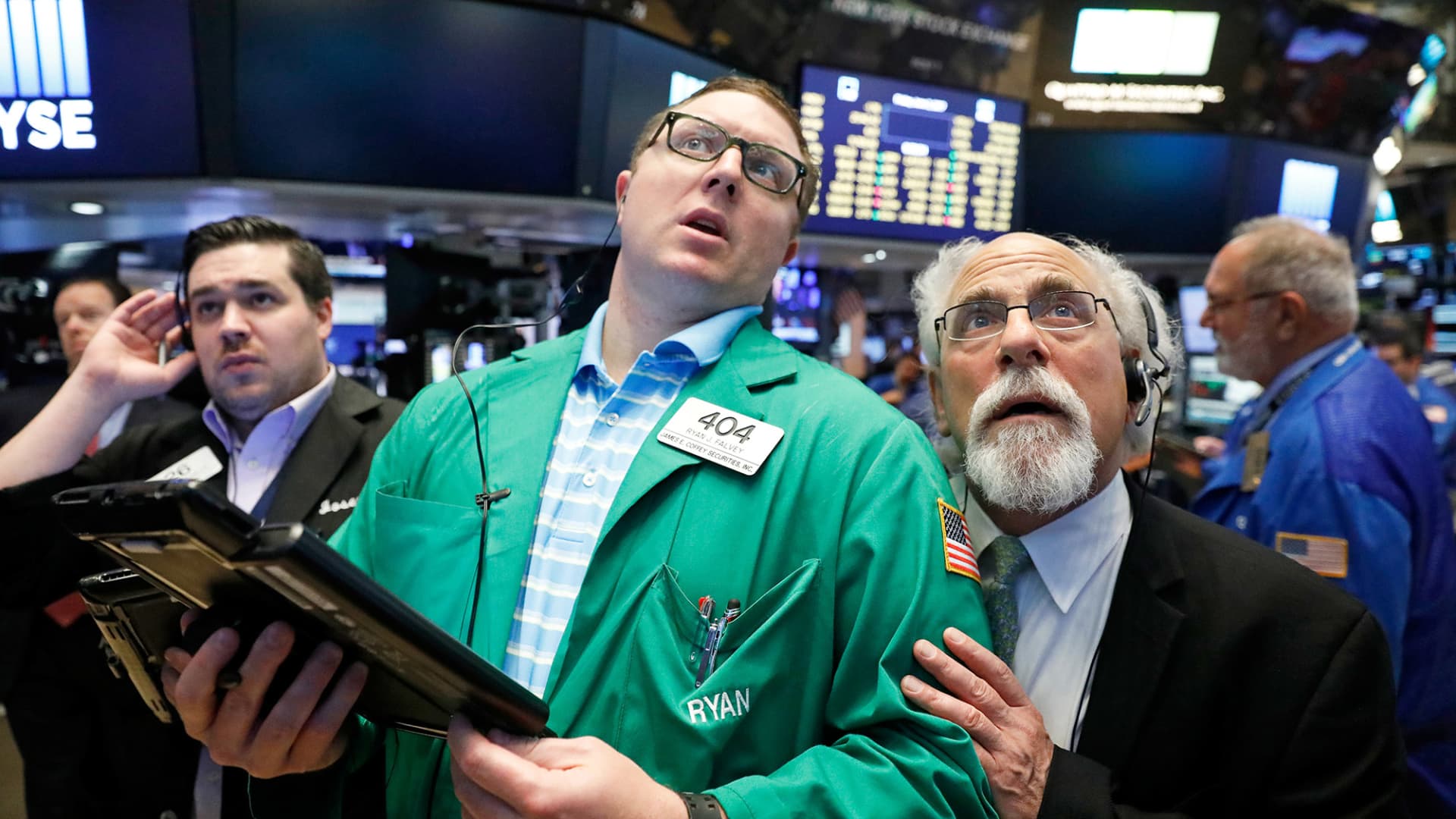
Over the past three weeks, the S&P 500 was flat, the Nasdaq fell nearly 1%, and the Dow rose 2.7% to record highs as investors rotated out of tech and into value and defensive names. Top performers included Arm (+38.2%), Wells Fargo (+13.9%), and Cardinal Health (+13.5%), while Amazon (-10.8%), Salesforce (-10.2%), and Meta (-7.6%) lagged amid AI capex concerns and software weakness. The article highlights mixed market sentiment, heavy AI-driven volatility, and a clear sector rotation within the portfolio.
The tape is signaling a classic factor unwind rather than a clean macro regime shift: crowded AI beneficiaries are being forced to finance growth at the same time capital is rotating into balance-sheet stories and regulated cash generators. That creates a near-term asymmetry where the market is rewarding visible free-cash-flow durability and punishing any business whose AI spend requires fresh external capital or ambiguous ROI. The second-order effect is that semiconductor picks-and-shovels can keep levitating even as the hyperscalers themselves underperform, because investors prefer leveraged exposure to AI demand without underwriting the capex bill.
The bank move looks more tactical than fundamental. A three-week rally in WFC and GS is consistent with lower position crowding, better rate-volatility optics, and a bid for financials as a late-cycle “quality cyclicals” basket, but it is not yet a thesis that credit is re-accelerating. If this is just a factor rotation, the risk is that banks give back gains once the market stops paying for defensive balance-sheet exposure and starts caring again about loan growth and deposit betas.
CRM is the clearest sentiment-driven short candidate: when a company is forced to buy its way into the AI narrative, the market is effectively telling you it doubts internal product velocity. That is different from Amazon/Alphabet/Meta, where the market is mostly questioning funding discipline, not strategic coherence. For the megacap ad names, the move may be overdone if the funding language settles down; their core franchises still throw off enough cash to absorb AI capex without impairing equity value over a multi-quarter horizon.
The contrarian setup is in DOW/CAH/JNJ/PG: these “safe haven” names can work for another leg if volatility stays elevated, but their relative upside is likely capped unless earnings revisions turn up. The cleaner expression is not to chase defensives outright, but to use them as funding legs against the most crowded AI monetization names. The path dependency matters: in days to weeks, financing headlines drive multiples; over months, investors will reprice based on whether AI spend shows up in revenue growth or merely in balance-sheet leverage.
AI-powered research, real-time alerts, and portfolio analytics for institutional investors.
Request DemoOverall Sentiment
neutral
Sentiment Score
0.05
Ticker Sentiment
